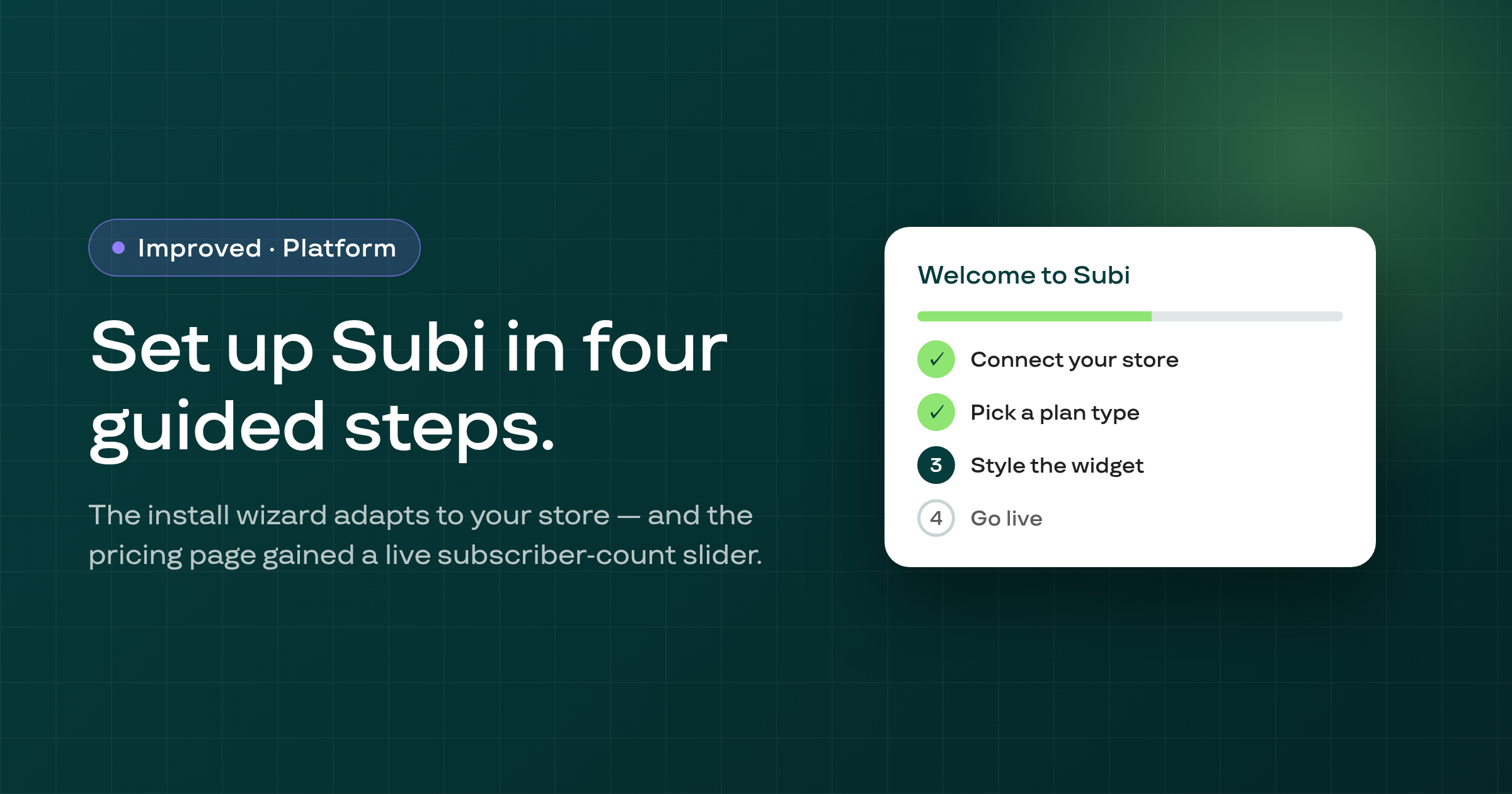
The setup wizard's pricing step shows the active campaign price on plan cards, and subscribing from that step now correctly carries the discount code and billing period through to the Shopify charge, so merchants are no longer billed the full price after seeing a discounted one.
During the setup wizard's goal conversation, asking the assistant for a fixed-dollar discount (for example, $20 off) no longer gets converted into a percentage discount using the same digits (a 20 percent discount); the assistant now asks for the percentage instead, since Subi plan discounts are always set as a percentage.
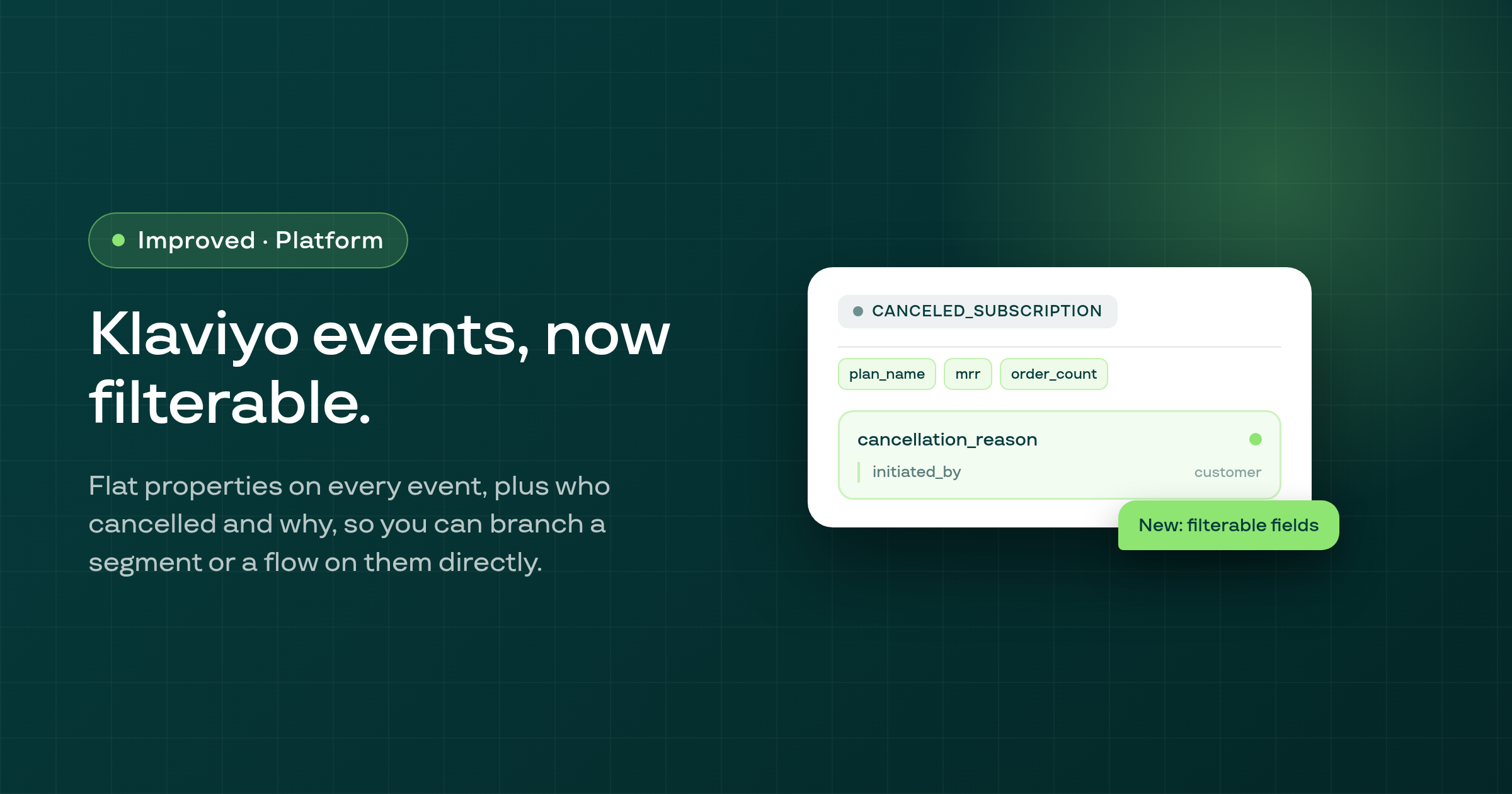
Every Klaviyo event Subi sends now includes a set of flat, top-level properties alongside the existing nested data, so you can filter a Klaviyo segment or split a flow on them directly, and the Canceled Subscription event now also carries the cancellation reason and whether the customer or the merchant cancelled.
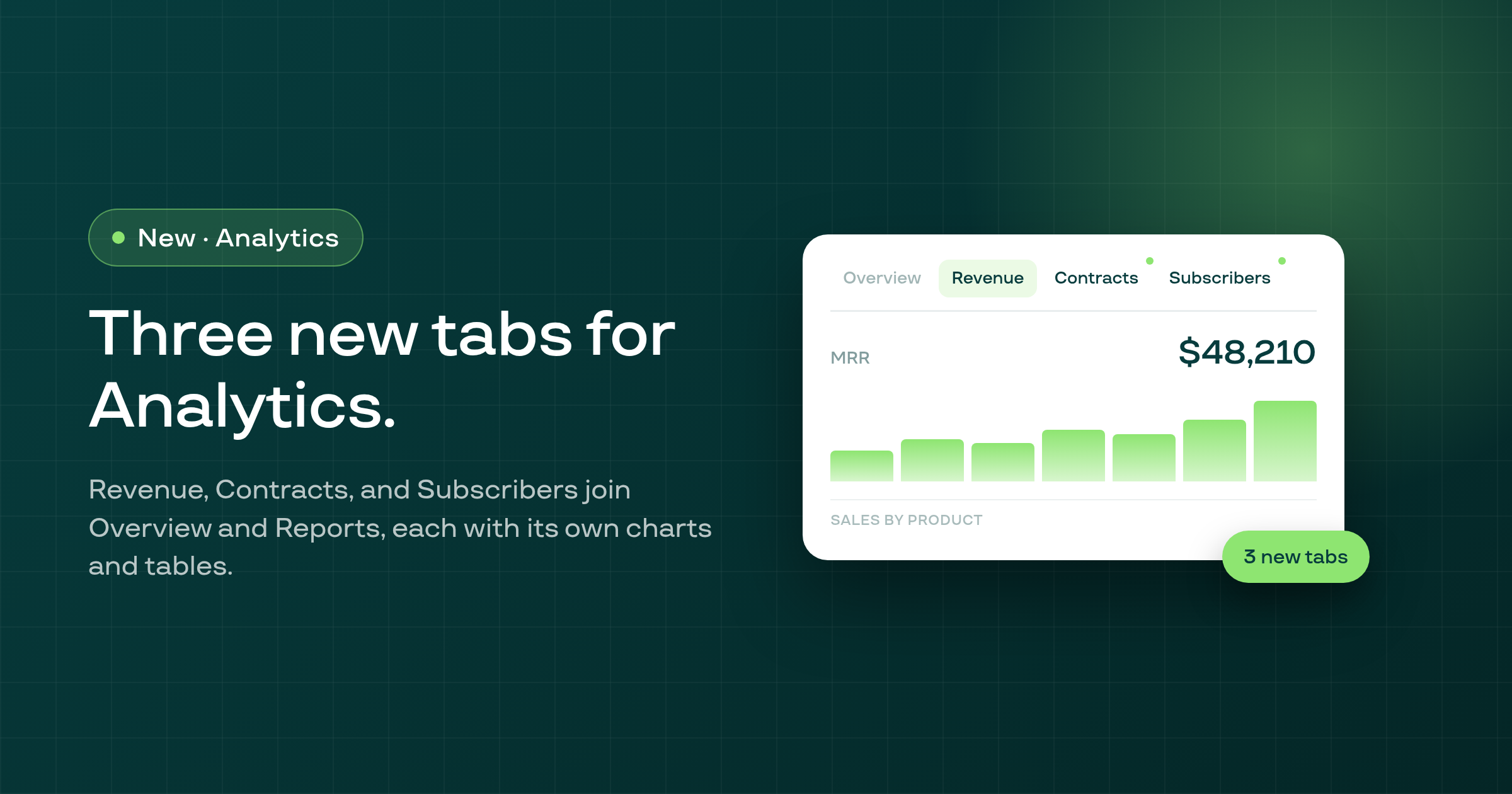
Subi Analytics now has three new tabs, Revenue, Contracts, and Subscribers, each with dedicated charts and tables, and switching between any Analytics tab no longer reloads it or resets your date range.
The padlock icons on Payment recovery fields you don't have access to on your plan did nothing on hover, click, or keyboard; they now respond consistently and explain why the field is locked.
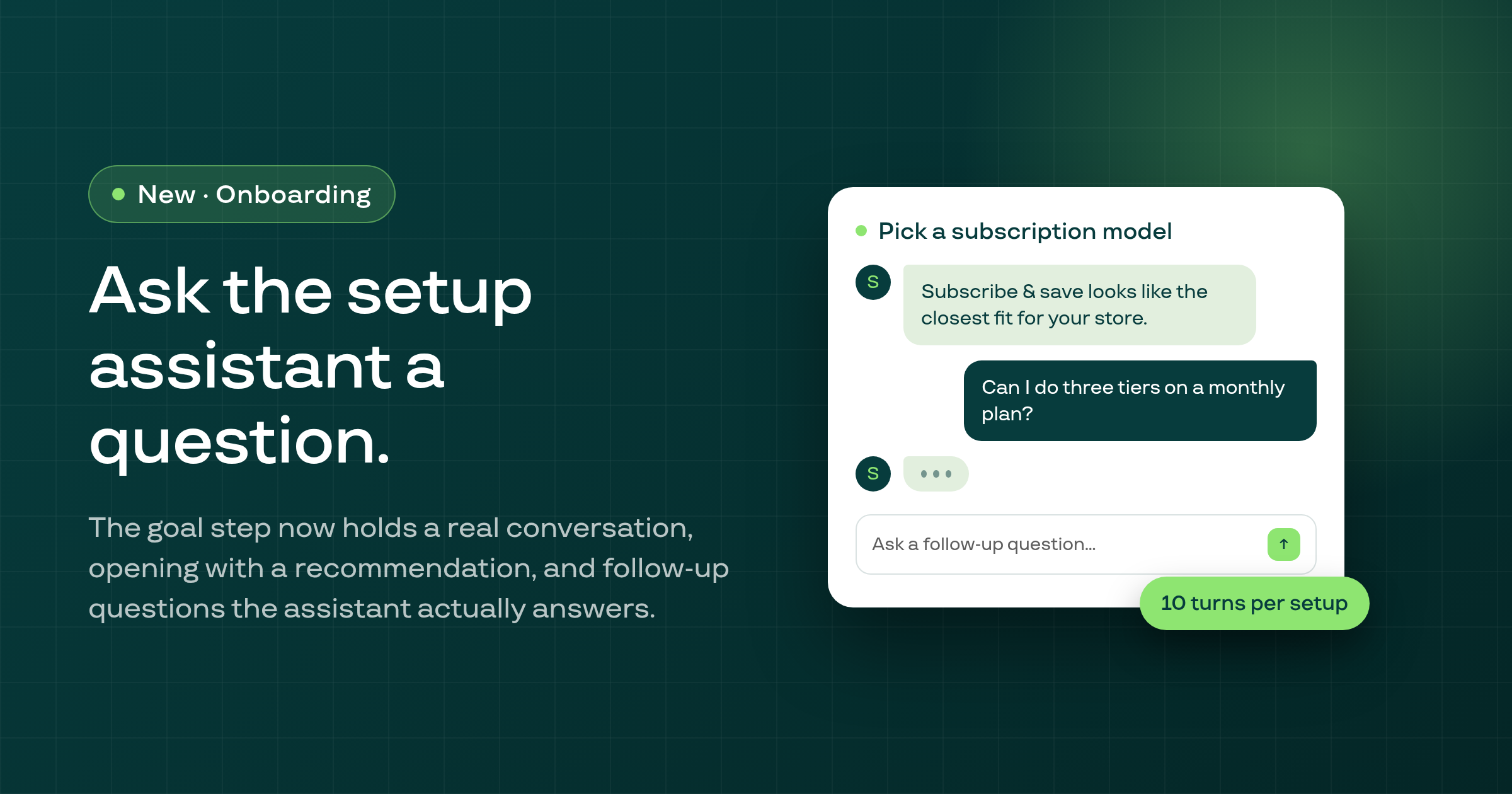
The setup wizard's 'Pick a subscription model' step now holds a real back-and-forth conversation, opening with a recommendation and letting you ask follow-up questions before you commit to a plan.
A membership plan could drift into allowing a one-time, non-subscription purchase in Shopify; saving the plan now re-asserts that its products are subscription-only, and the underlying setting can no longer be overridden from outside the panel.
In a contract's Edit > Product details modal, typing a discount on one line and then changing a different line's product used to silently revert your discount; it now survives, and any edit that genuinely can't carry over is called out on screen.
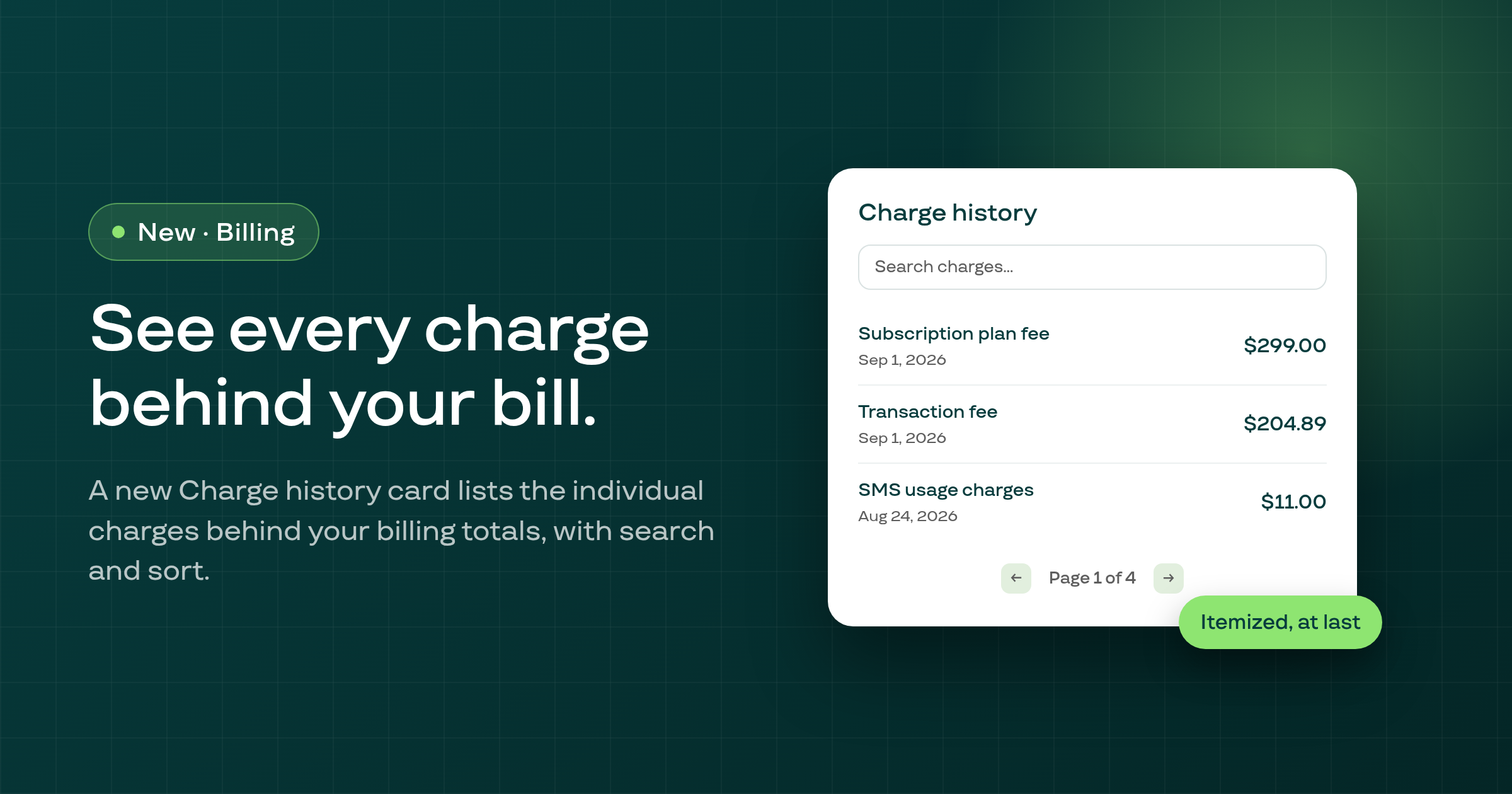
Settings > Subi billing now has a Charge history card listing the individual charges behind your billing totals, with search and sort, alongside a rebuilt Plan details card.
The Portal Customization modal used to spin forever, and could crash the page behind it, when its contents failed to load; it now shows a clear error with a Try again option.
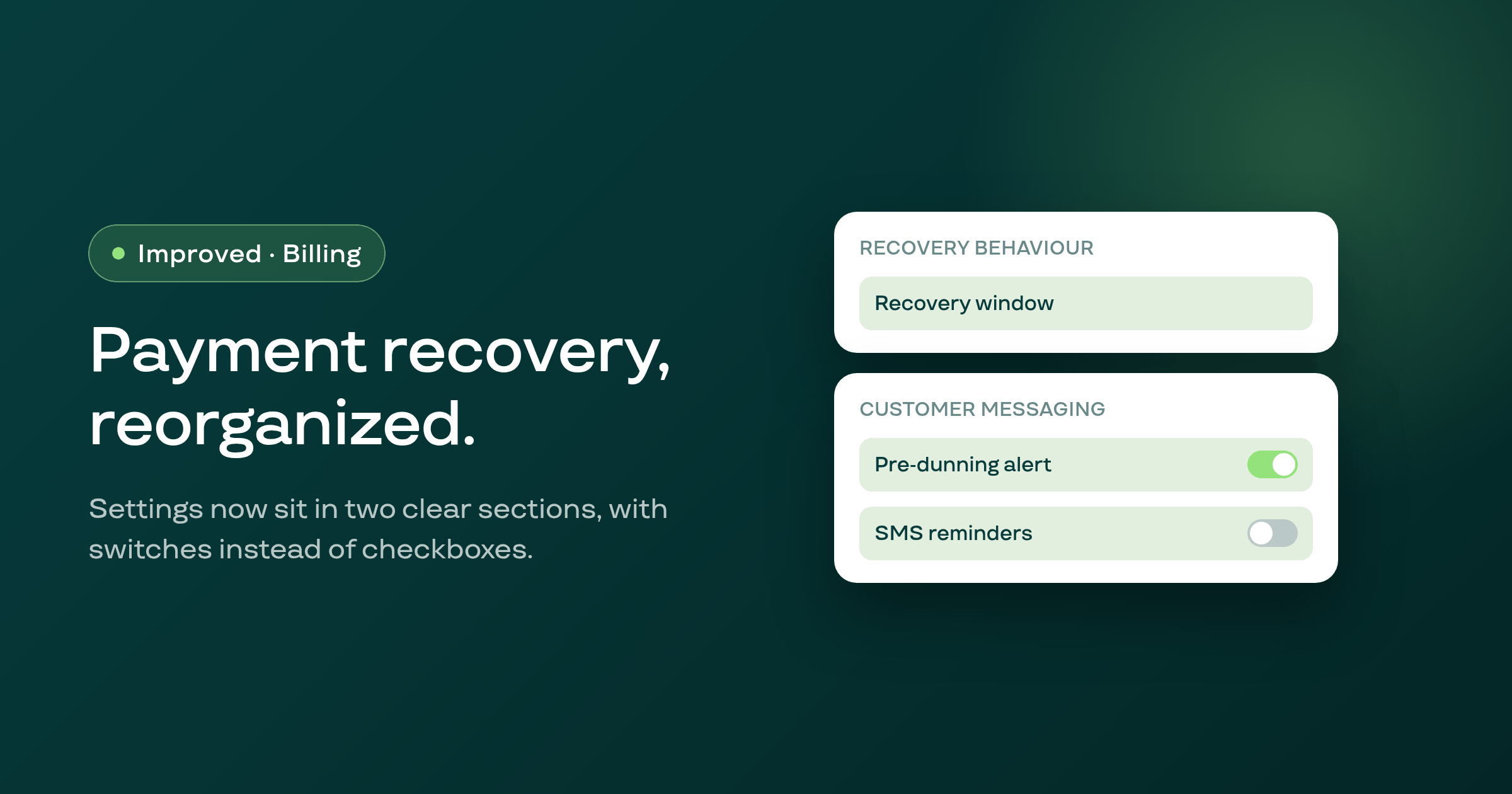
The Payment recovery settings page now groups its seven cards into two sections, Recovery behaviour and Customer messaging, with toggle switches in place of checkboxes and one menu per email template's actions.
A turn in the Subi AI Copilot that searched multiple times and found nothing was stacking a duplicate 'No results found' card for each search; it now shows the card once per turn.
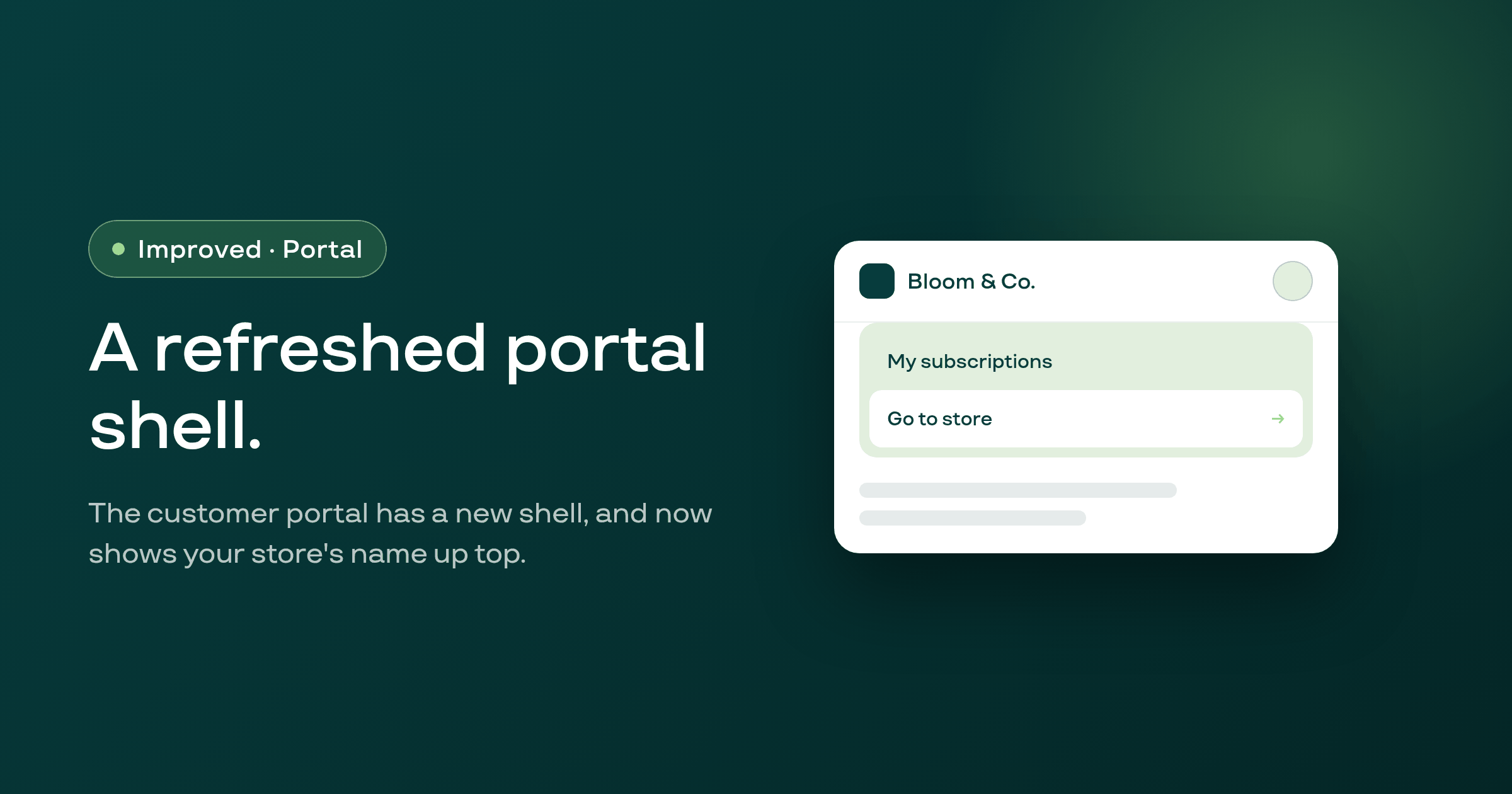
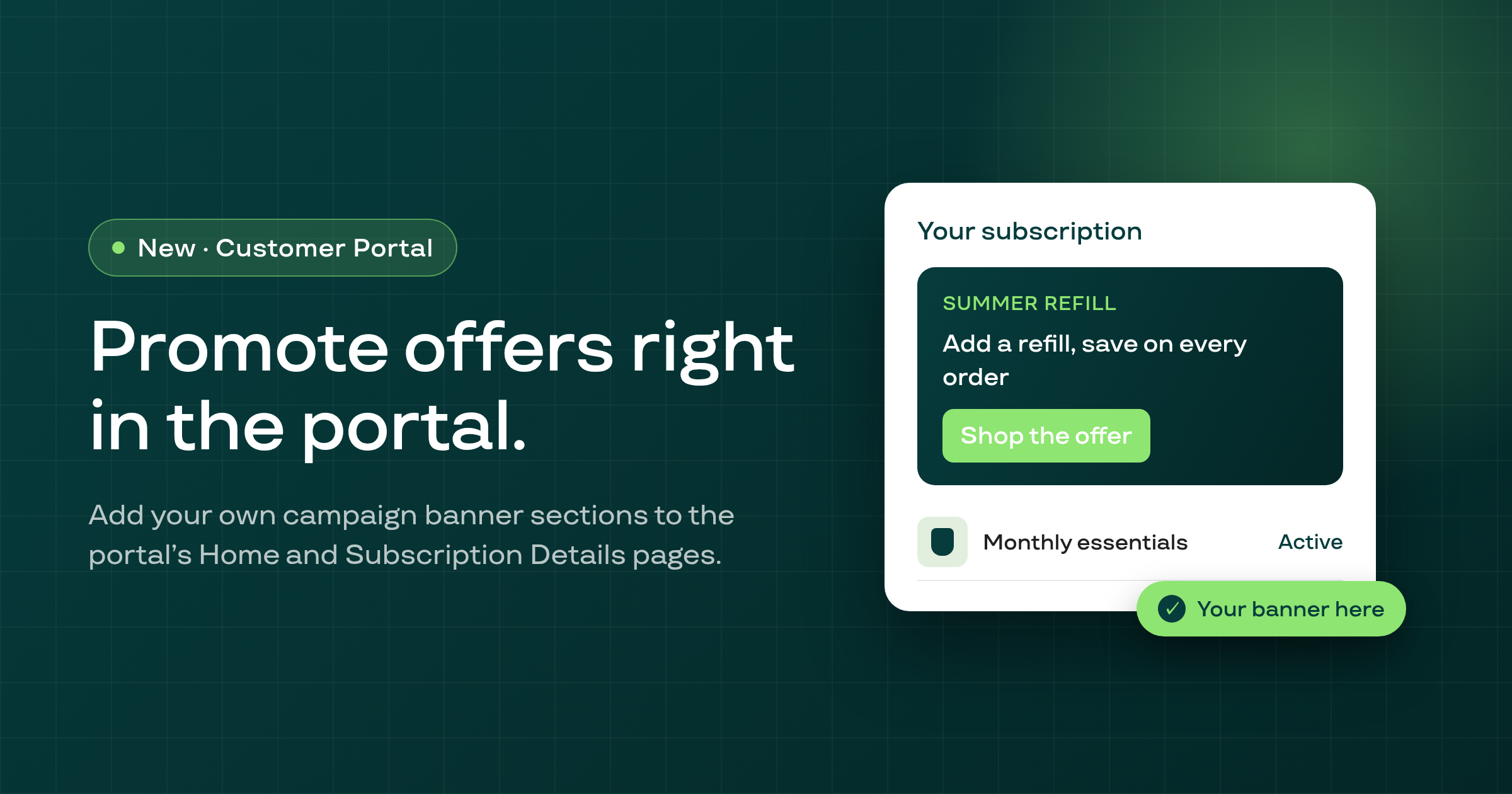
The customer portal's shell has been rebuilt with a new design system, and now shows your store's name in the top bar with a working link back to your storefront.
Editing a delivery address in the customer portal was silently converting a Local Delivery subscription to Shipping, which then failed to renew; the portal no longer makes that conversion, and Subi is restoring contracts already affected.
The Retry now button on a subscription's Payment Recovery panel was posting to a URL that 404'd before reaching the backend, so it never triggered a retry; it now reaches the correct route and completes the retry.
The customer search in manual subscription creation only searched customers Subi already knew about, so a Shopify customer who had never subscribed couldn't be found or given a contract; the search now also checks the shop's Shopify customer list.
The manual Create subscription page could show amounts in the wrong currency and the wrong product variant's price; every amount now renders in the shop's own currency, and the price shown and billed matches the variant you actually selected.
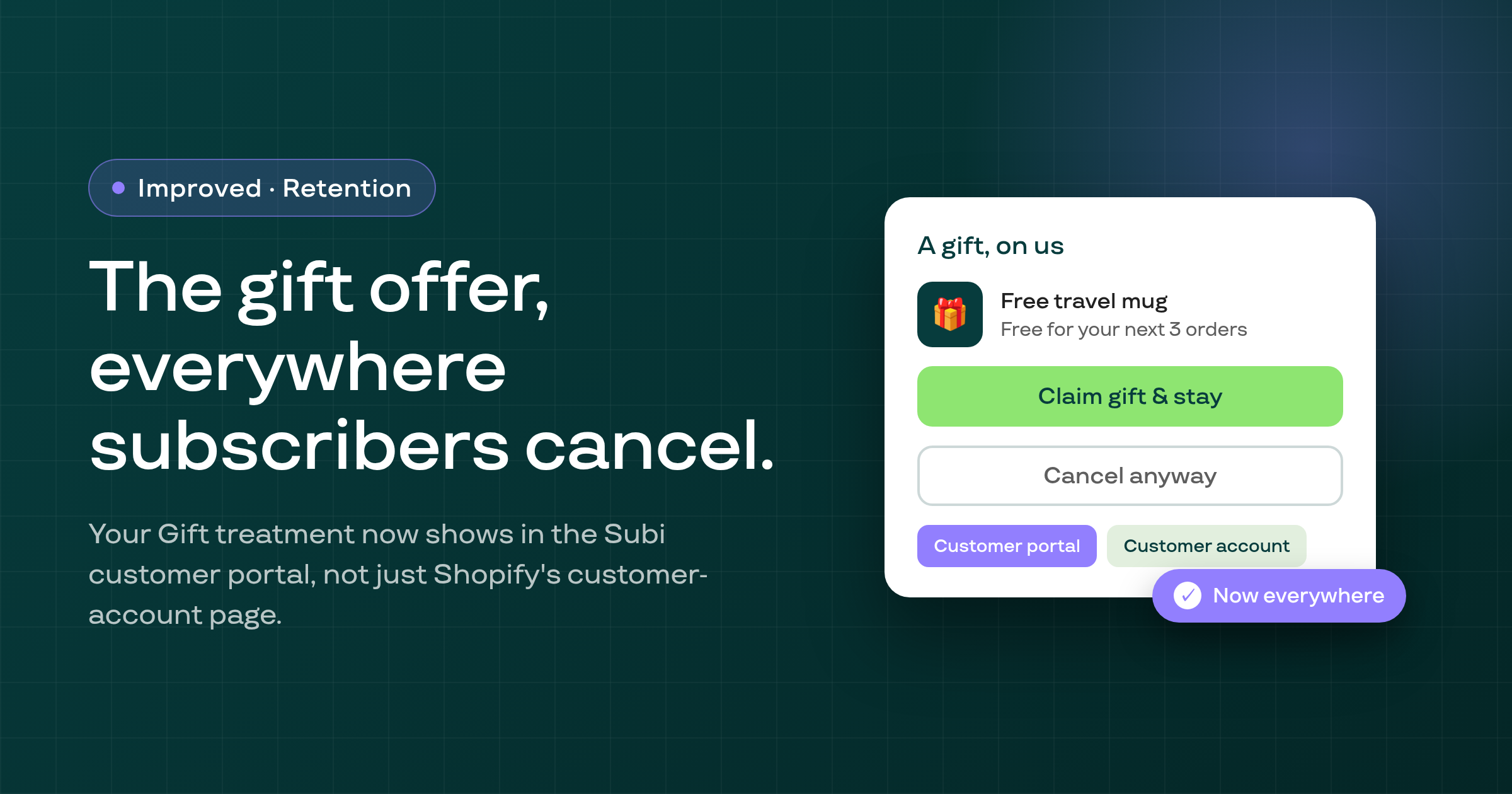
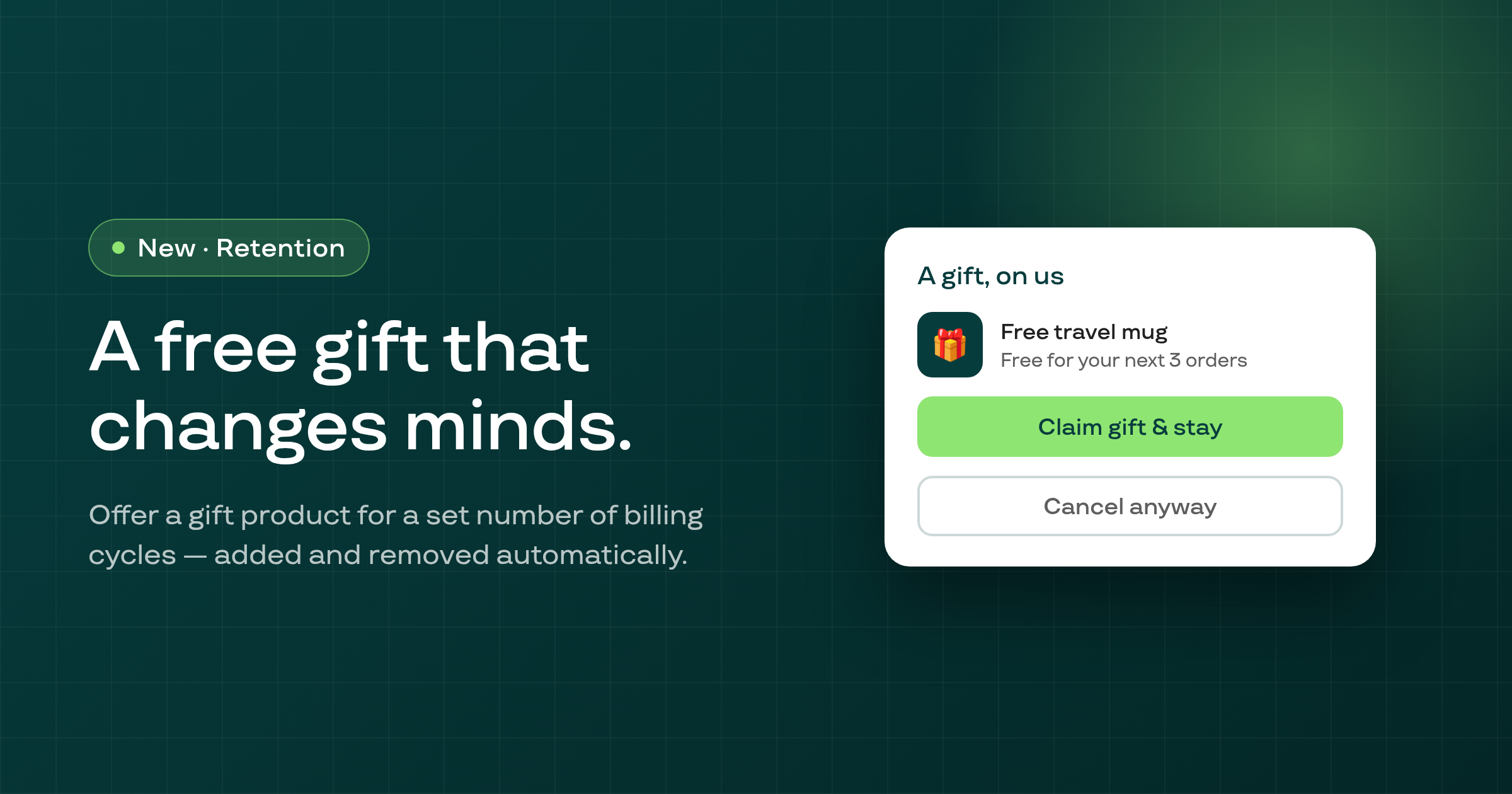
The Gift treatment in your cancellation flow, which offers a subscriber a free product to stay, now also renders in the Subi customer portal, not just Shopify's customer-account page.
Subi now rejects a broken SMS notification template at the moment you save or preview it, with a clear error, instead of silently saving it and letting it fail when your first customer message tries to send.
Subi no longer sends you back into the onboarding wizard's plan editor if the plan it remembers creating for you has since been deleted; the wizard now recognizes the plan is gone and lets you continue normally.
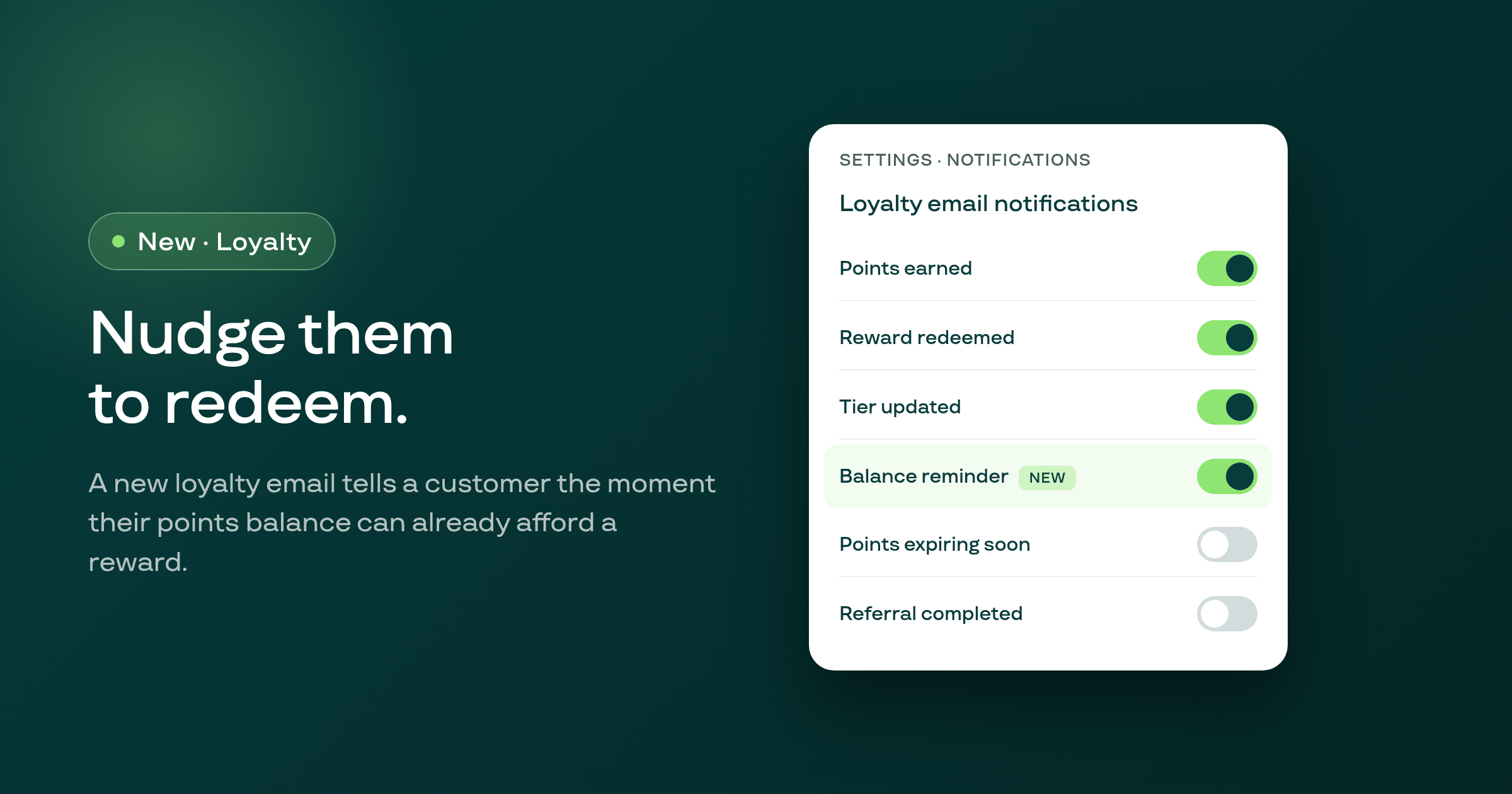
A new, opt-in loyalty email notification tells customers as soon as their points balance can already afford a reward, so points sit in accounts less and get redeemed more.
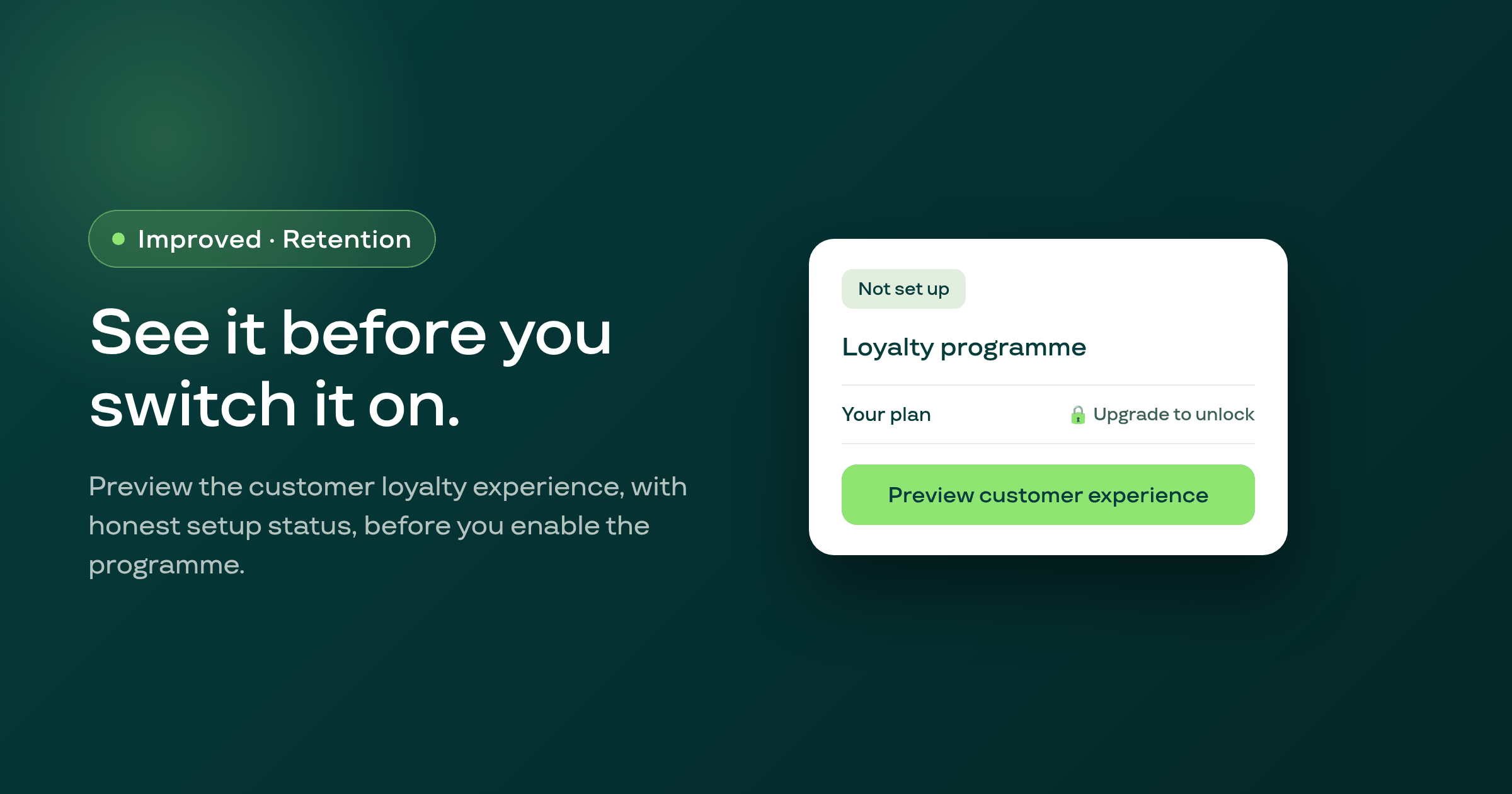
Merchants who haven't enabled the loyalty programme can now preview the customer-facing experience and see accurate setup status before deciding to turn it on.
A rare authentication hiccup inside the embedded Shopify admin could cause an in-progress edit, such as a plan change, to fail and be lost with no recovery; Subi now retries the request automatically.
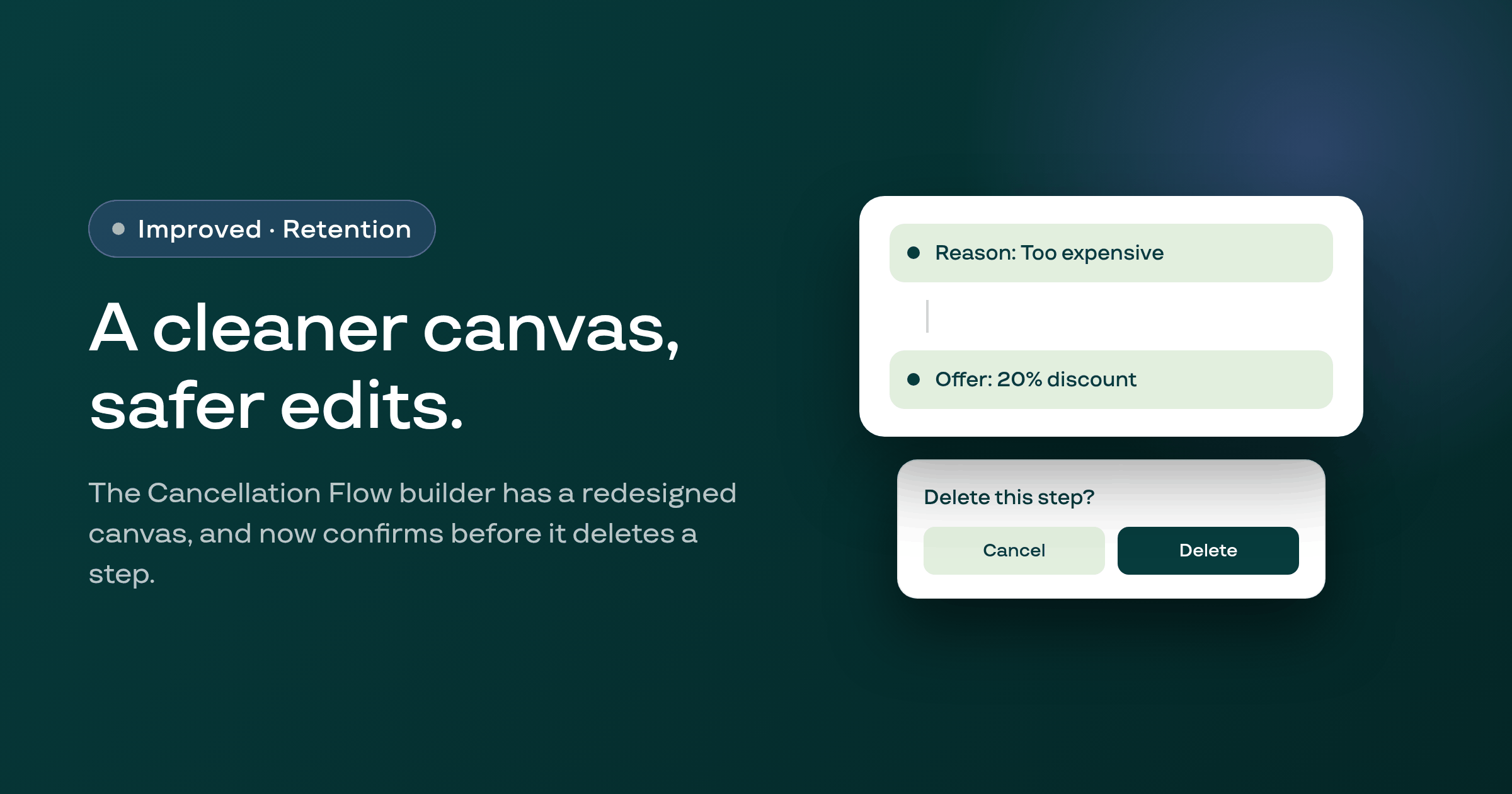
The Cancellation Flow builder's canvas has been rebuilt with a dedicated left-side edit pane, click-to-add connections, and a confirmation step before any deletion.
A Build-a-Box bug that could silently drop a product's discount to zero at checkout when its eligibility sync to Shopify failed is now fixed, with automatic retries and error surfacing instead of a silent failure.
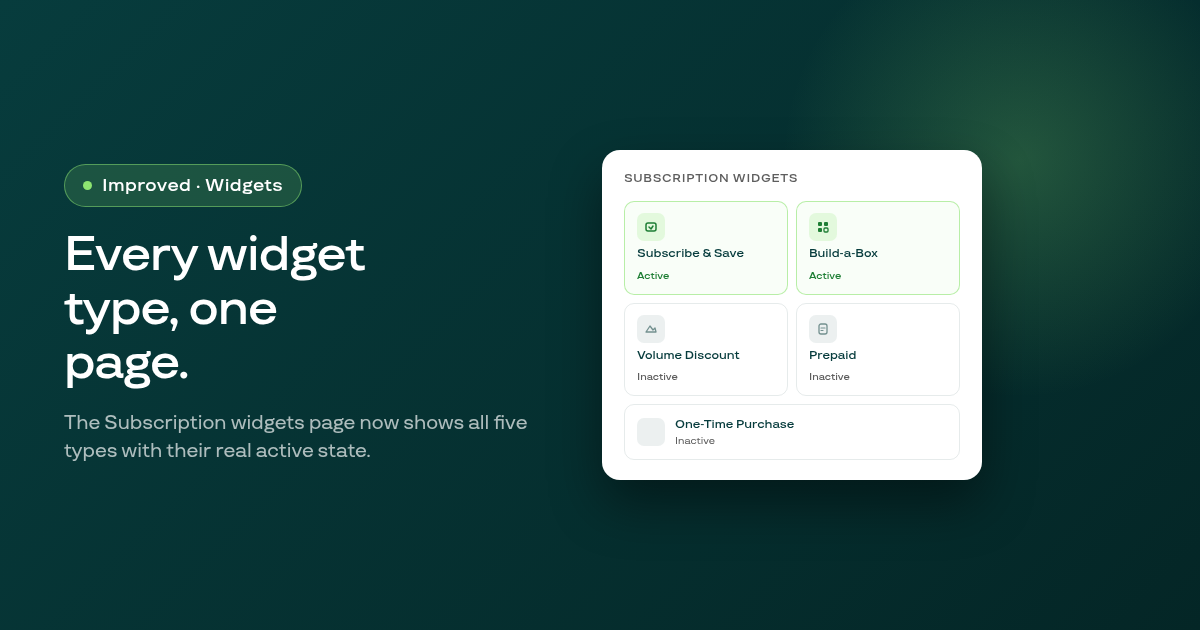
The Subscription widgets page has been rebuilt: all five widget types appear on one screen with their real active/inactive state, the type switcher inside the editor now works correctly, and the visual design has been updated to match the current design system.
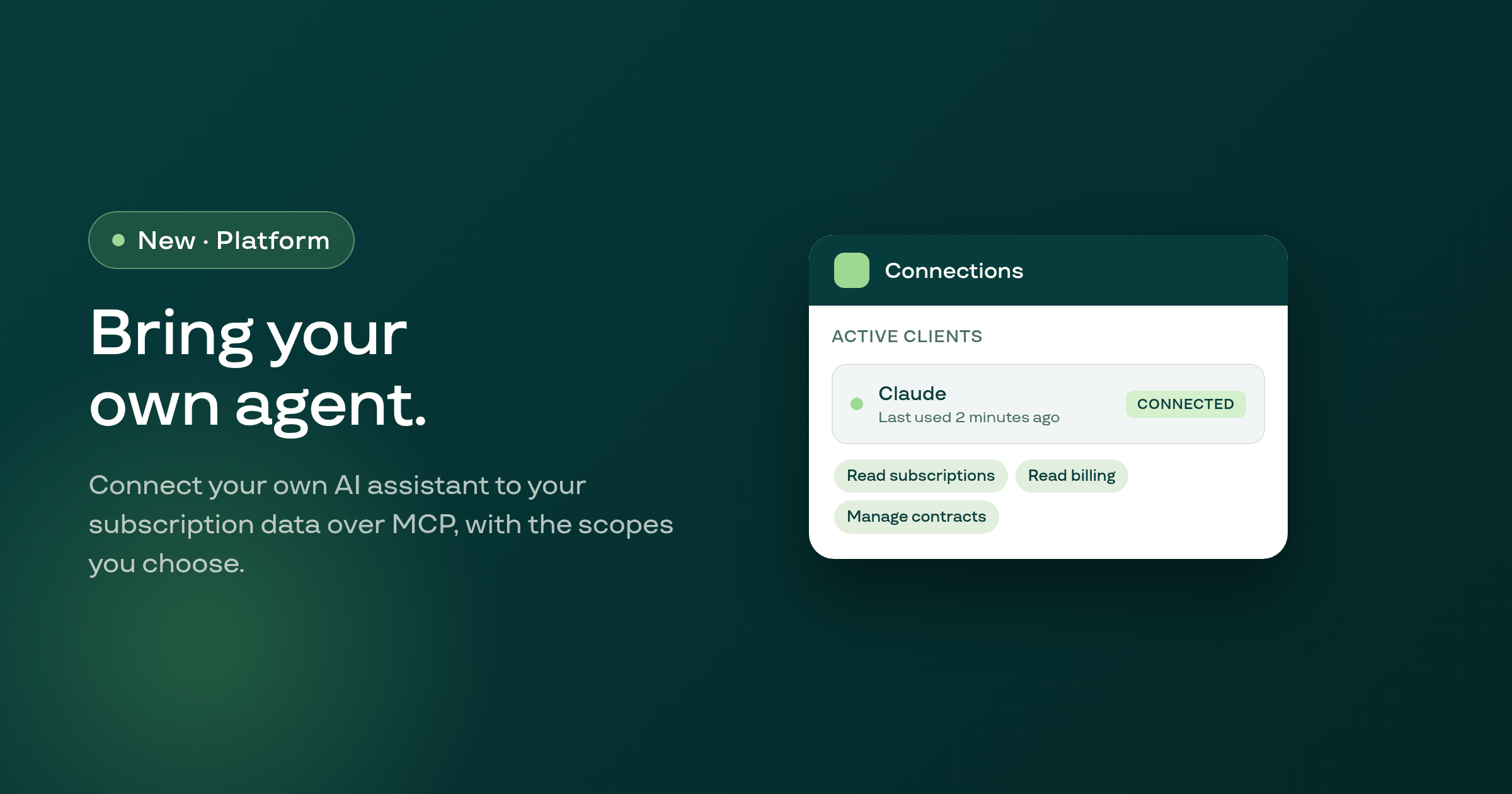
Subi now runs a remote MCP server, so your own AI assistant can read and act on your subscription data with scopes you choose, a connections list you control, and an activity log of every call it makes.
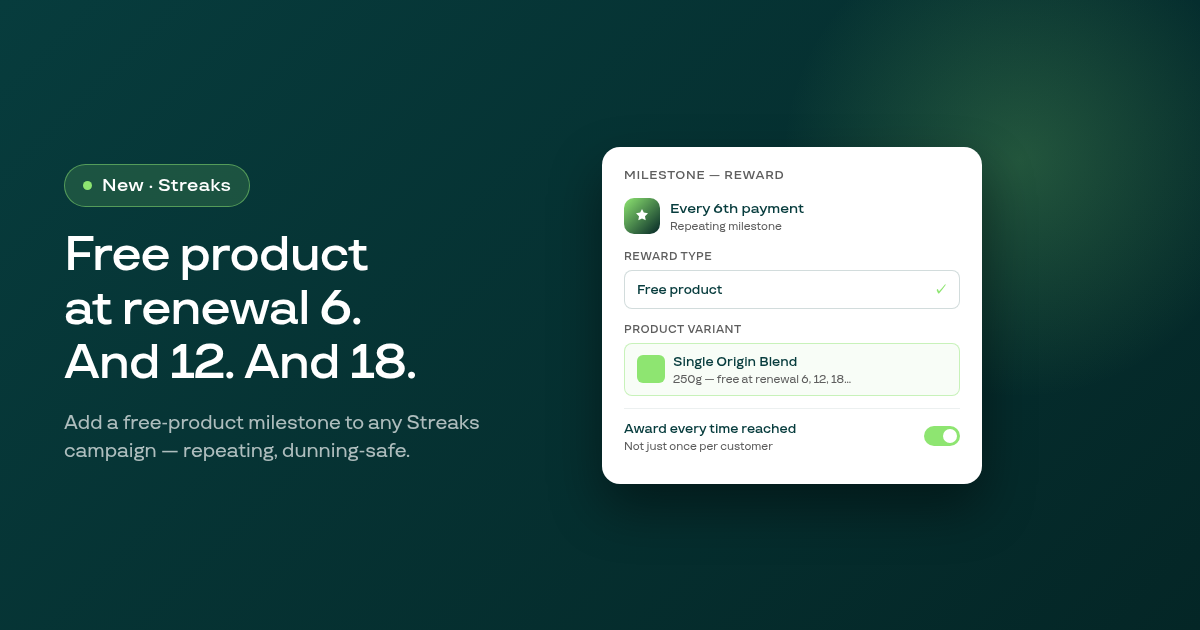
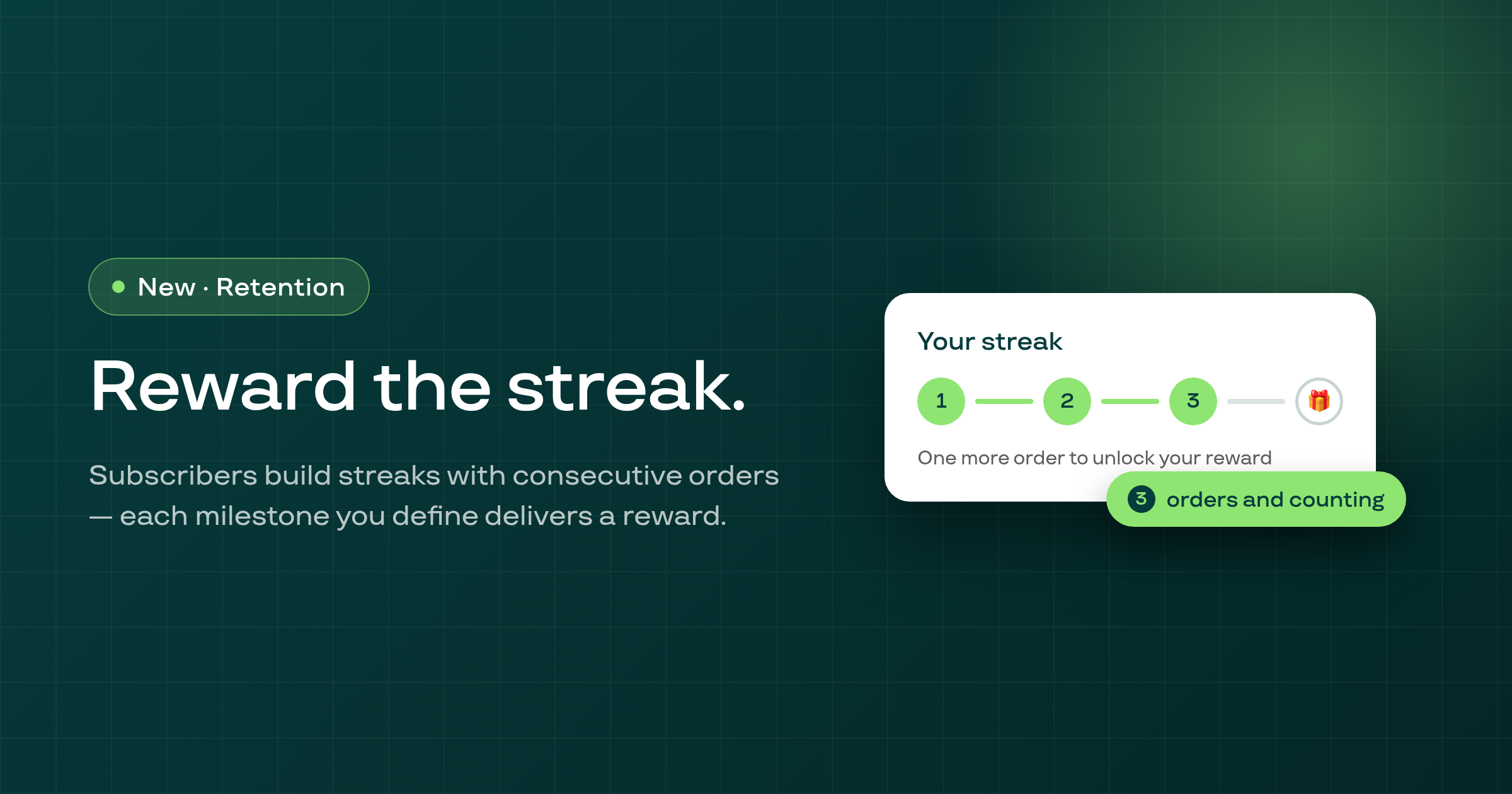
Streaks now supports a free-product reward type: merchants can set a subscription milestone that automatically adds a specific product to the subscriber's next order at no charge, repeating at every Nth renewal.
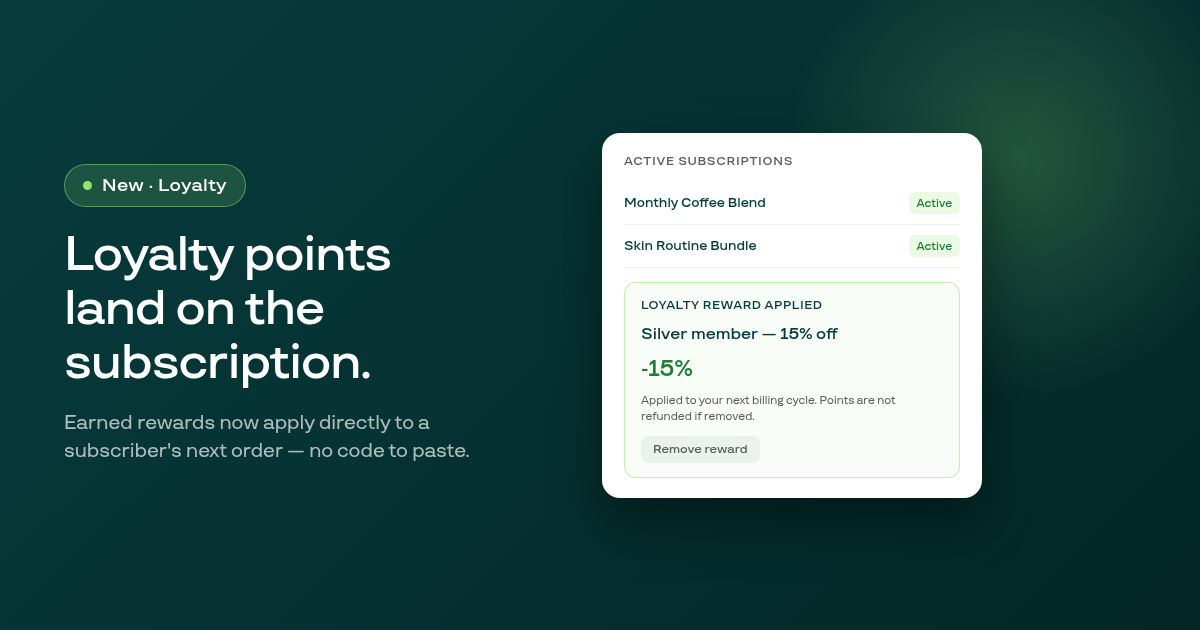
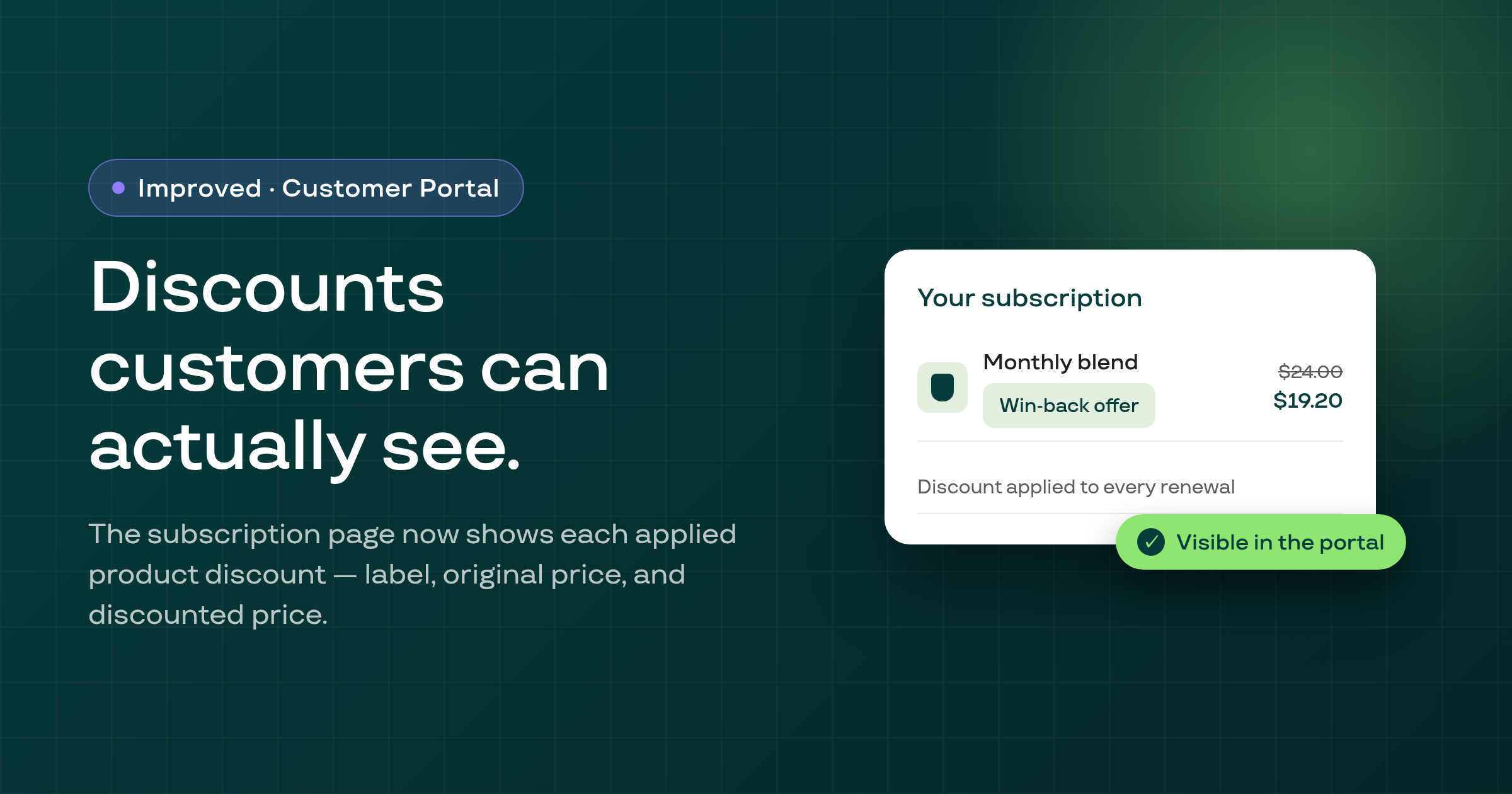
Customers who redeem loyalty points can now have the resulting reward applied directly to their subscription contract, with the discount visible in the customer portal and removable at any time.
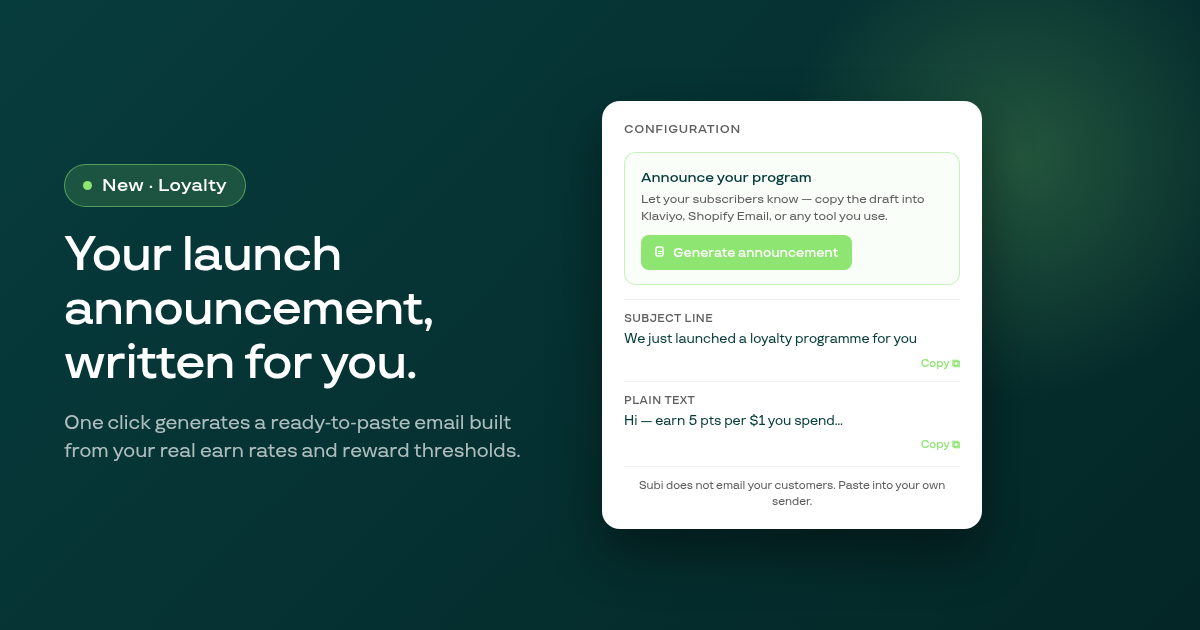
A new Announce your program card in the Loyalty configuration tab generates a ready-to-send email — subject, plain text, and HTML body — built from your actual programme data, for you to paste into Klaviyo, Shopify Email, or any other tool.
Pressing Save on a subscription contract's product details modal silently did nothing when any line carried a 100% discount; the save now works correctly for free gift items and any fully discounted line.
Subscription contracts configured to end after a set number of billing cycles could continue charging past their limit; cycle counting now reads from a dedicated table that tracks each contract's own orders correctly.
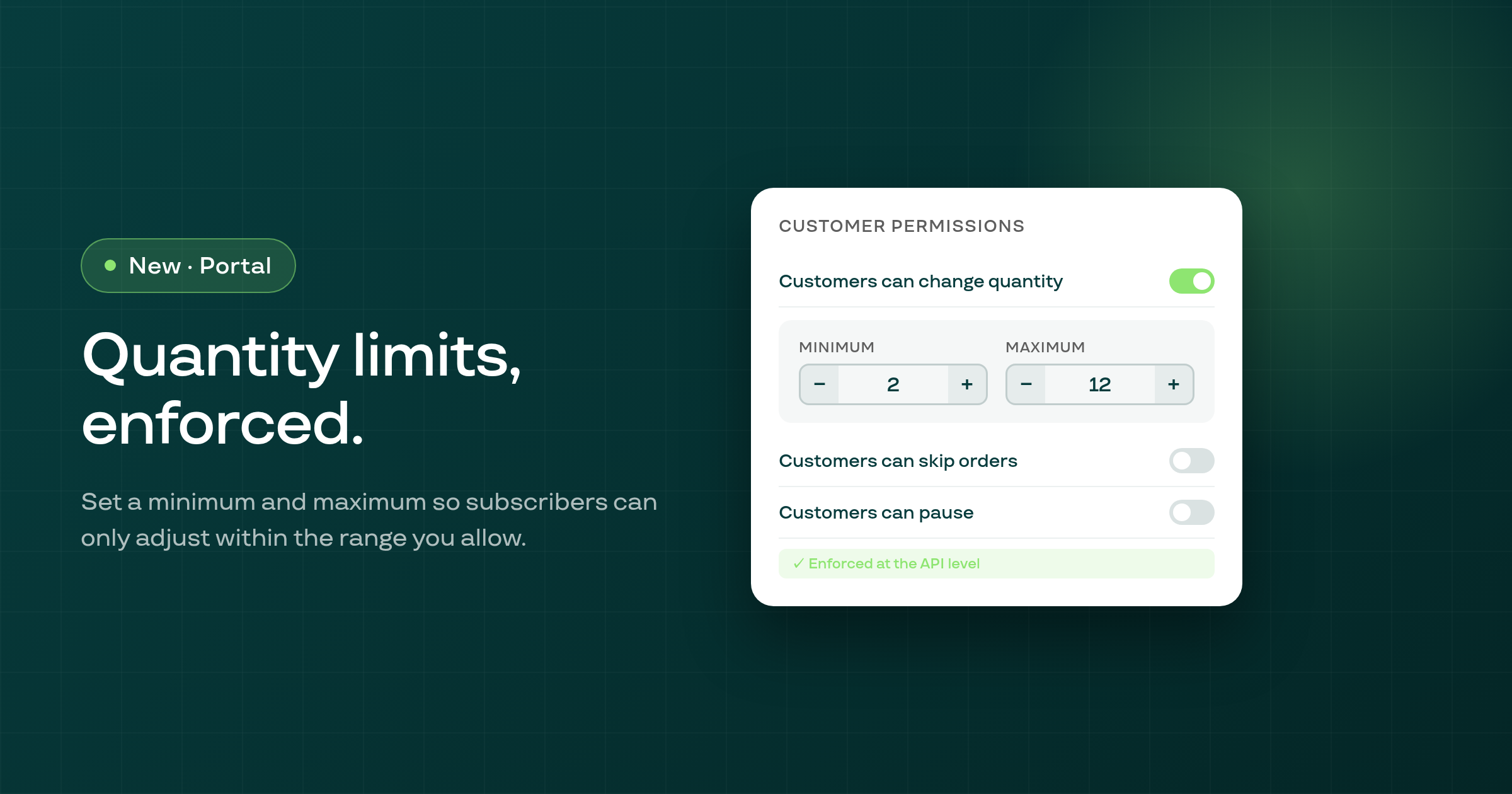
Merchants can now set a minimum and optional maximum quantity for each subscription item, and the customer portal enforces those bounds on every quantity edit.
Membership shops with a large number of plans could silently lose their free-trial discount for all plans at once; this is fixed by trimming the configuration payload to include only plans that have a free trial.
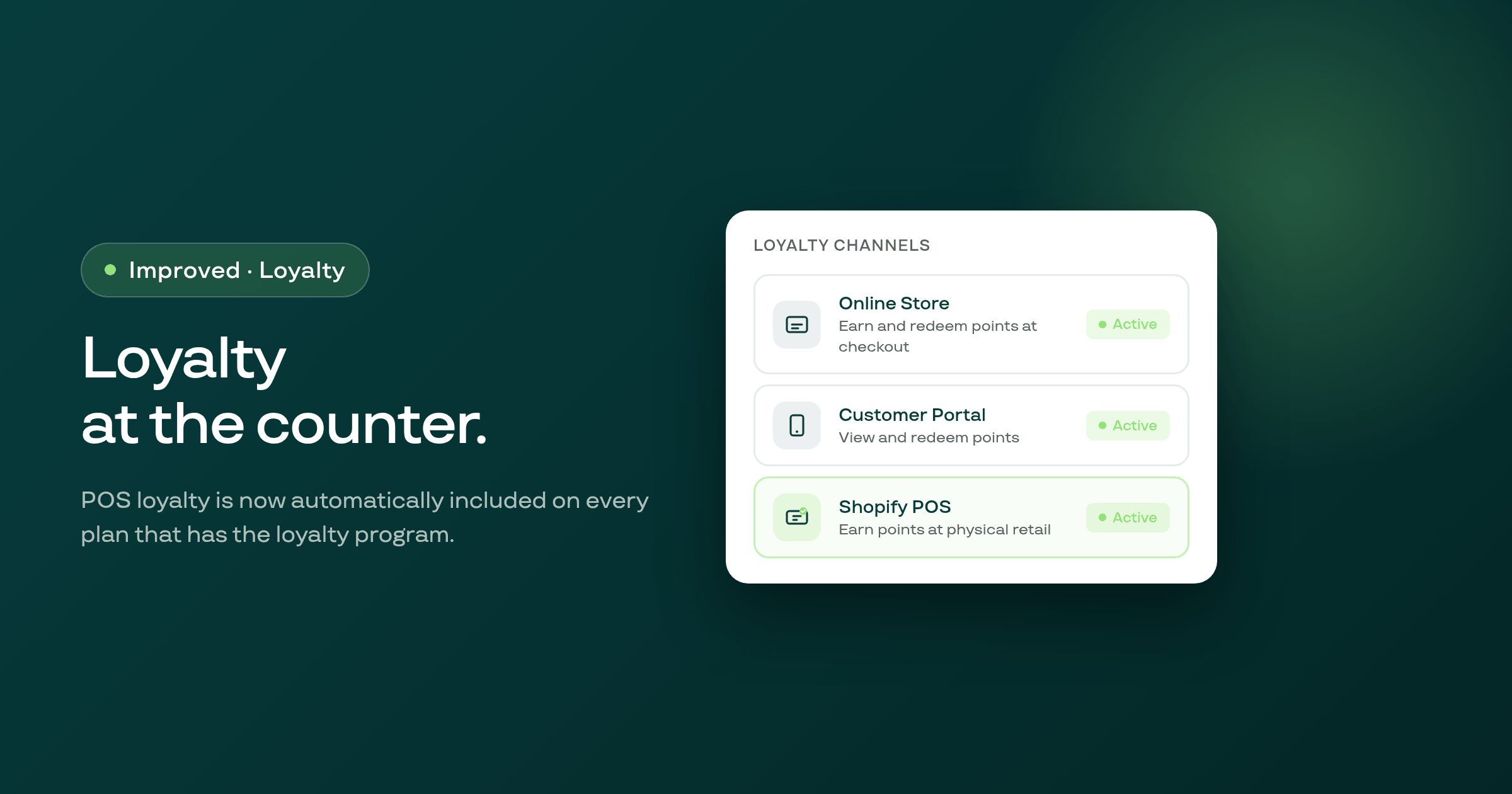
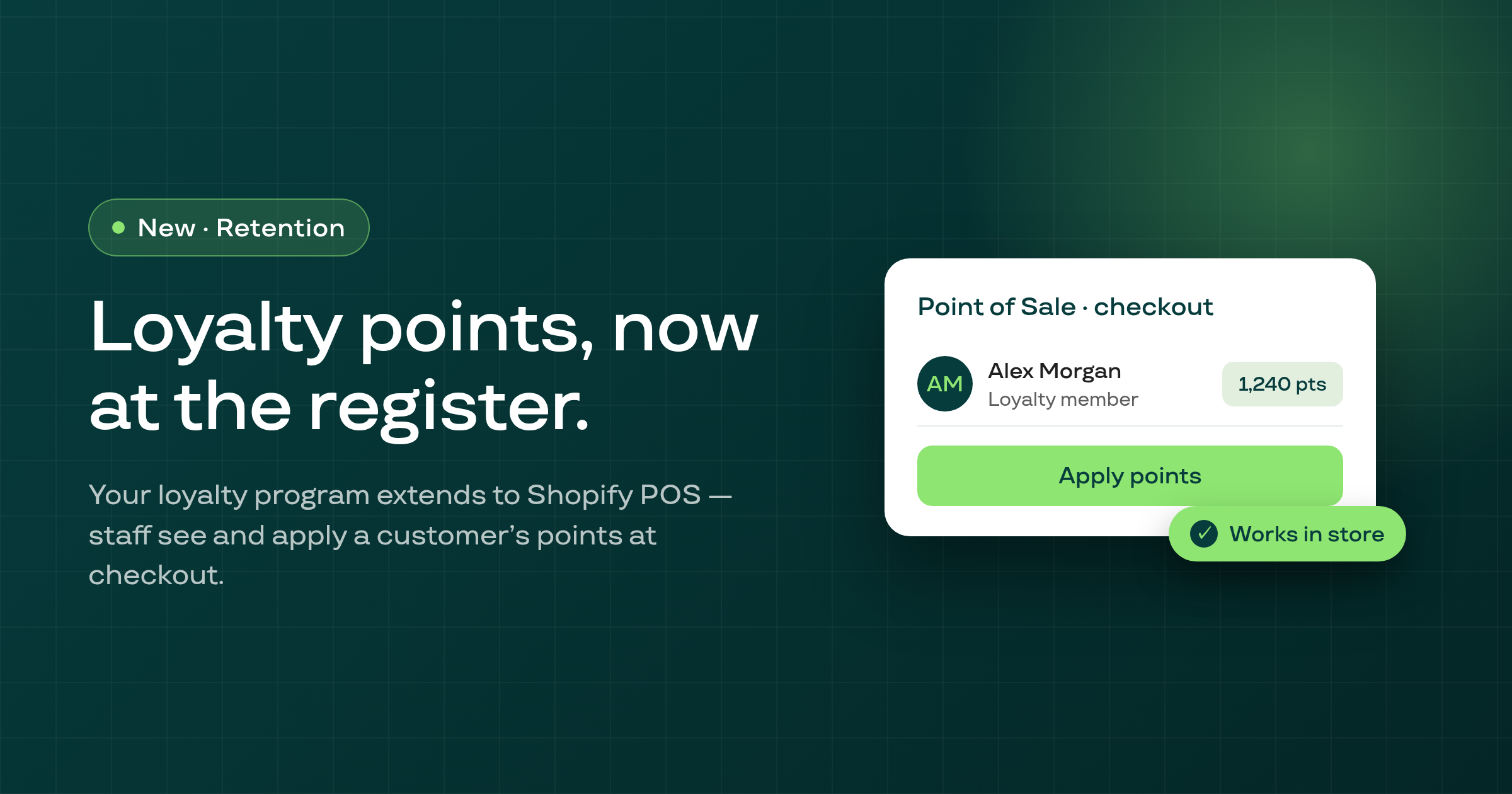
Shopify POS loyalty is now available to every merchant who has the loyalty program active, and a new card on the loyalty page confirms whether the POS smart-grid tile is live.
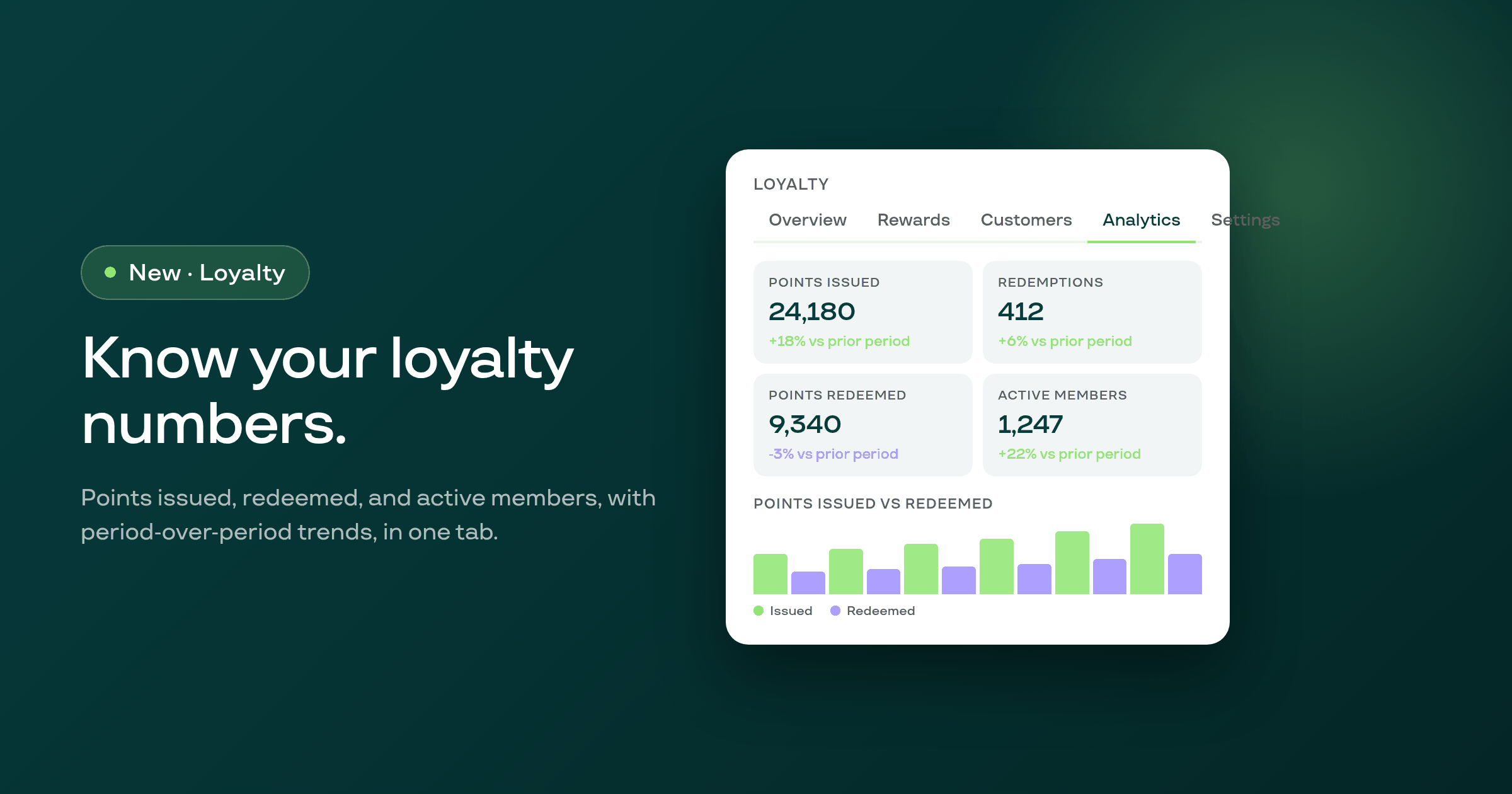
A new Analytics tab on the loyalty page shows four KPIs with period-over-period deltas, a points-issued-versus-redeemed chart, and a redemptions breakdown by reward type.
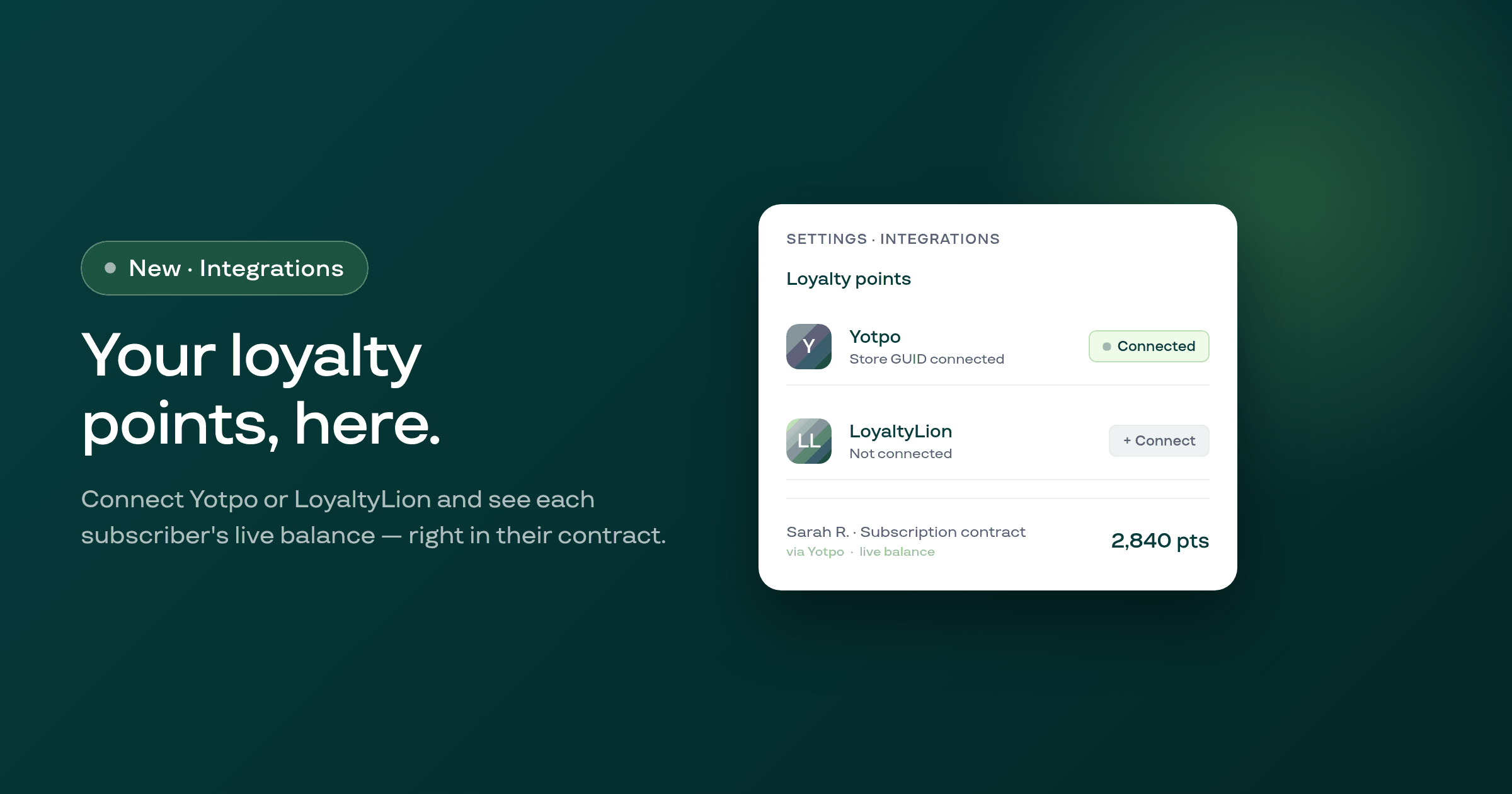
Merchants can now connect their existing Yotpo or LoyaltyLion account in Settings, and Subi will read each subscriber's live points balance from it and display it on the subscription contract page.
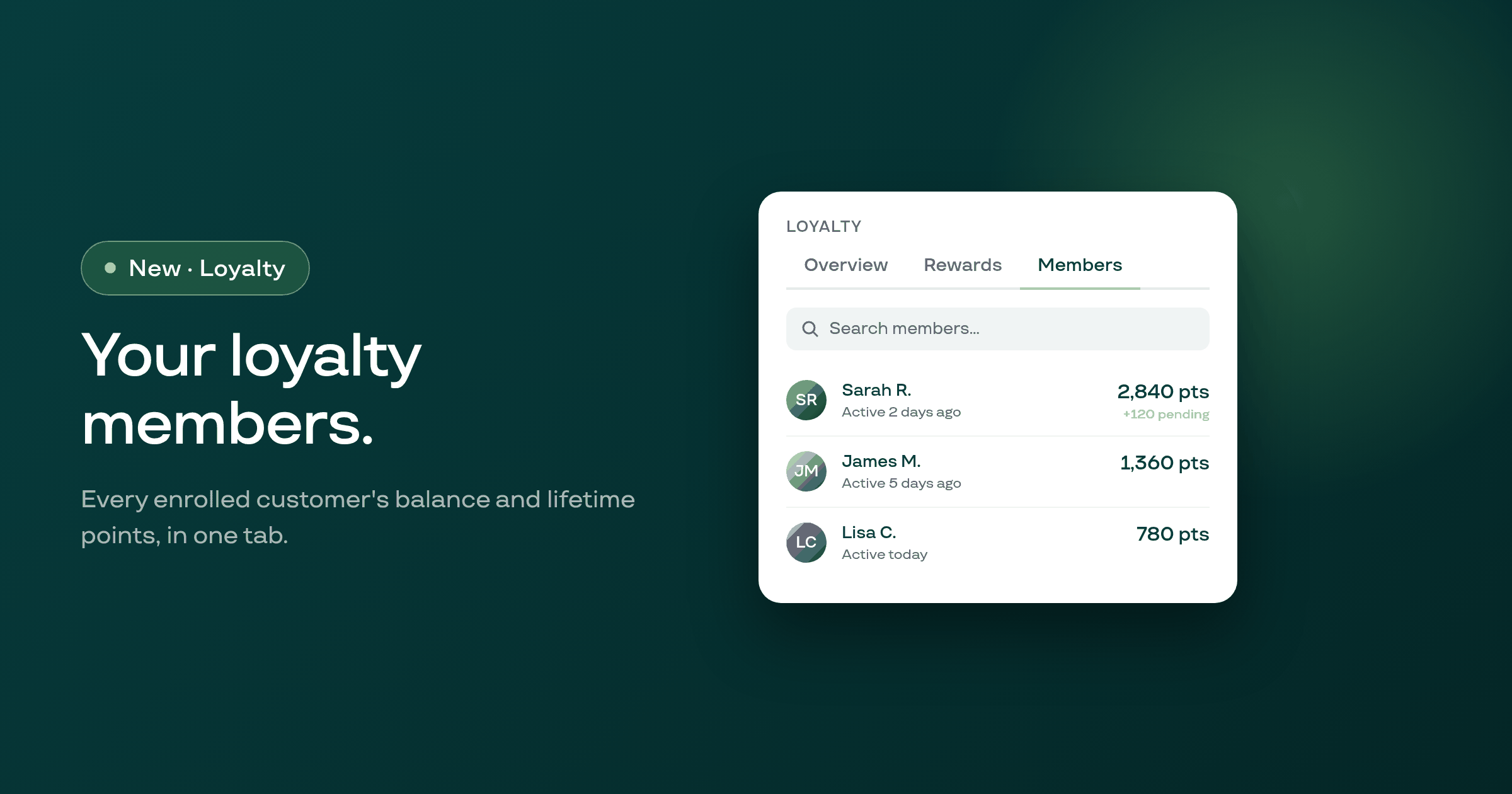
A new Members tab on the Loyalty page lists every enrolled customer with their current points balance, pending points, lifetime earned, and date of last activity.
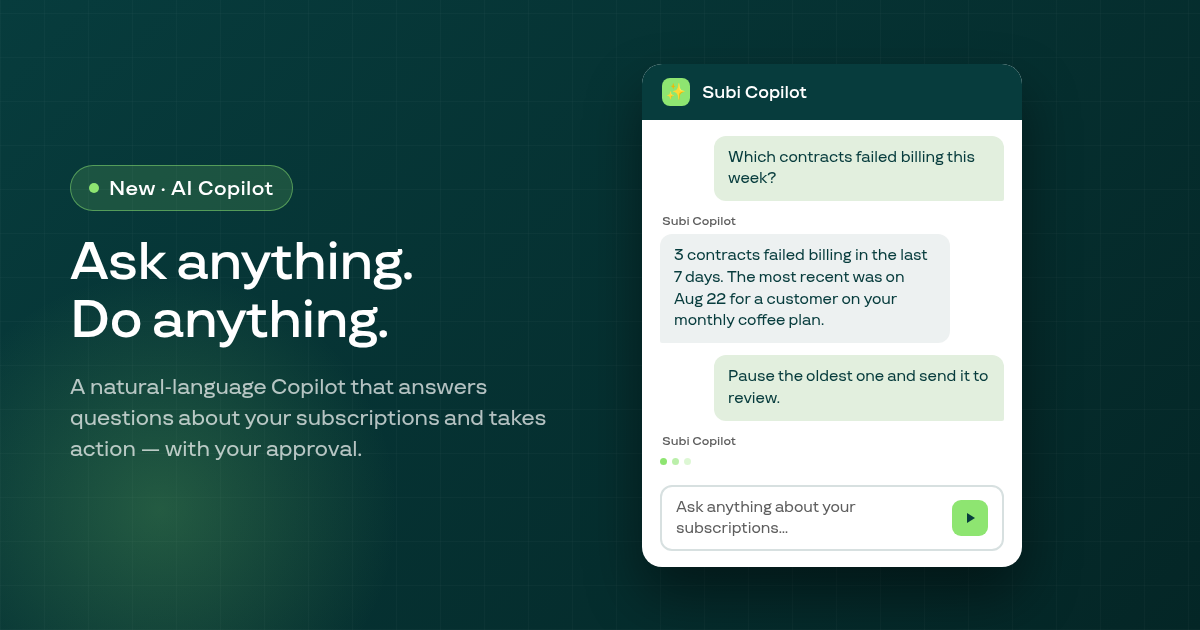
The Subi AI Copilot is a new overlay panel that answers plain-English questions about your subscriptions and can carry out admin actions on your behalf, with your approval before anything changes.
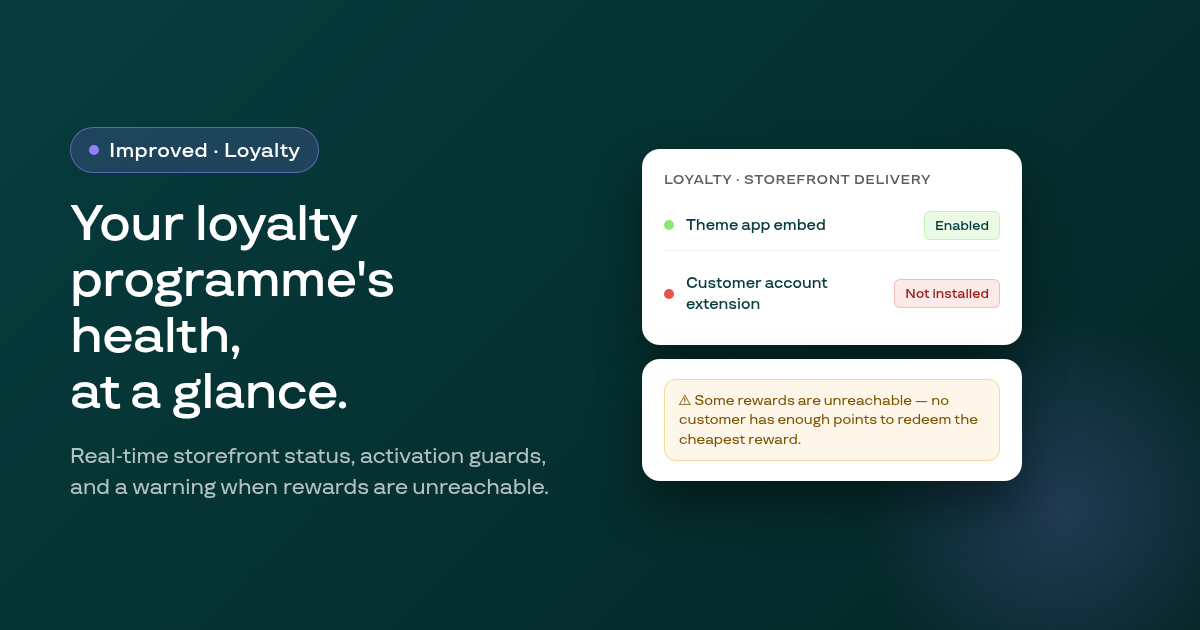
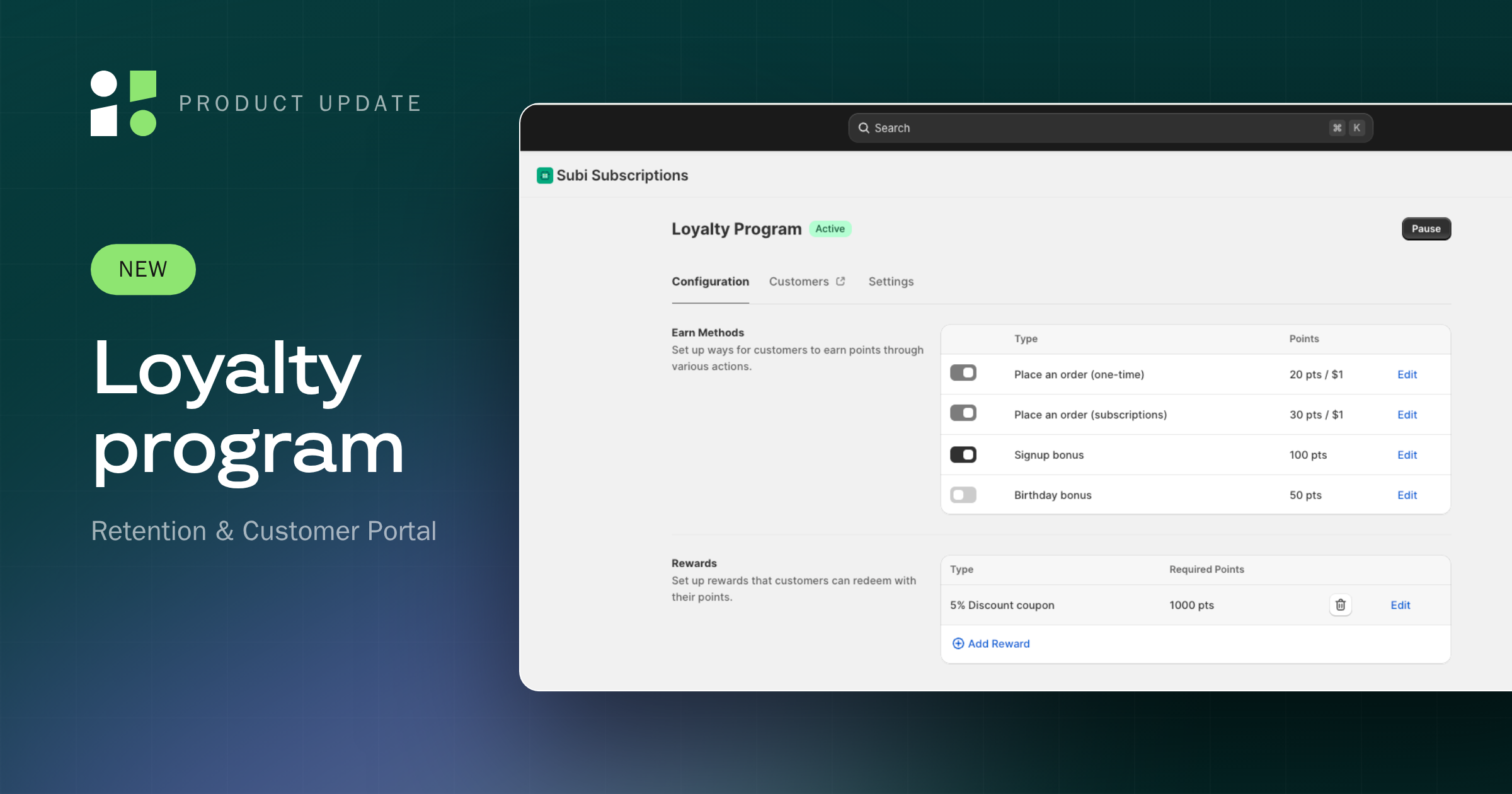
The loyalty programme page now shows real-time storefront delivery status, warns you when active rewards are unreachable by any customer, blocks activation of programmes with no reward methods, and captures your reason when you pause.
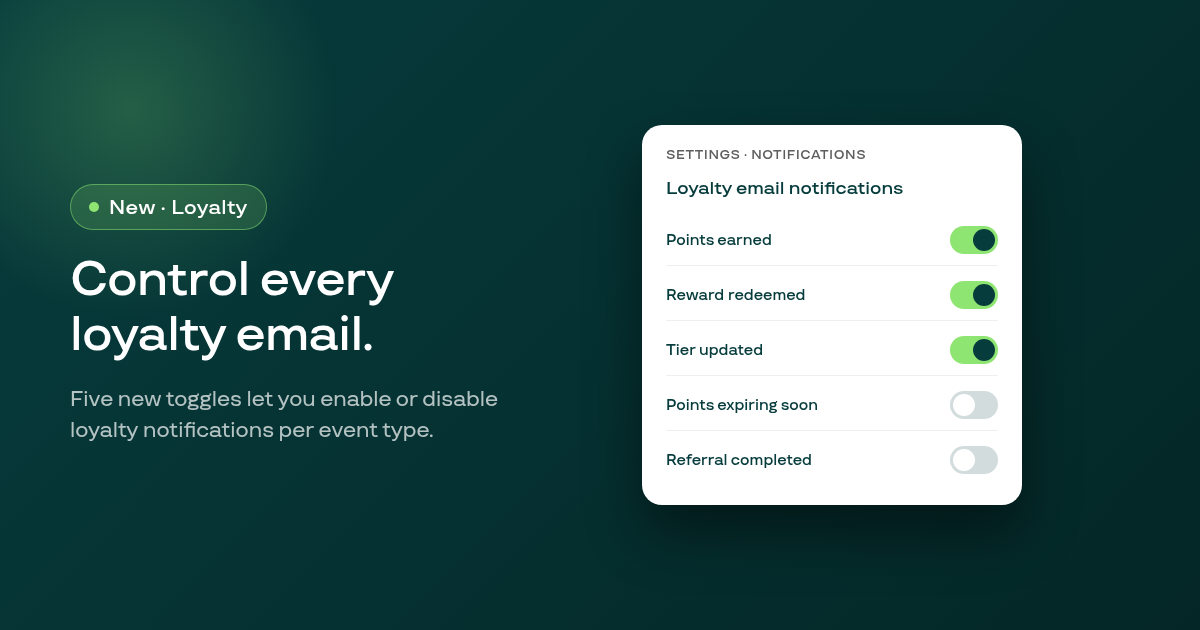
Five new email notification toggles in Settings let you enable or disable each loyalty email type independently: points earned, reward redeemed, tier updated, points expiring soon, and referral completed.
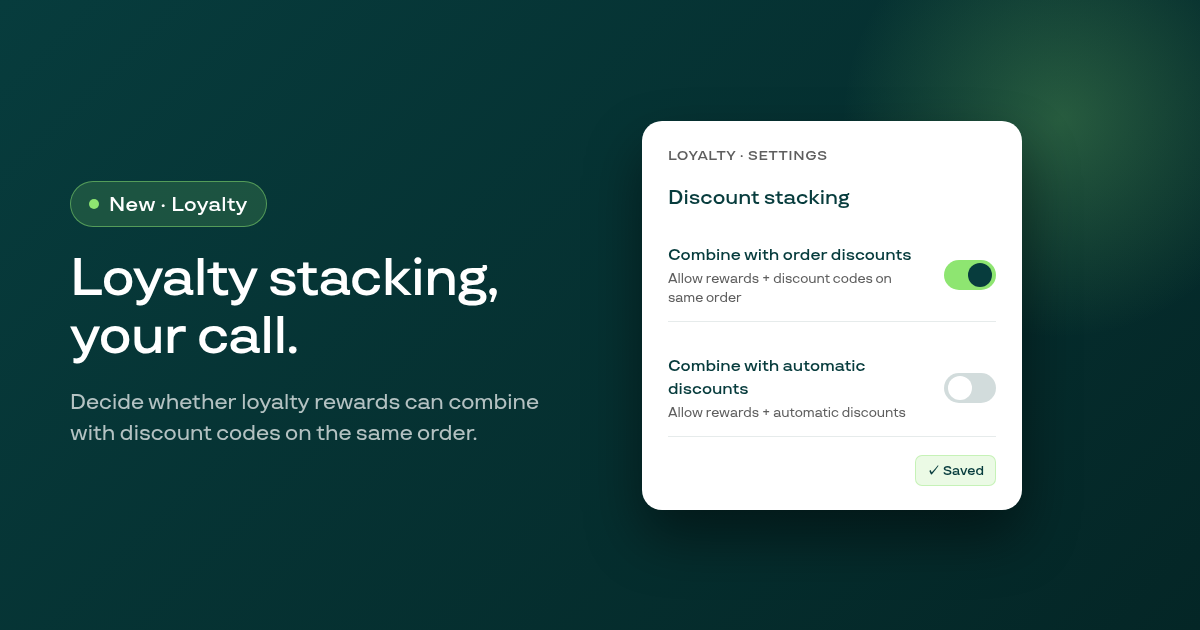
Two new Discount stacking controls in Loyalty Settings let you decide separately whether loyalty reward redemptions can combine with order discount codes and with automatic discounts.
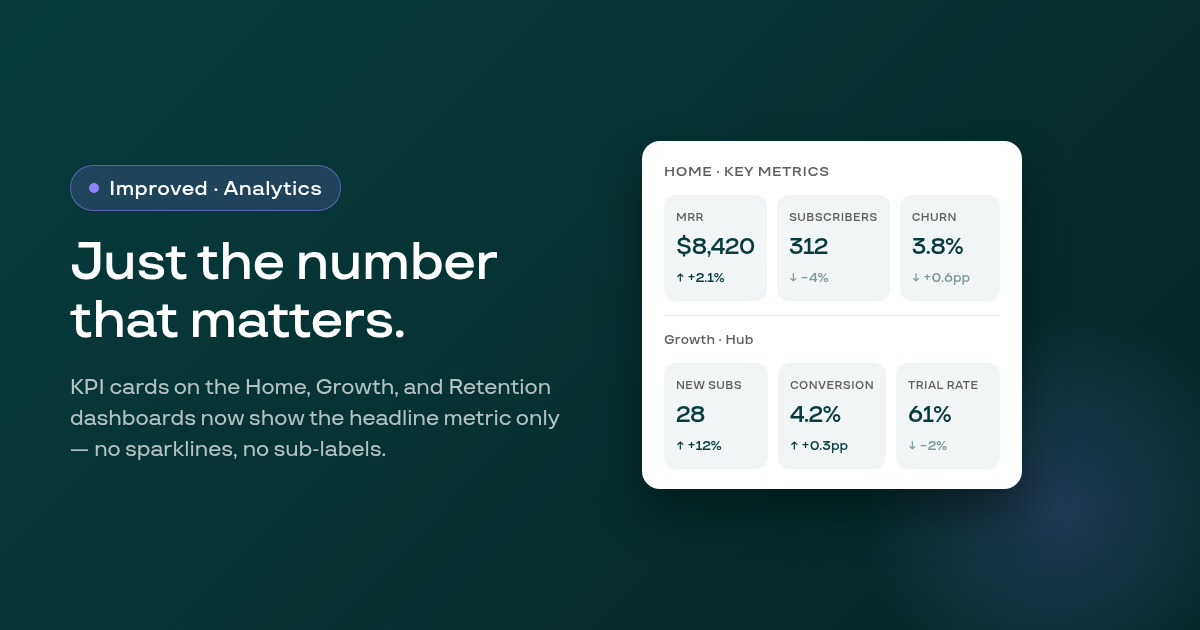
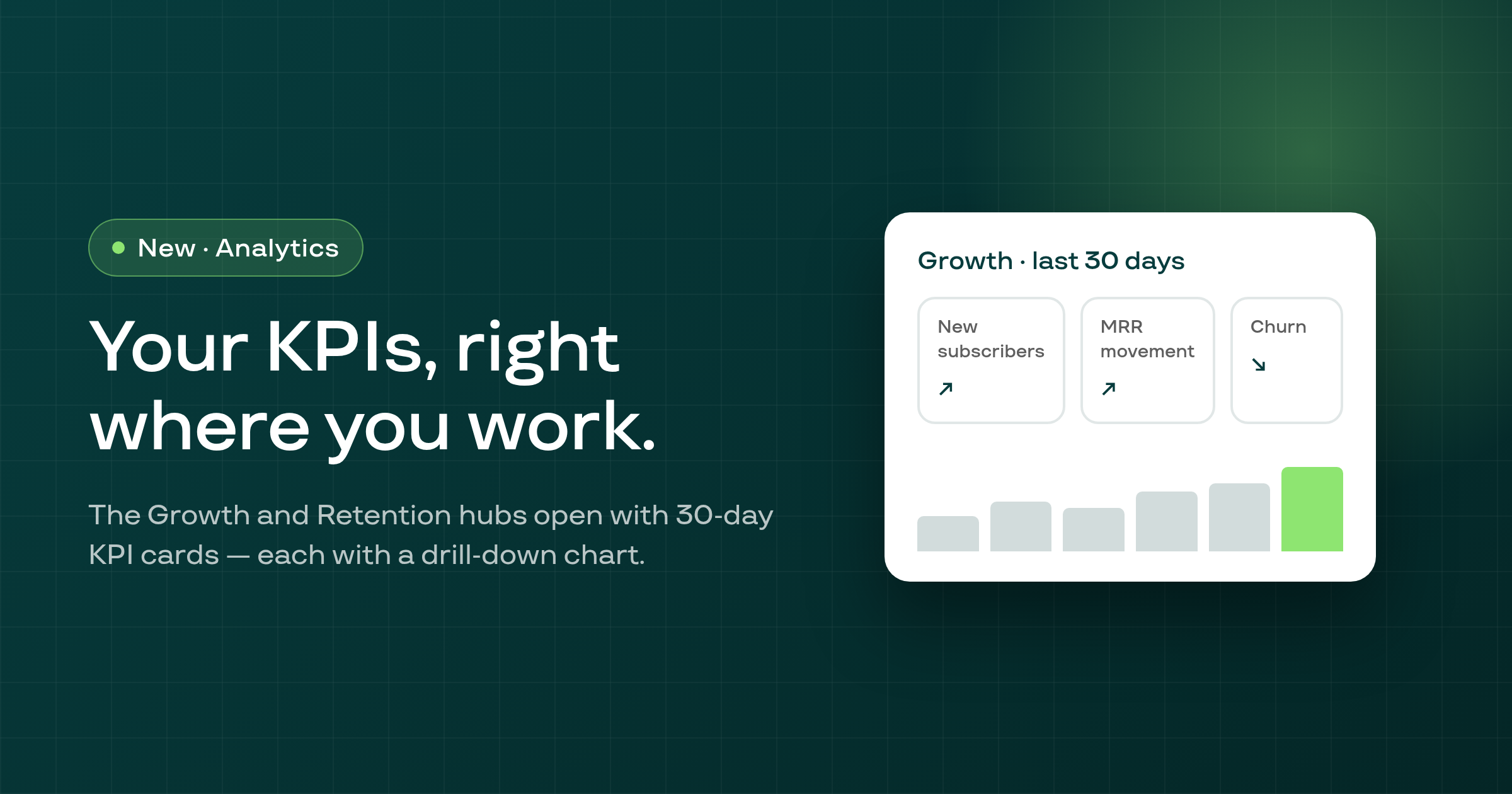
KPI cards on the Home page and the Growth and Retention hub strips have had their mini sparklines, sub-labels, and footer text removed, leaving a cleaner, more readable layout focused on the headline number.
Dismissing the catalog-sync lock notice on a selling plan's product selection card was being stored forever, so merchants who clicked away once could never see the product selection again even after the sync completed.
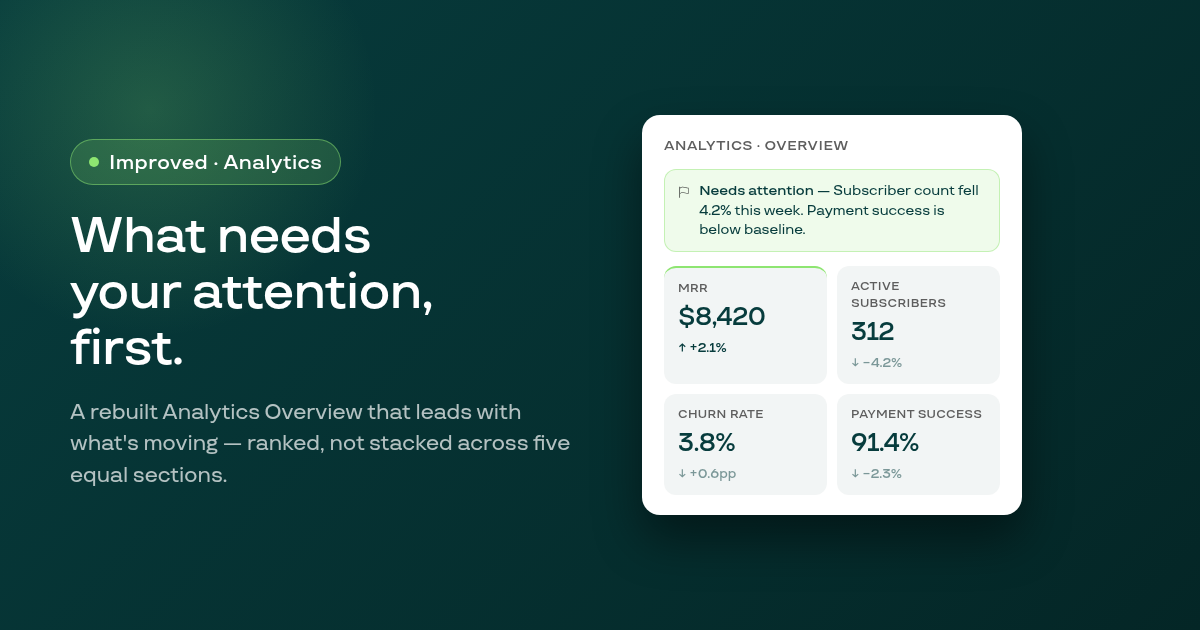
The Analytics Overview has been rebuilt with a needs-attention banner at the top, followed by four KPI cards ranked by priority, replacing the five equal stacked sections of the previous layout.
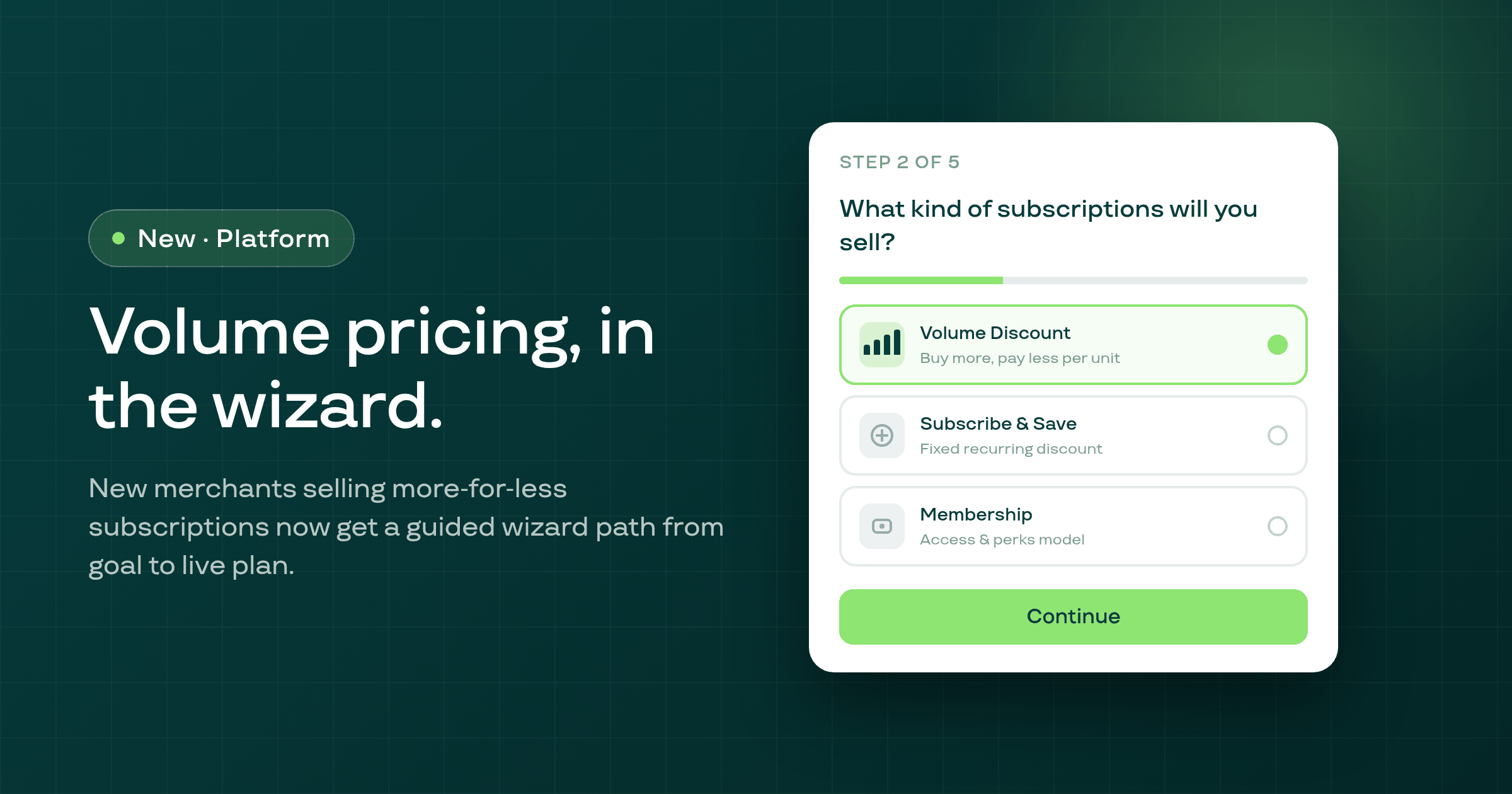
New merchants who want tiered volume-discount subscriptions can now set up their first plan directly from the Subi onboarding wizard, with a guided path from goal selection to a live selling plan.
Revenue and money metrics in Analytics charts now display with currency symbols on axes and tooltips, matching the formatted figures already shown in table cells and stat cards.
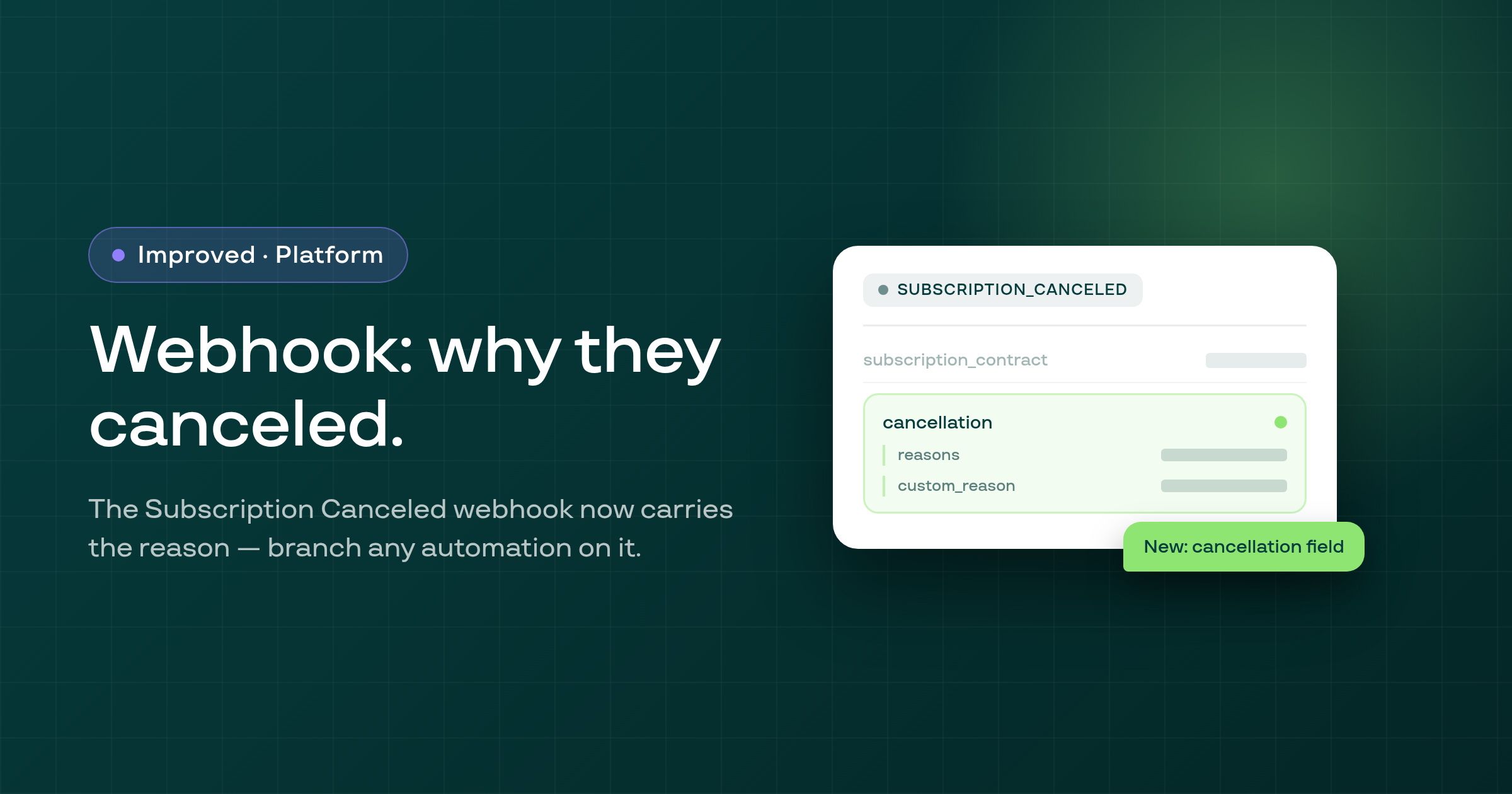
The Subscription Canceled webhook payload now carries a cancellation object — the reason the subscriber selected and any free text they typed — so your automations can branch on why someone left without a support lookup.
A race condition at checkout could silently prevent a new subscription contract from being created — the subscriber paid, but Subi never recorded their subscription. This is now fixed.
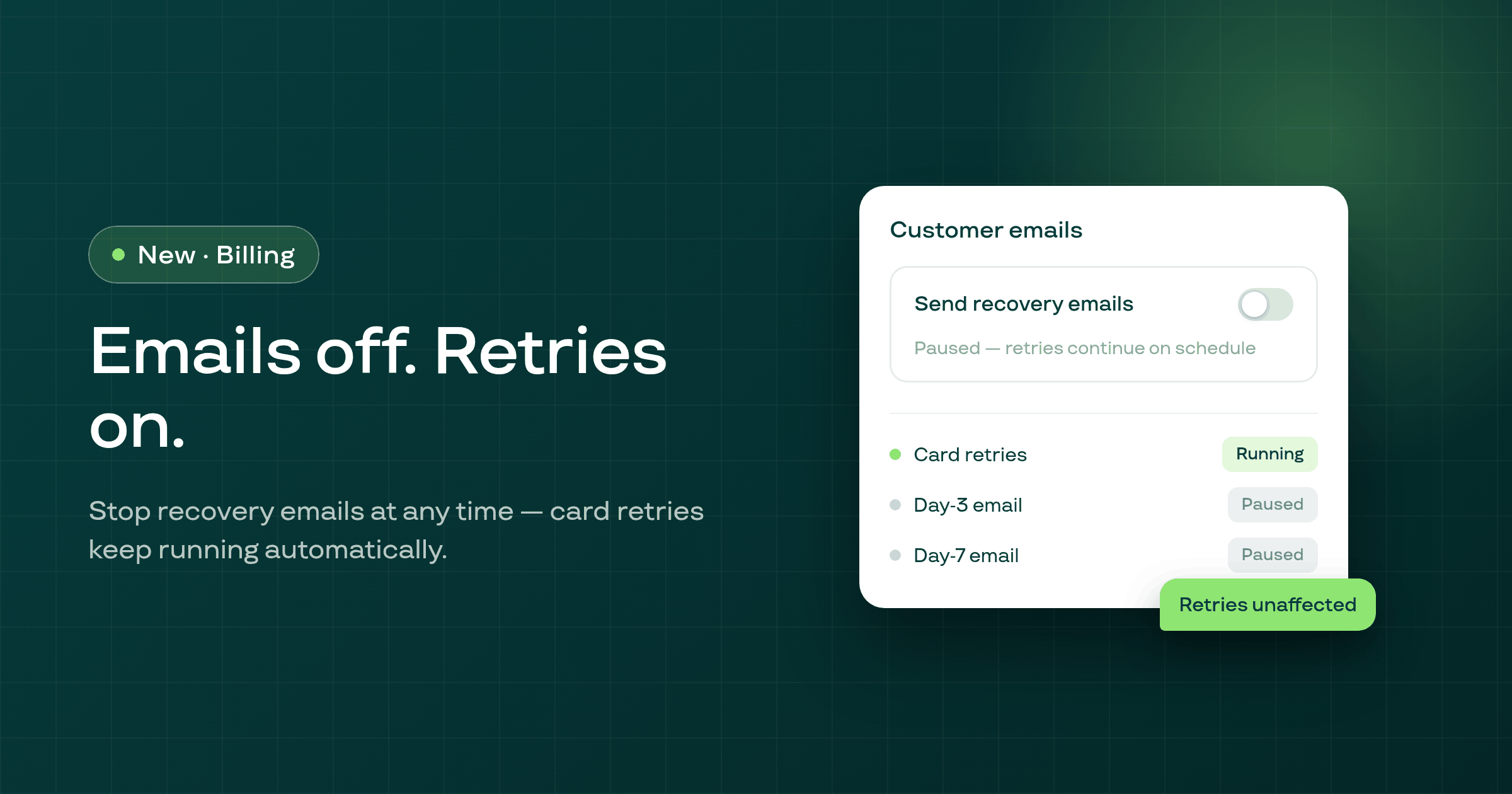
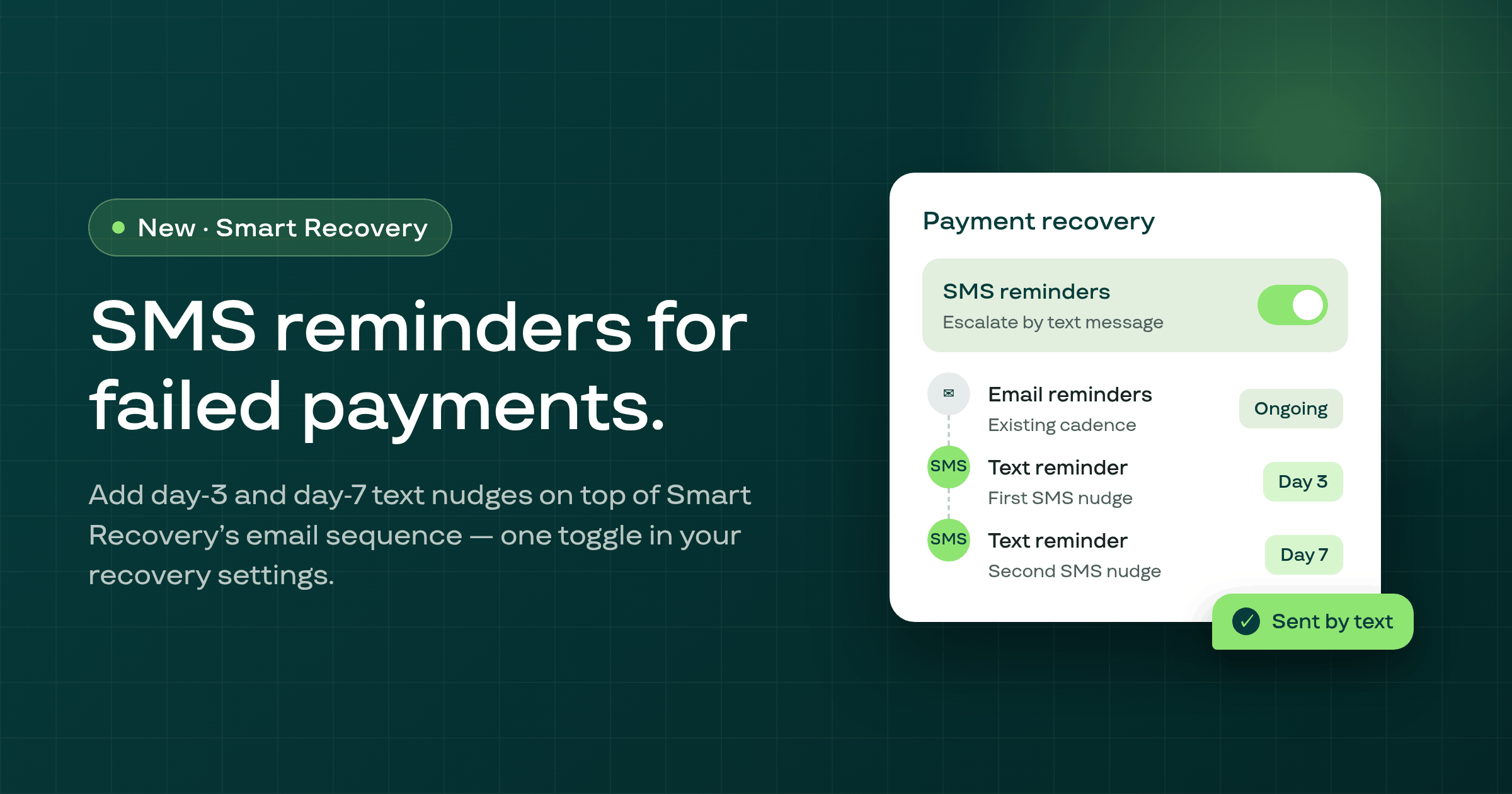
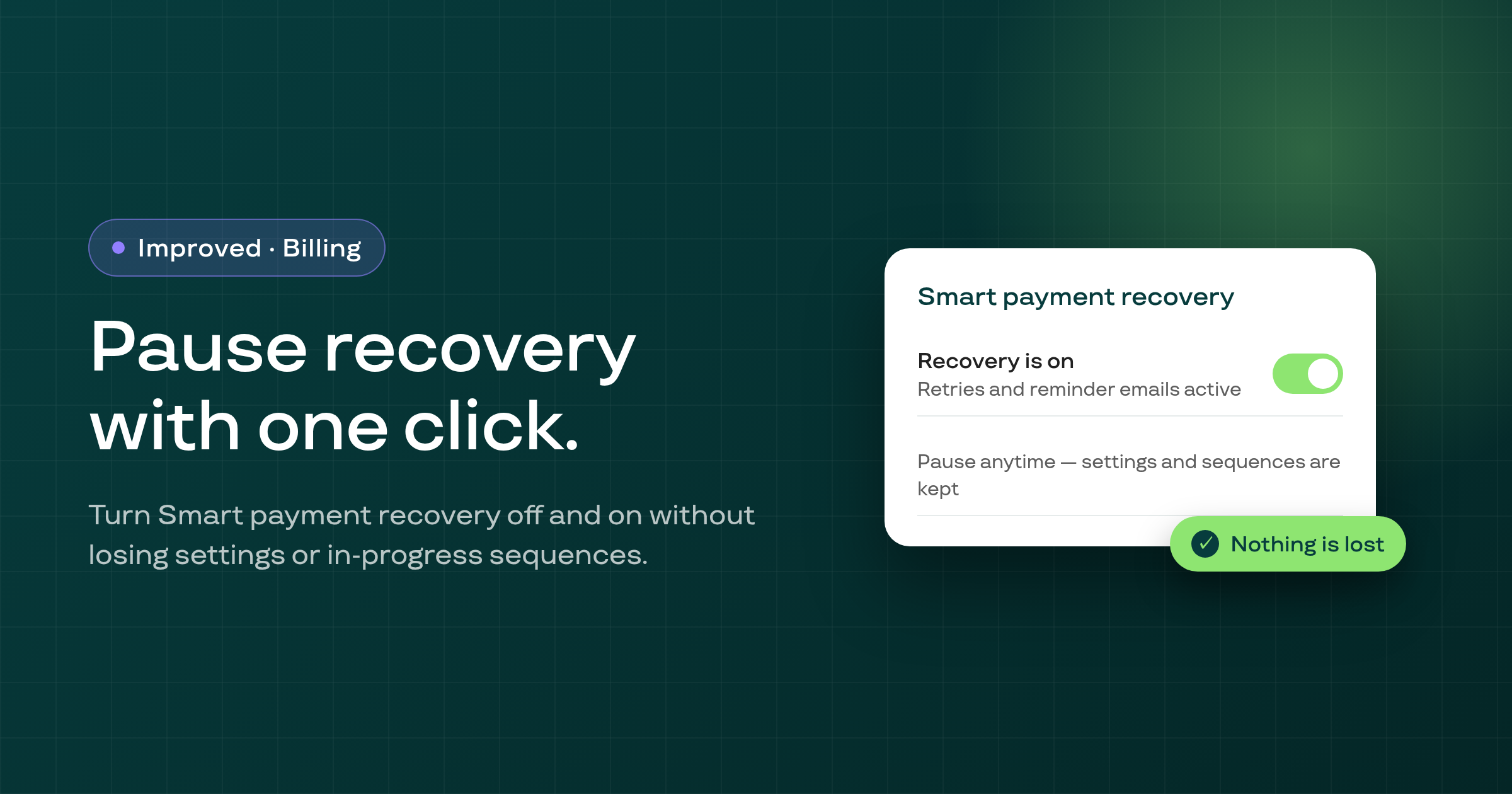
A new toggle in Payment Recovery lets you stop the failed-payment email sequence independently of card retries, so Subi keeps attempting the charge while your customer hears nothing.
A new Shopify POS extension lets your staff start a subscription from the point-of-sale screen: the customer picks a plan, confirms, and the contract is created without leaving the POS checkout.
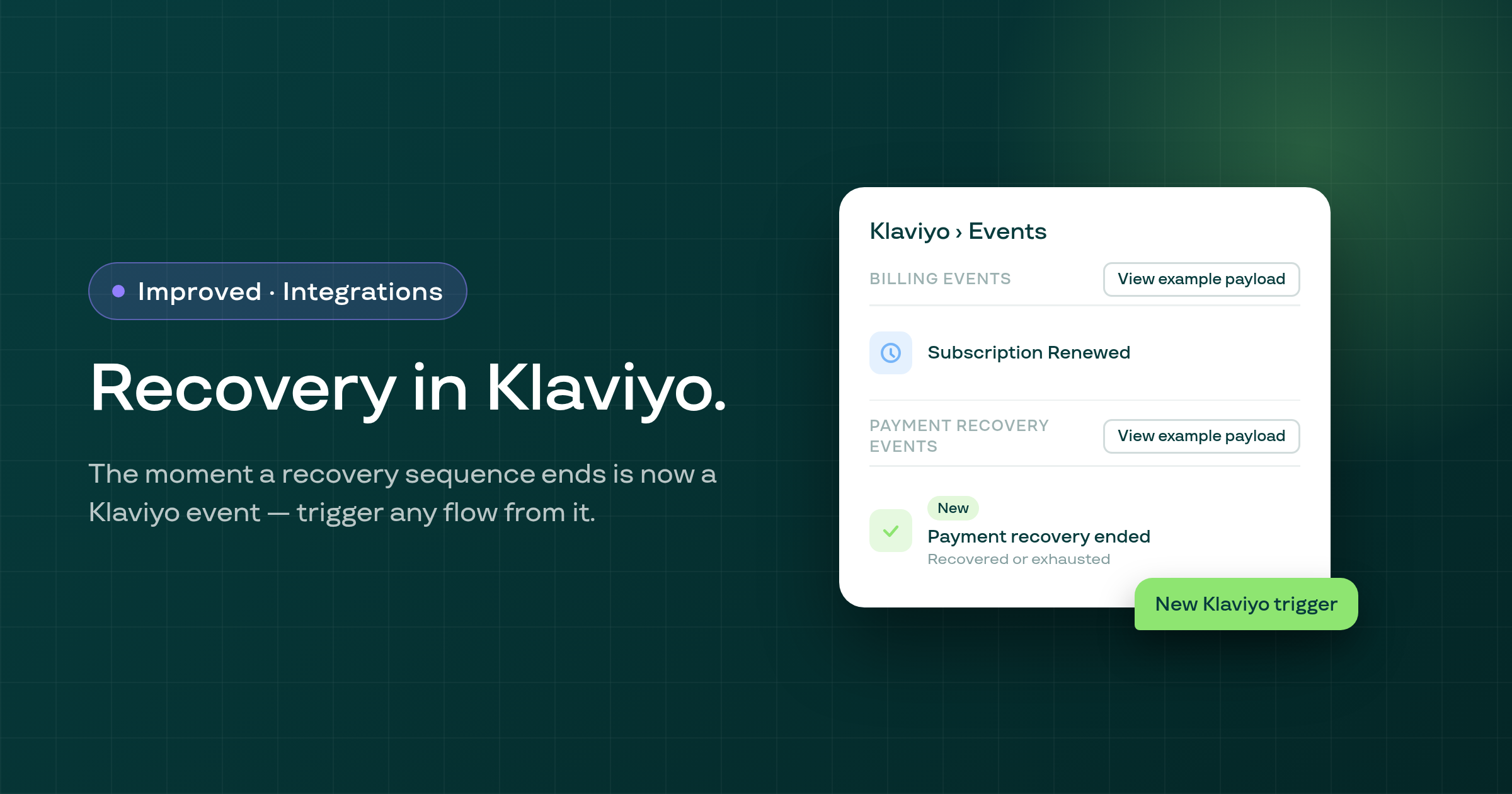
A new Klaviyo event, Subscription Recovery Ended, fires when a Smart Payment Recovery sequence closes, letting you build win-back or churn follow-up flows from the exact recovery outcome.
The Create subscription button was missing for merchants with zero existing subscriptions, making manual subscription creation impossible until at least one contract already existed. This is now fixed.
Two fixes on the Analytics page: the date range picker now responds to every preset click without switching modes silently, and all money figures render in your shop currency consistently.
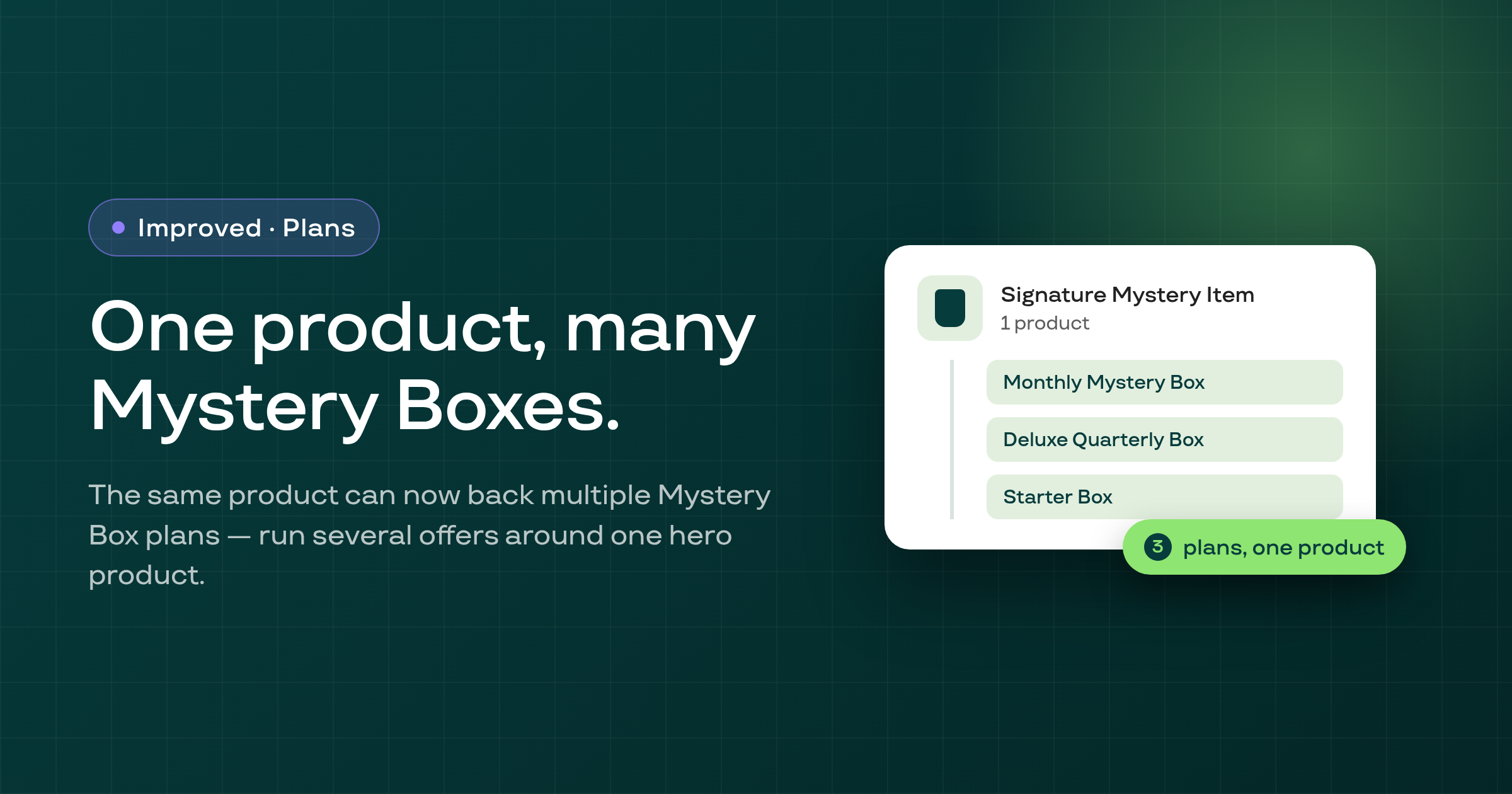
Subscribers can now swap their subscription product in the customer portal even when the new variant belongs to multiple selling plans with the same billing interval.
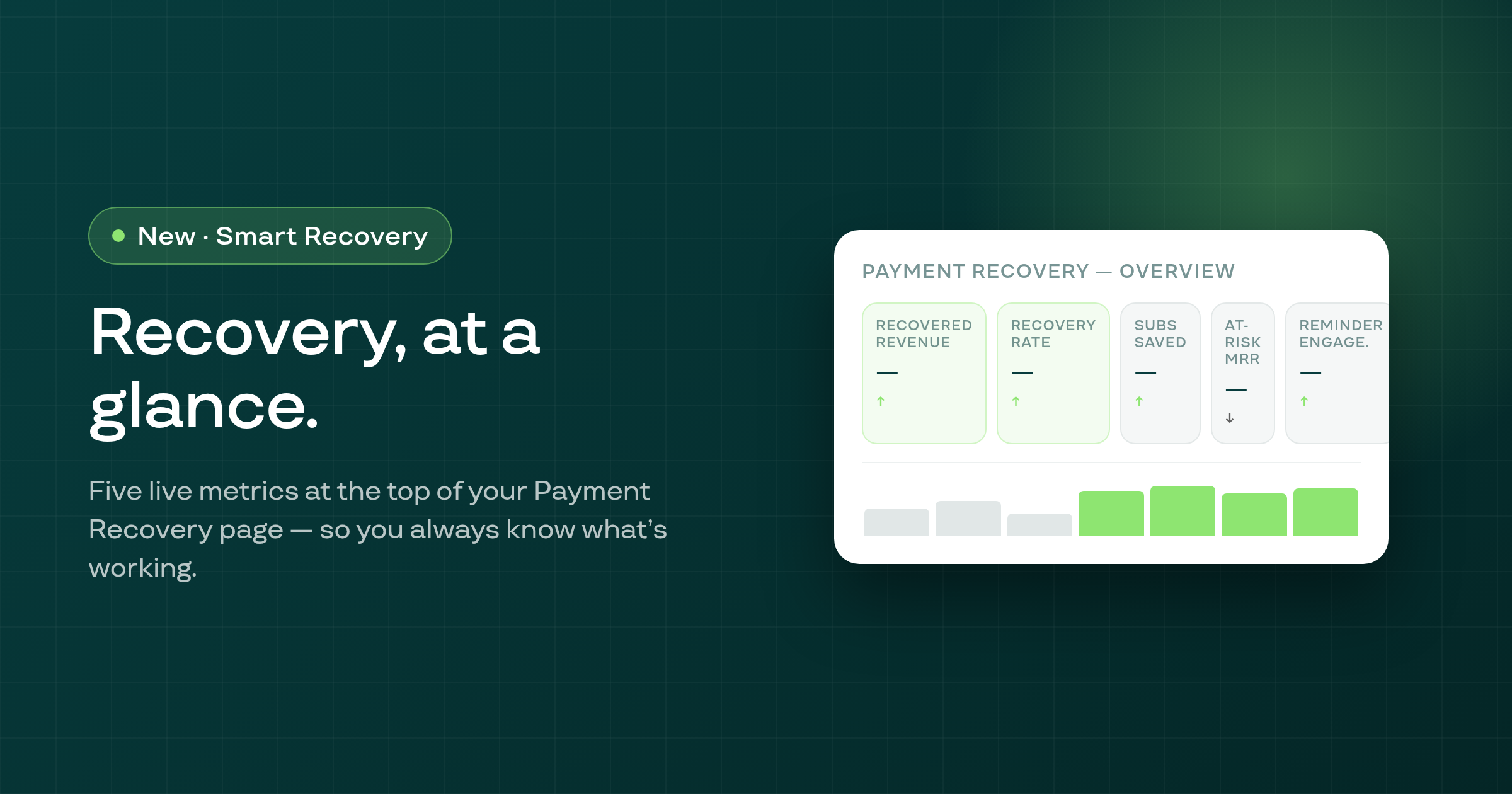
A five-metric overview strip — recovered revenue, recovery rate, subscriptions saved, at-risk MRR, and reminder engagement — now appears at the top of the Payment Recovery page for every Smart Recovery merchant.
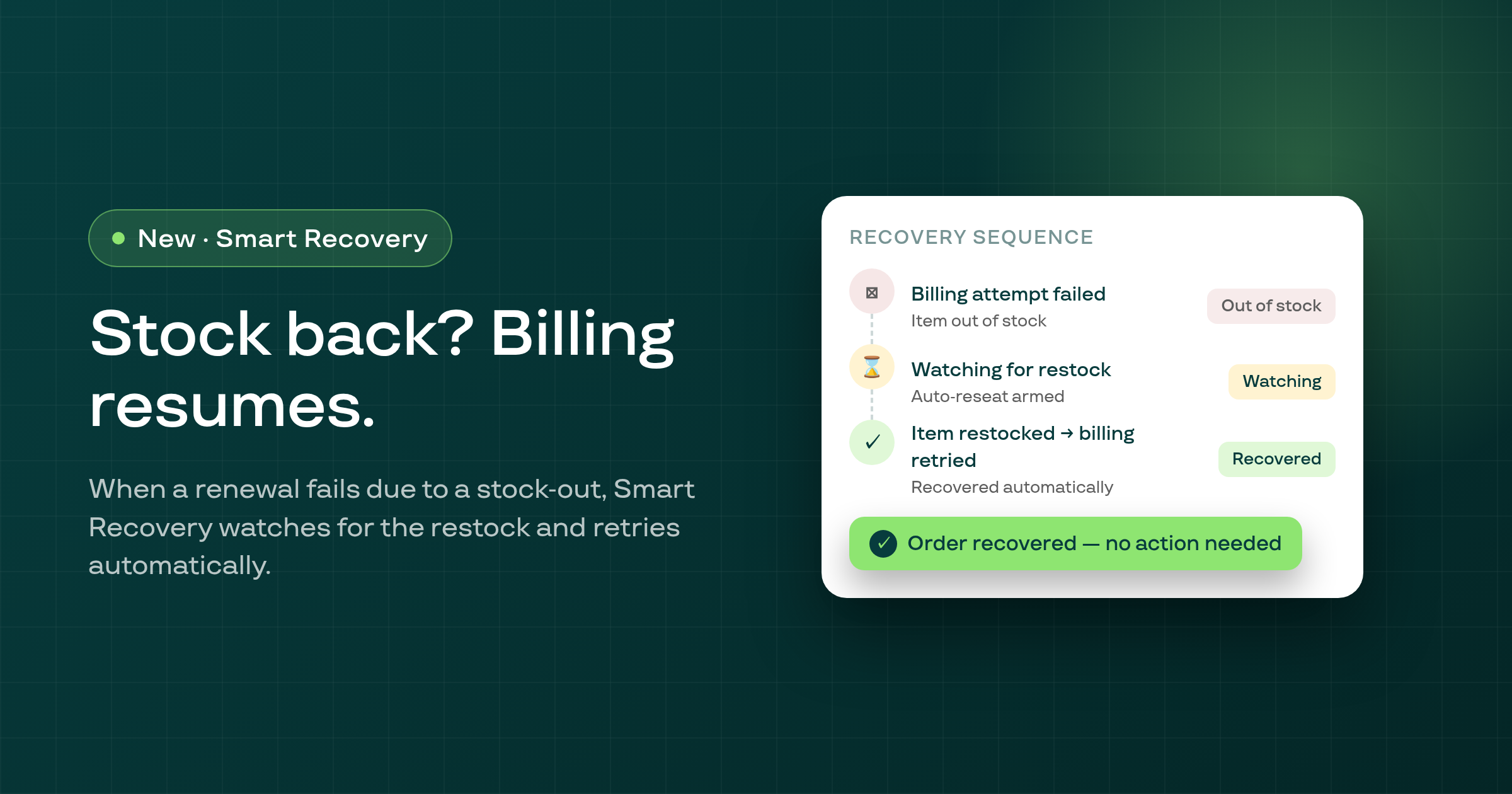
When a subscription renewal fails because the product is out of stock, Smart Recovery now watches for the item to be restocked and automatically retries the billing — recovering the order without any manual intervention.
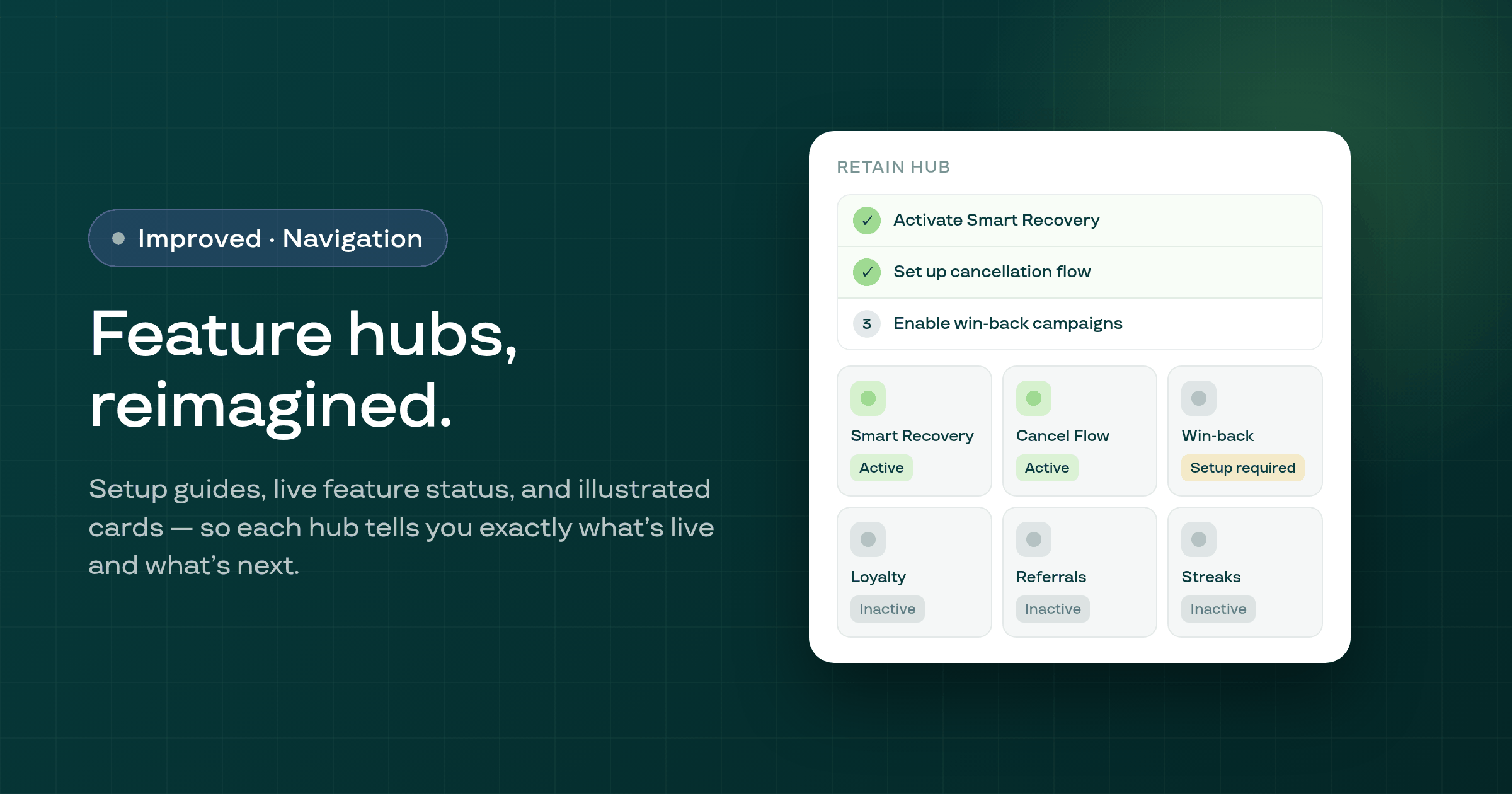
The Growth, Retain and Storefront hub pages in the Subi admin have been rebuilt with illustrated feature cards, live per-card status indicators, per-hub setup guides, and a responsive grid — so each hub is a clear starting point, not a pass-through.
Reinstalling Subi when a stale plan log entry was present no longer incorrectly applies the free plan — the plan log is reconciled before the free plan check runs.
Editing a prepaid subscription contract — changing the plan, frequency, or cycle count — now sends the correct price to Shopify; a bug that caused the stale per-cycle multiplier from before the edit to persist has been resolved.
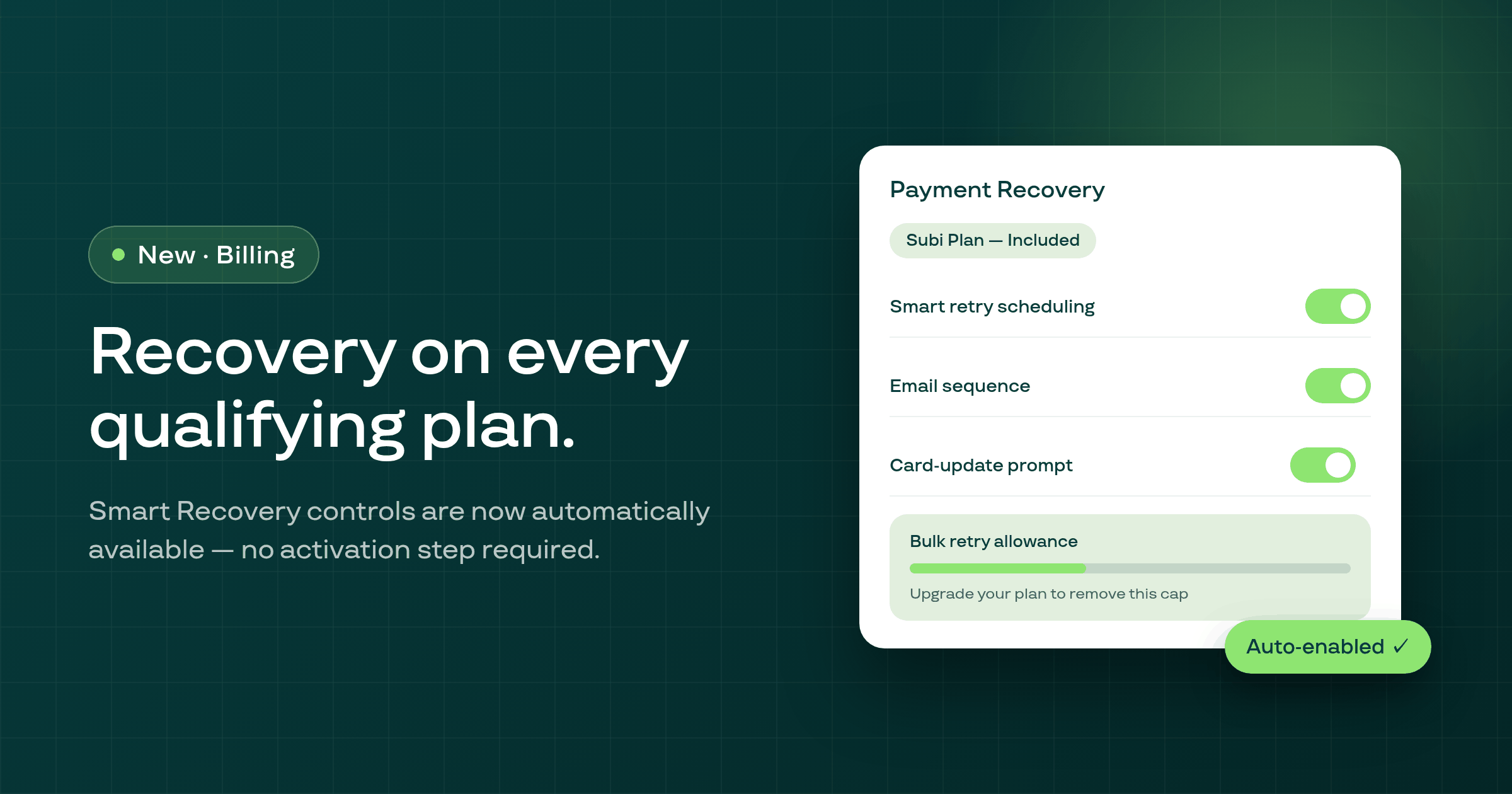
Smart Recovery's full control suite — retry scheduling, email timing, and bulk recovery actions — is now automatically available to merchants on qualifying plans, with a clear cap display for free-tier accounts.
Disconnecting Subi from Klaviyo now properly removes the Subi integration from your Klaviyo account — no stale connection remains after you disconnect.
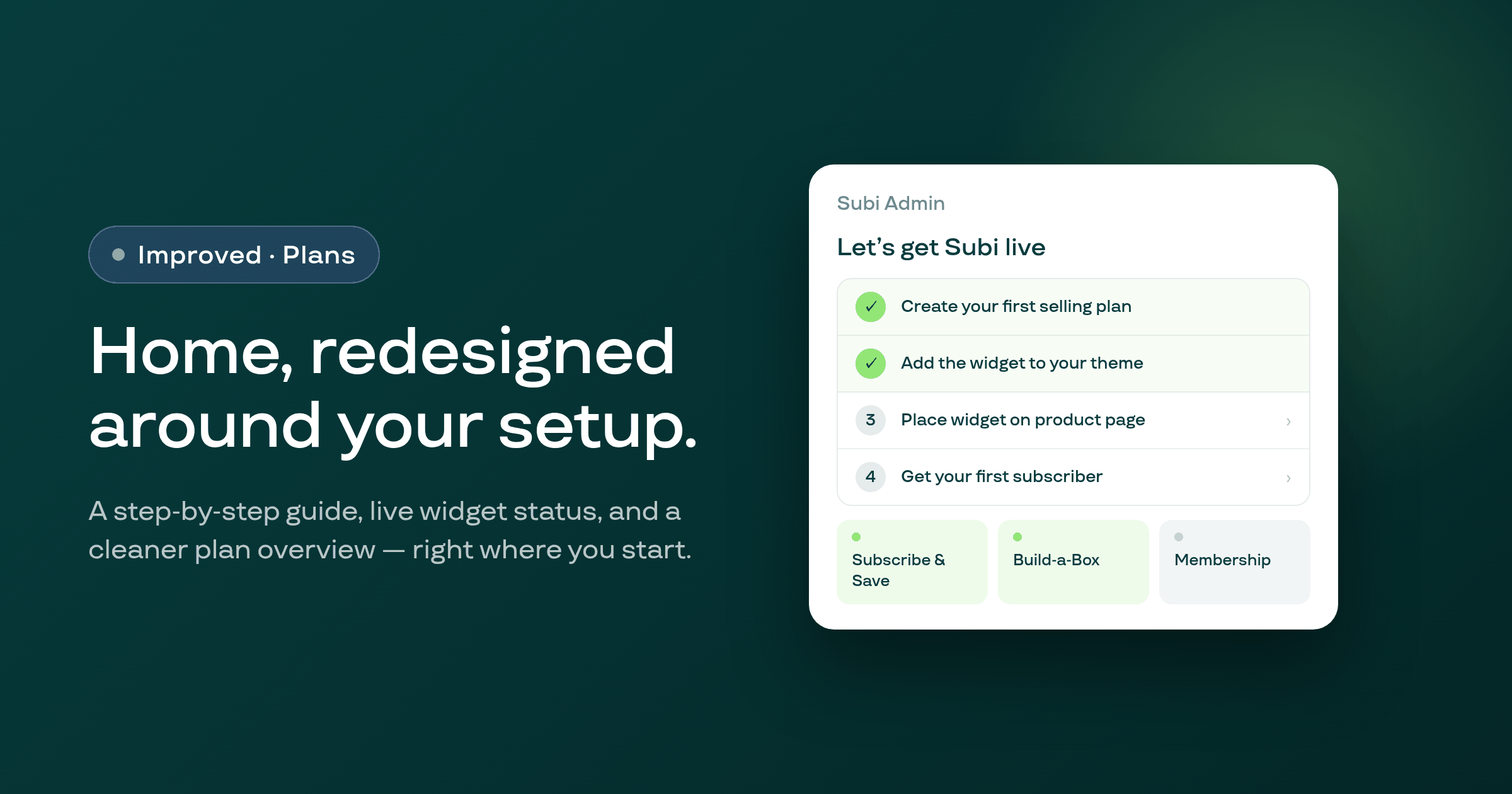
The merchant admin Home page is redesigned around a step-by-step setup guide, a three-column plan-type overview, and a live widget-embed status indicator to help you start — and stay oriented — faster.
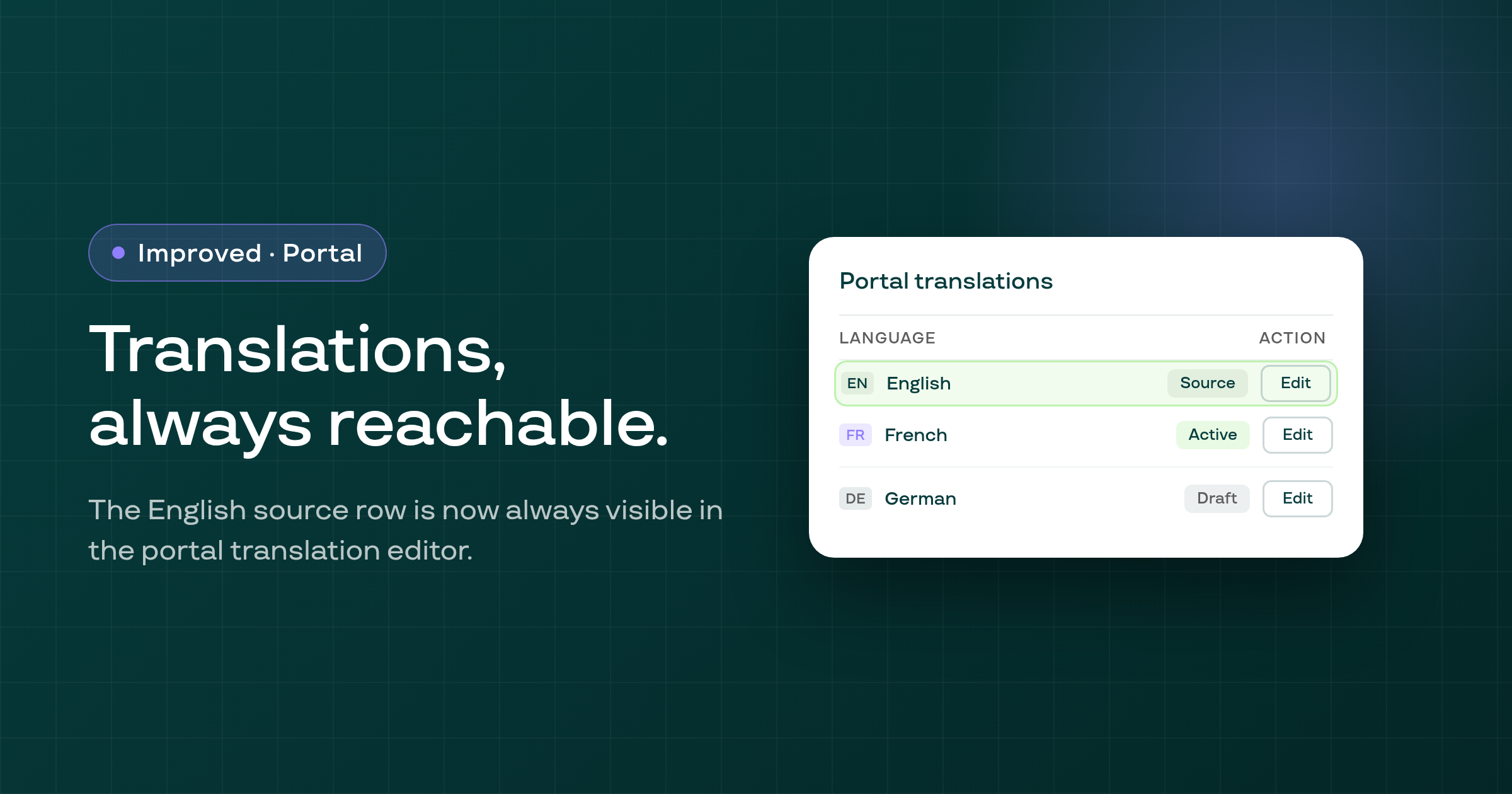
The customer portal translations page now always shows the English source row so you can edit your portal copy at any time, even on single-language stores or before enabling additional languages.
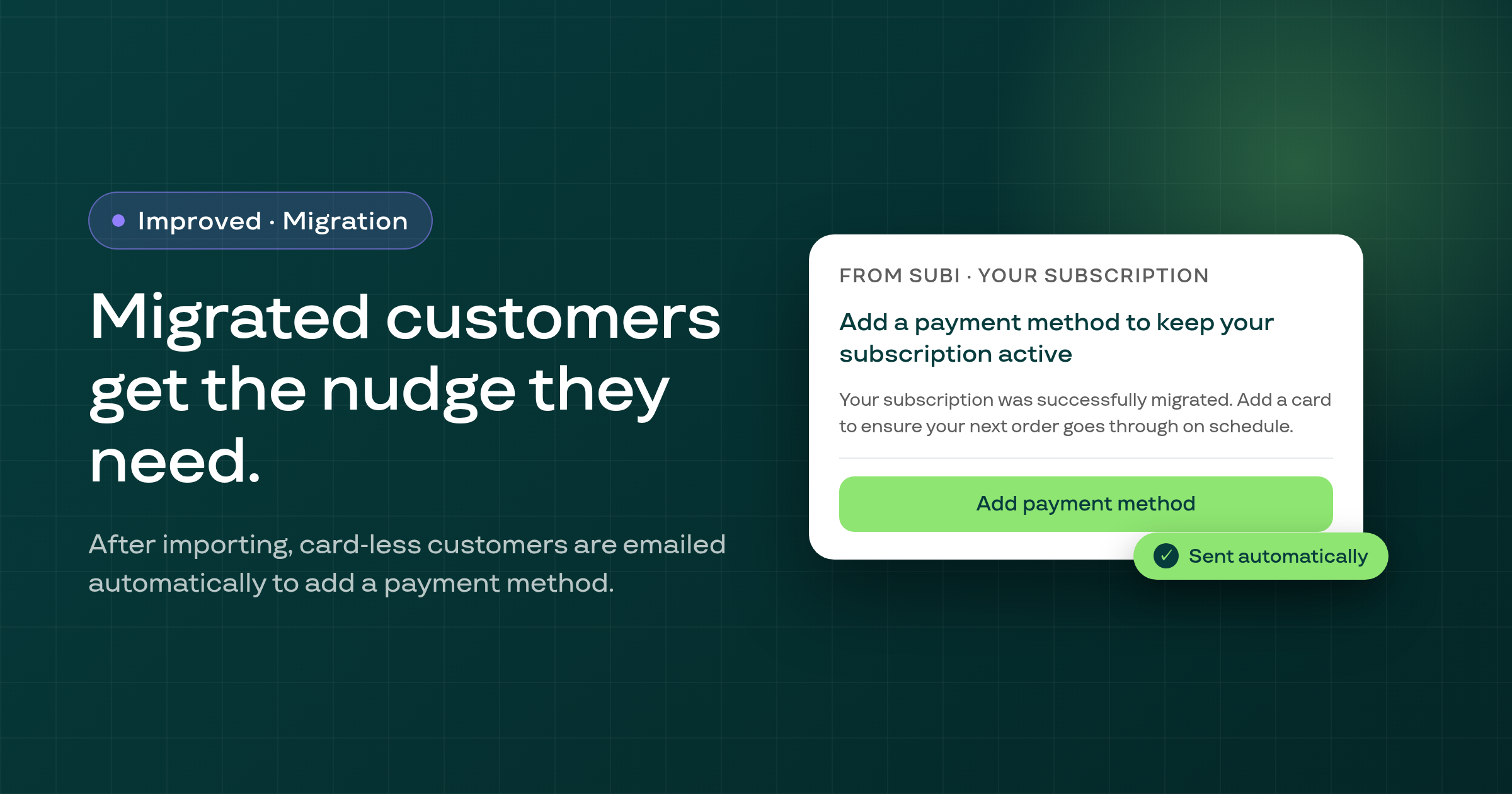
After importing subscriptions from a competitor, Subi now automatically emails any migrated customers who have no payment method on file, asking them to add a card so their contracts can bill on schedule.
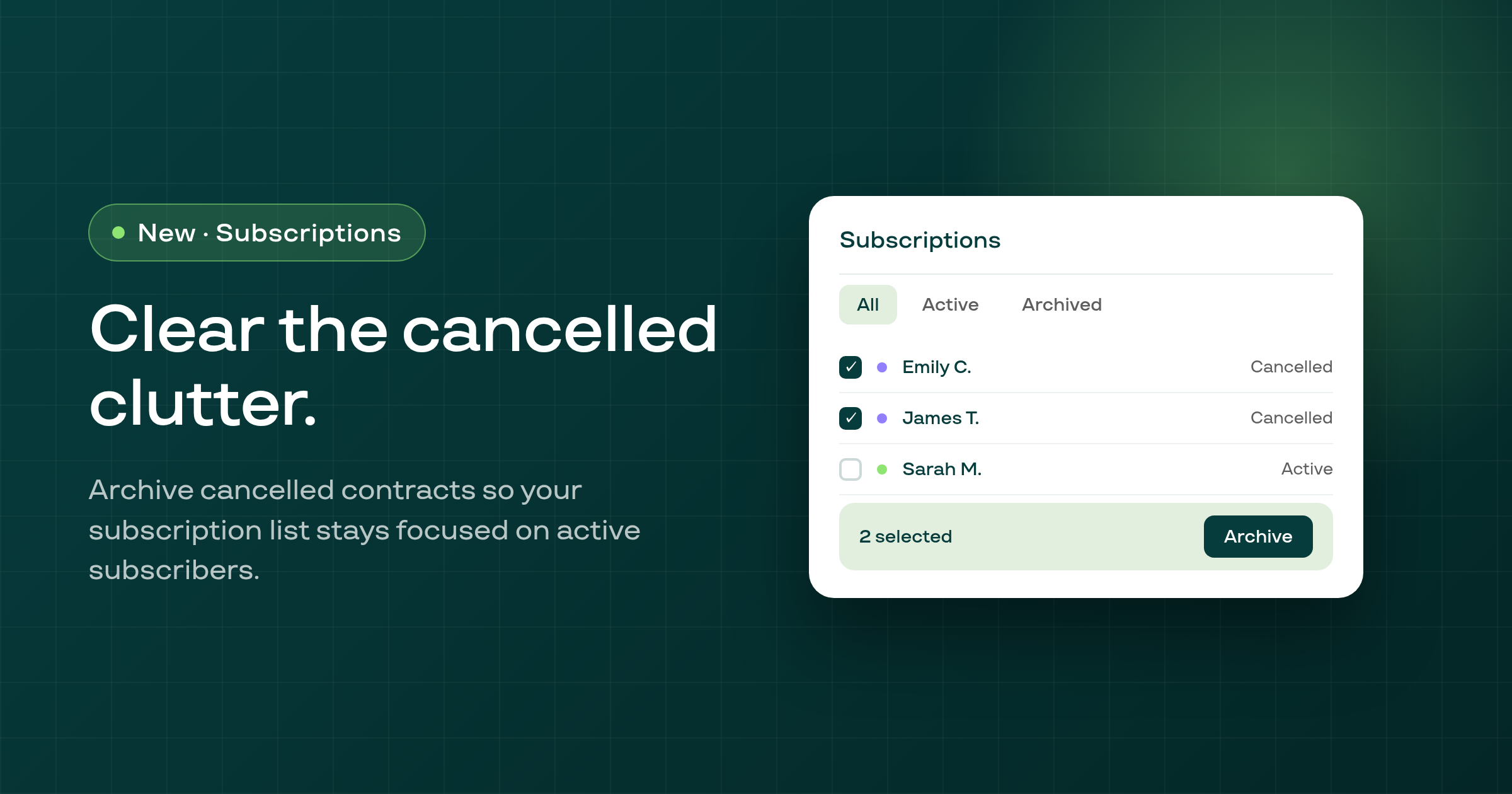
Merchants can now bulk-archive cancelled subscription contracts and view them in a dedicated Archived scope, keeping the All view focused on active and paused subscriptions.
Smart Payment Recovery now correctly honours the merchant's 'Recovered billing orders' setting — previously, the smart recovery path was ignoring it and always rescheduling recovered orders instead of using the original billing date.
Product names in the Quick Checkout generator are no longer cut off — the product column now uses the available row space instead of a fixed 120px cap that was truncating titles at roughly 15 characters.
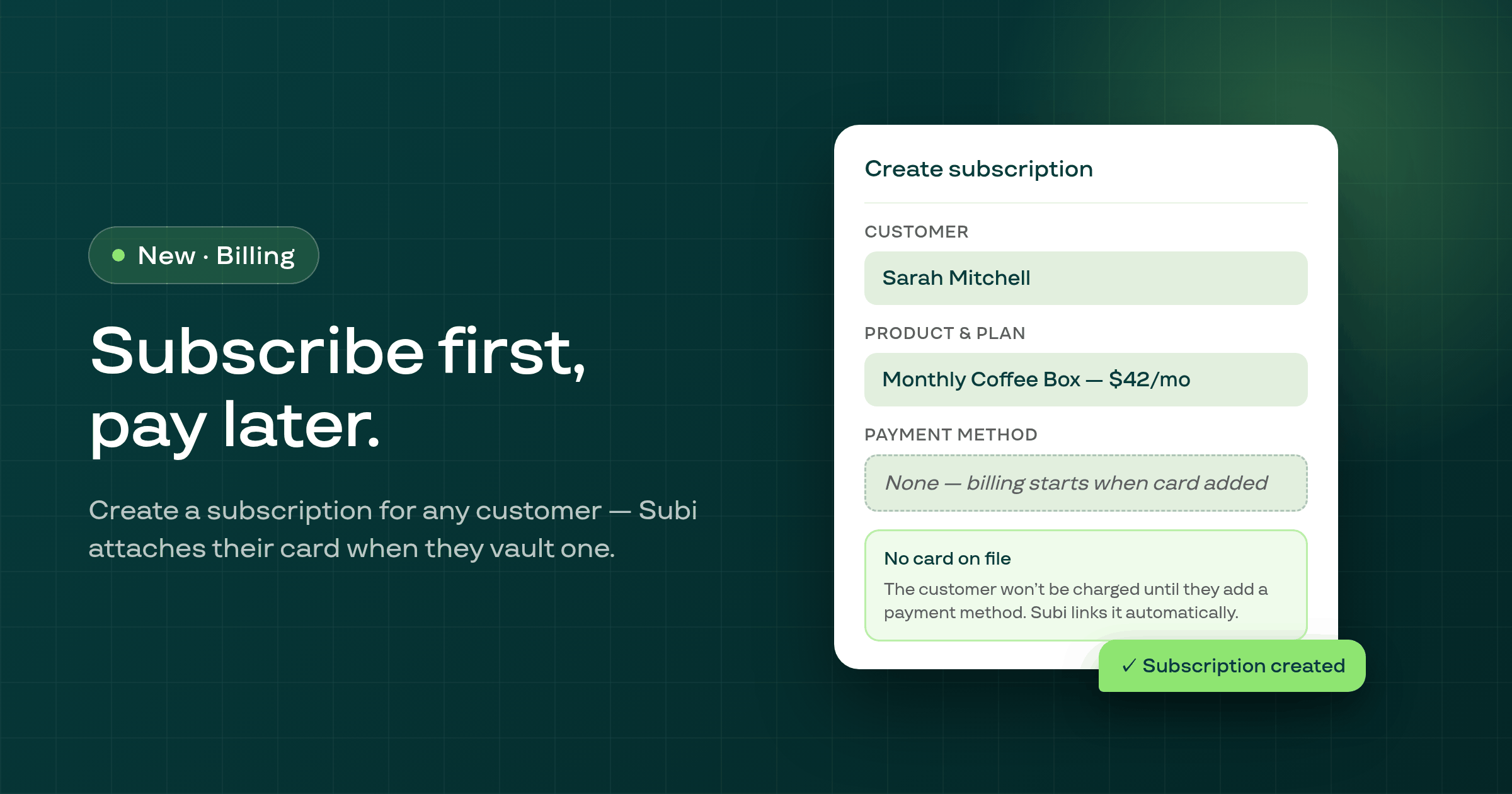
Merchants can now create a subscription manually for a customer who has no saved payment method — Subi automatically attaches their card when they vault one, and the payment method request email now correctly sends a Subi-branded login link.
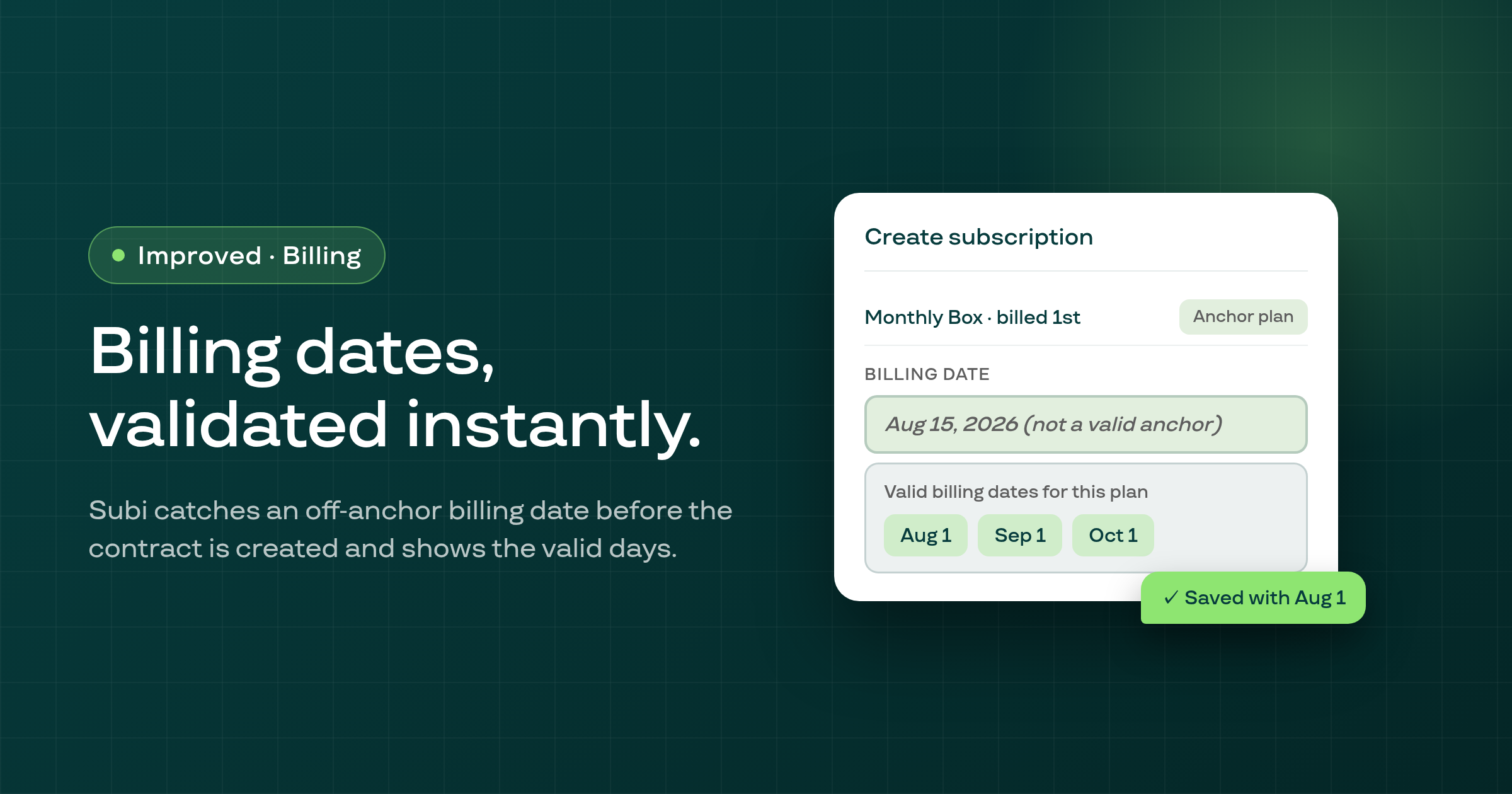
When creating a subscription manually, Subi now rejects a billing date that doesn't match the plan's billing anchors and shows a clear field-level error listing the valid anchor days — preventing a contract from being created in an invalid state.
Selling plan display order now persists after saving — dragging plans into the order you want no longer reverts to the original sequence on the next page load.
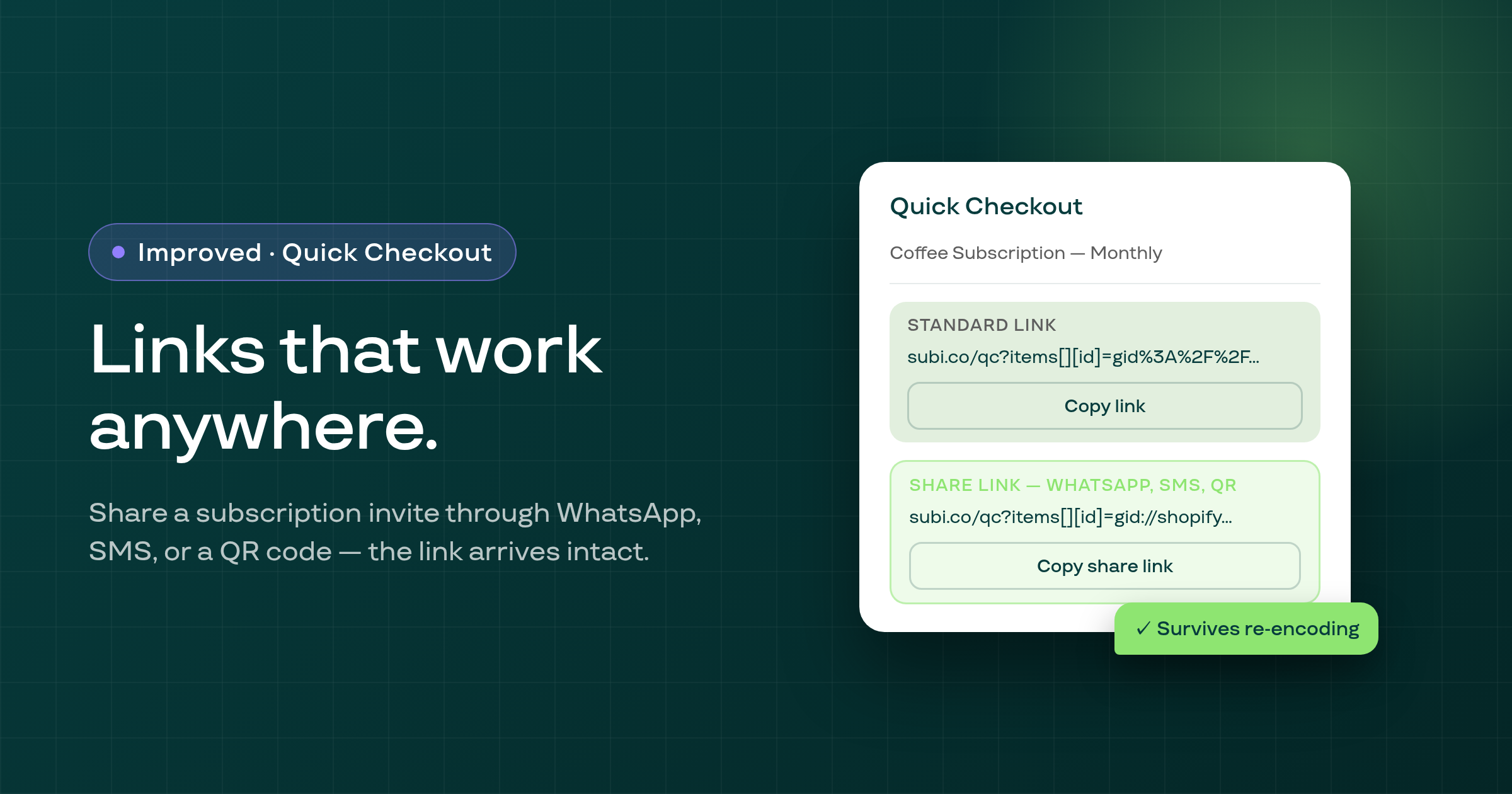
Quick Checkout now generates a chat-safe share link alongside the standard link — so subscription invite links reach customers correctly even when shared through WhatsApp, SMS, or a QR code.
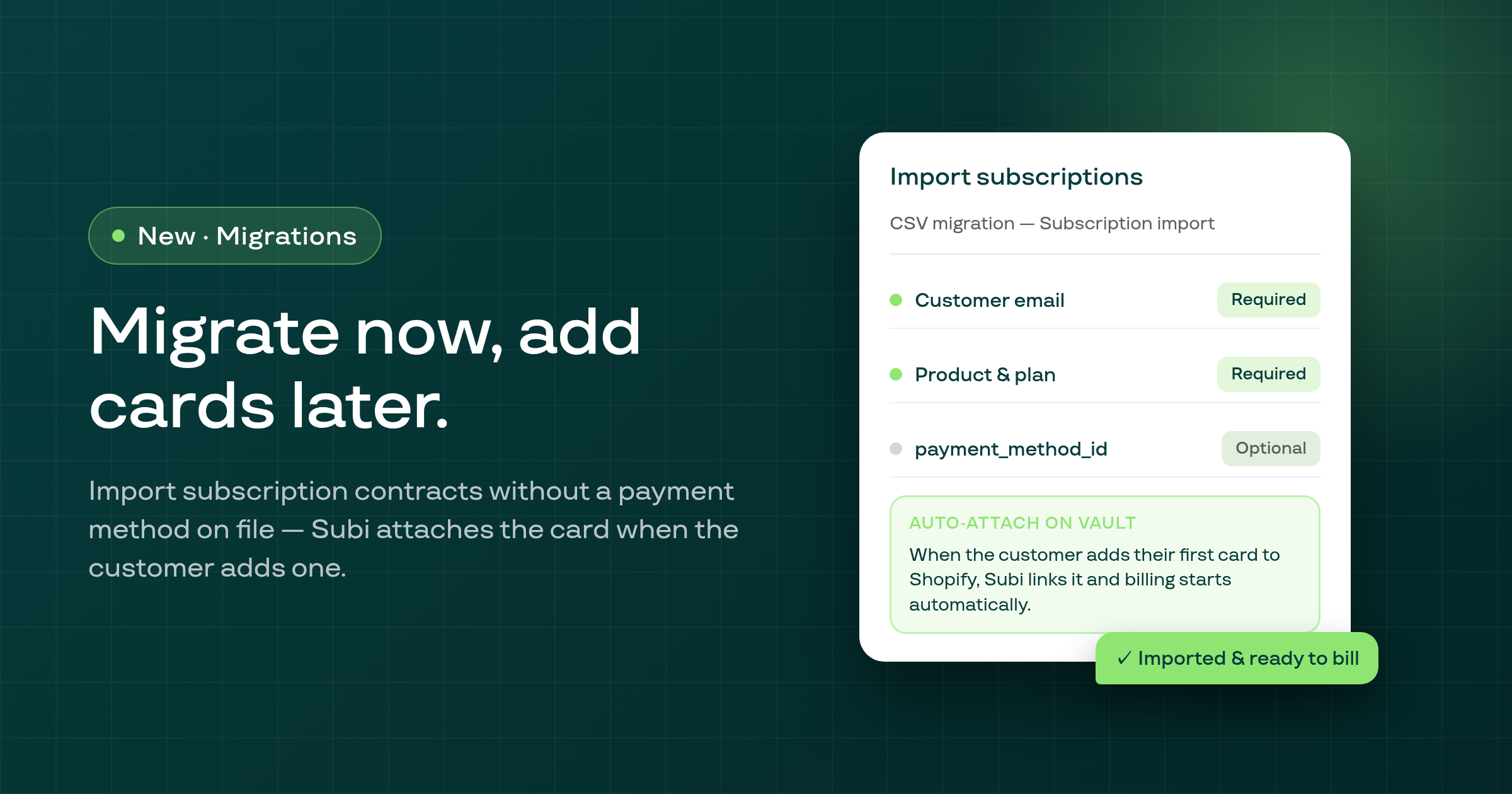
The Subi subscription migration import now accepts contracts without a payment method — leave the payment_method_id column blank, and Subi automatically attaches the customer's first vaulted card when they add one.
A Build-a-Box bug that caused an error when saving plan options after reusing a size that was previously removed in the same edit session is now fixed.
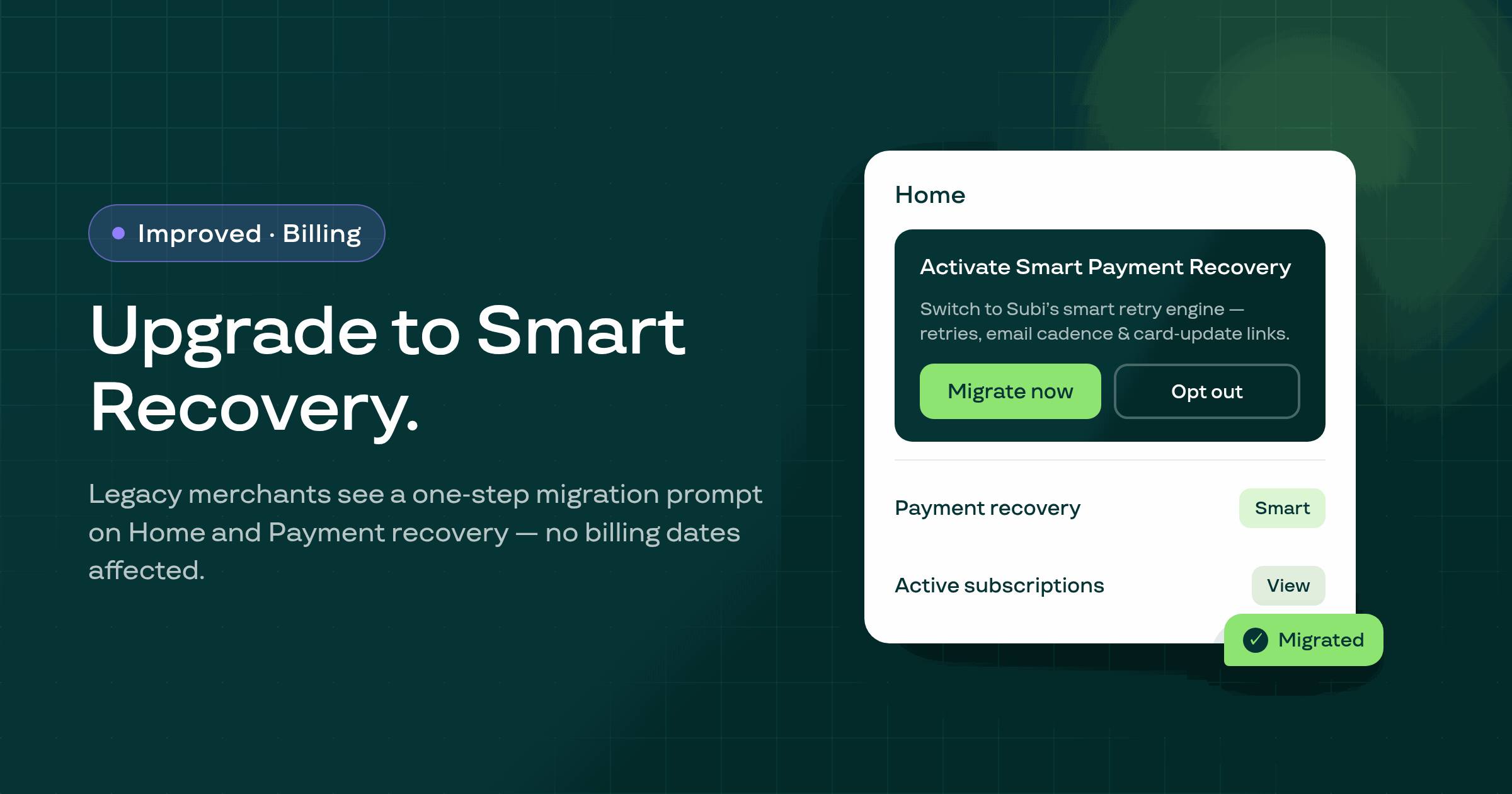
Merchants still on Subi's legacy billing-retry path now see a migration prompt on the Home and Payment-recovery pages — one click migrates their store to Smart Payment Recovery without changing any subscription billing dates.
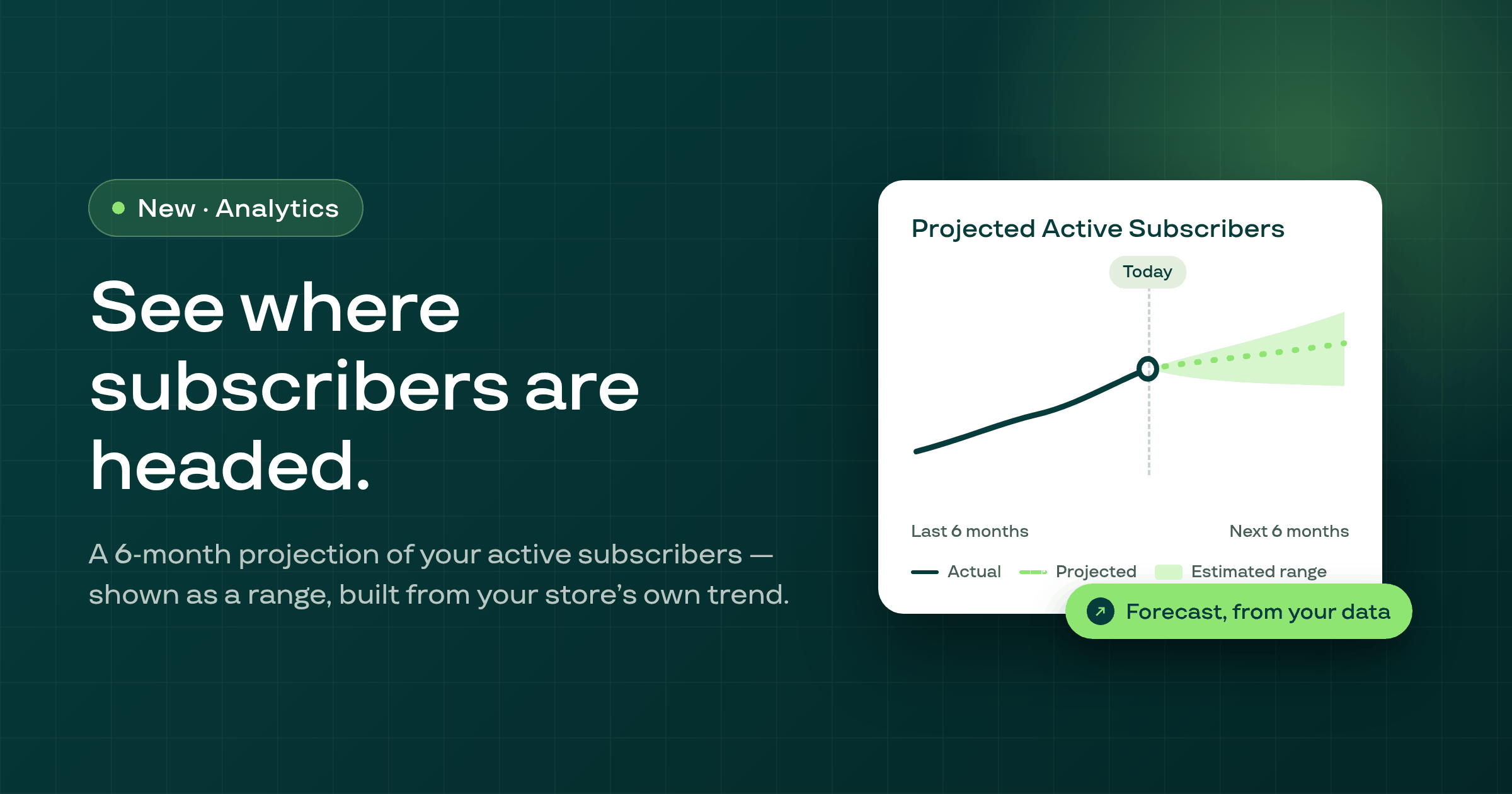
The analytics Overview's Subscribers section now shows a 6-month forward projection of Active Subscribers, displayed as a range rather than a single number.
Subscriptions migrated from other apps now receive the correct Recurring Order #N tag on new orders, fixing a double-count that inflated the number by one for affected contracts.
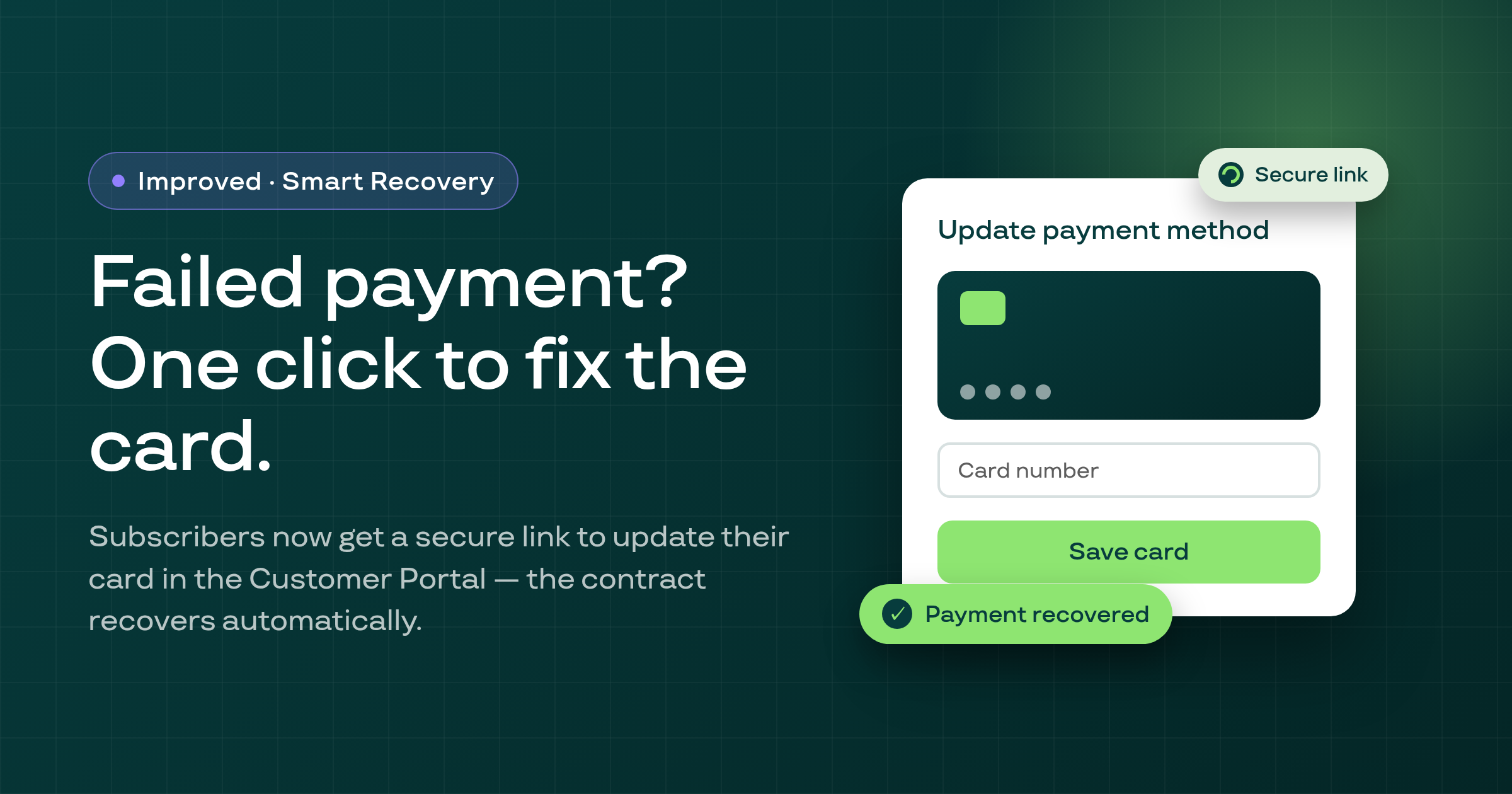
When a subscription payment fails due to a card issue, Subi now automatically sends the subscriber a one-click link to update their card directly in the Customer Portal, recovering the contract once the card is saved.
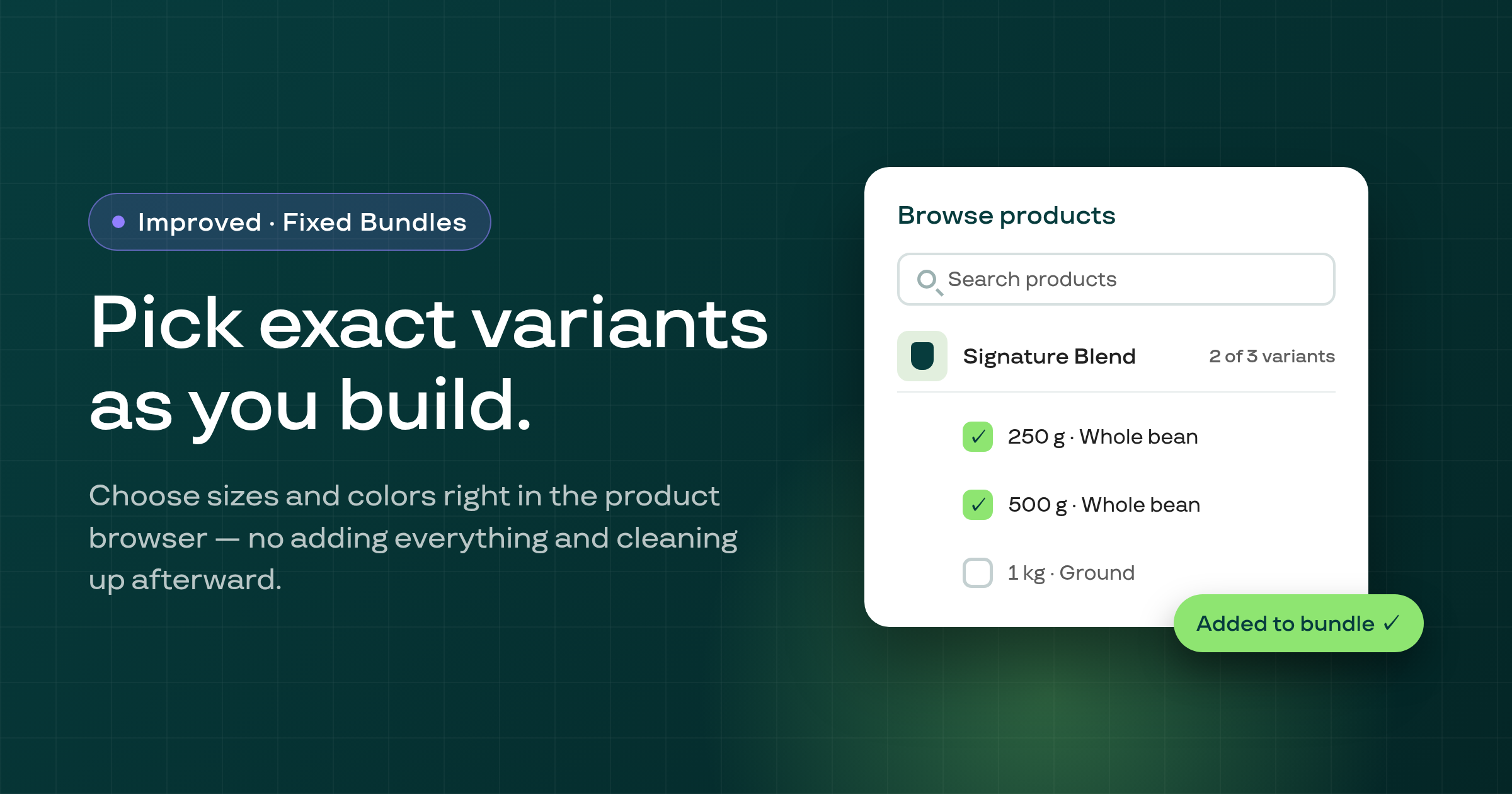
When adding products to a Fixed Bundle plan, merchants can now choose individual variants (size, color, etc.) directly in the Browse product modal, instead of having to add the whole product first and manually remove unwanted variants afterward.
The customer search in the manual subscription creation flow now paginates through all your customers and correctly labels the search field — fixing a bug where only 15 customers were shown regardless of store size.
You can now set an initial discount of 0% or $0 on a selling plan frequency, making it possible to create a free-first-order or no-discount period before the recurring discount kicks in — and the discount field no longer defaults to 0 when no pricing policy is active.
When a merchant declines Klaviyo's authorization prompt during setup, Subi now shows a specific, actionable message so they know exactly what to do next.
Merchants can now reliably configure subscription plans with an initial flat-rate price of $0, making it straightforward to offer free introductory orders without hitting a validation error or losing the setting on reload.
The setup wizard now marks itself complete as soon as you activate a Subi billing plan, and new merchants land on the updated Subi home screen after finishing onboarding.
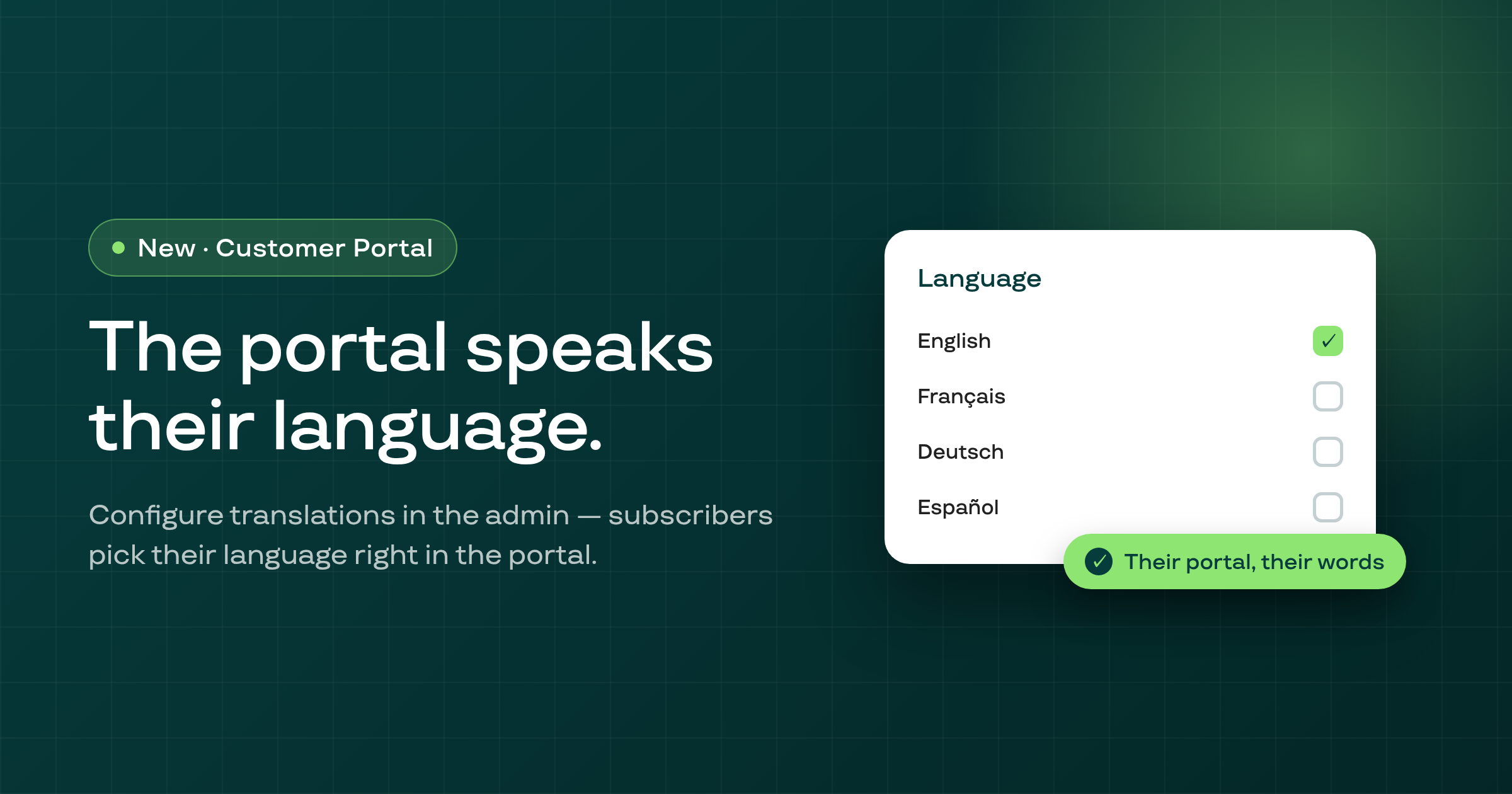
Your Subi customer subscription portal now supports multiple languages — configure translations in the admin and subscribers see a language selector to choose their preferred language, which is remembered across visits.
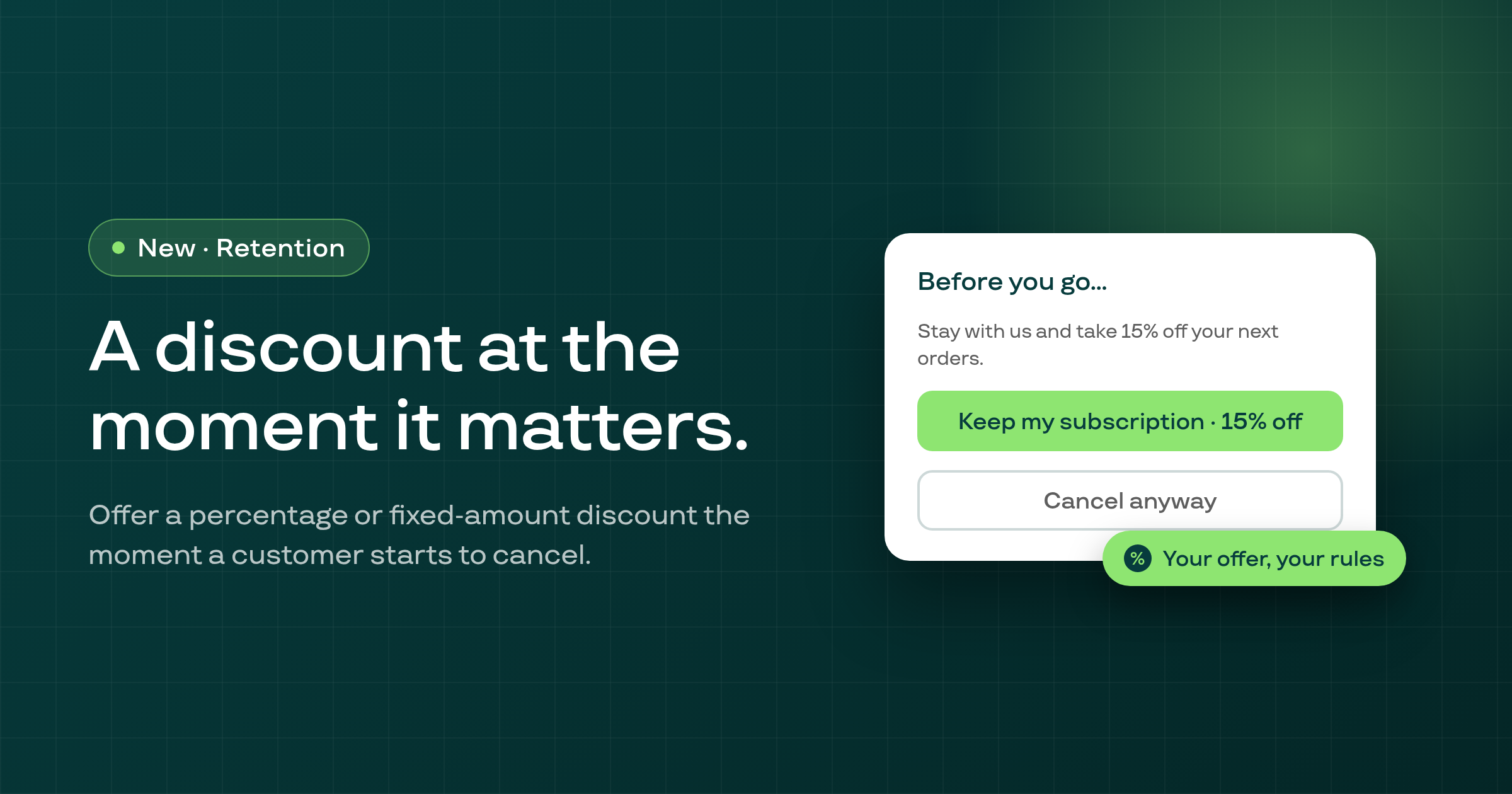
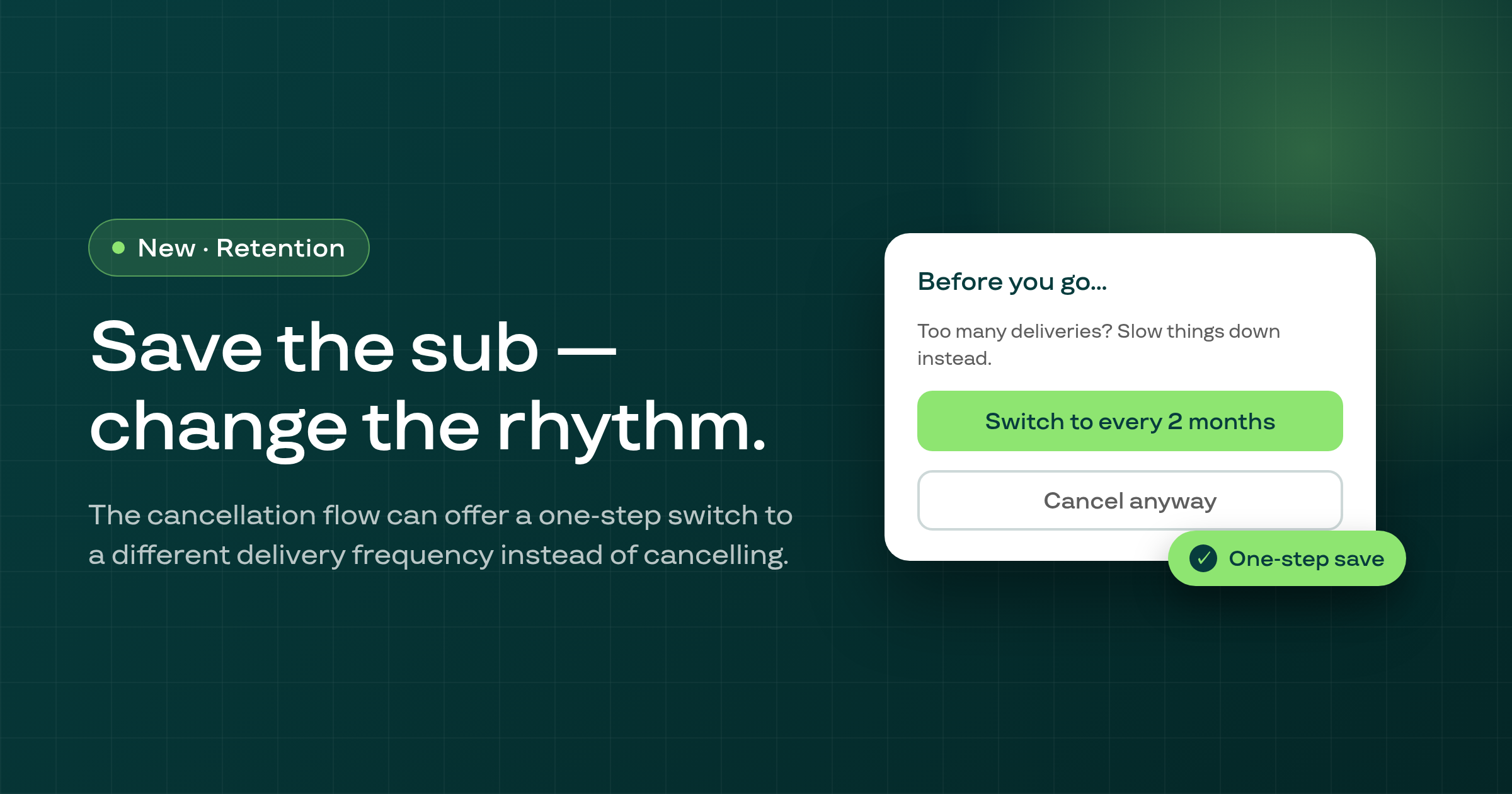
Your cancellation flow can now offer subscribers a free gift product for a set number of billing cycles, added automatically and removed after the period ends — no discount needed, no coupon codes.
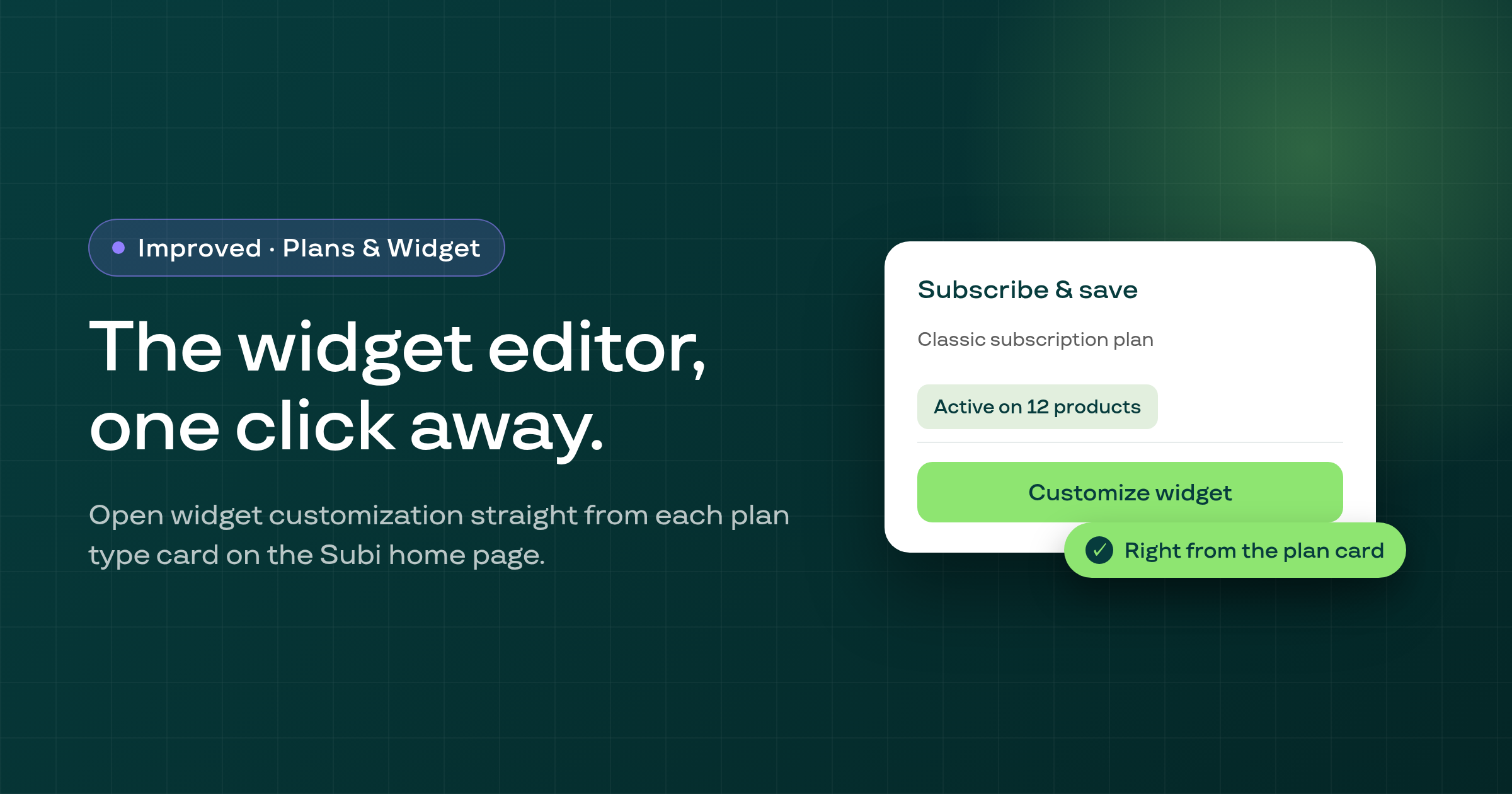
Merchants can now open the widget customization editor with one click from each plan type card on the Subi home page, making it faster to tailor how subscription options appear to shoppers.
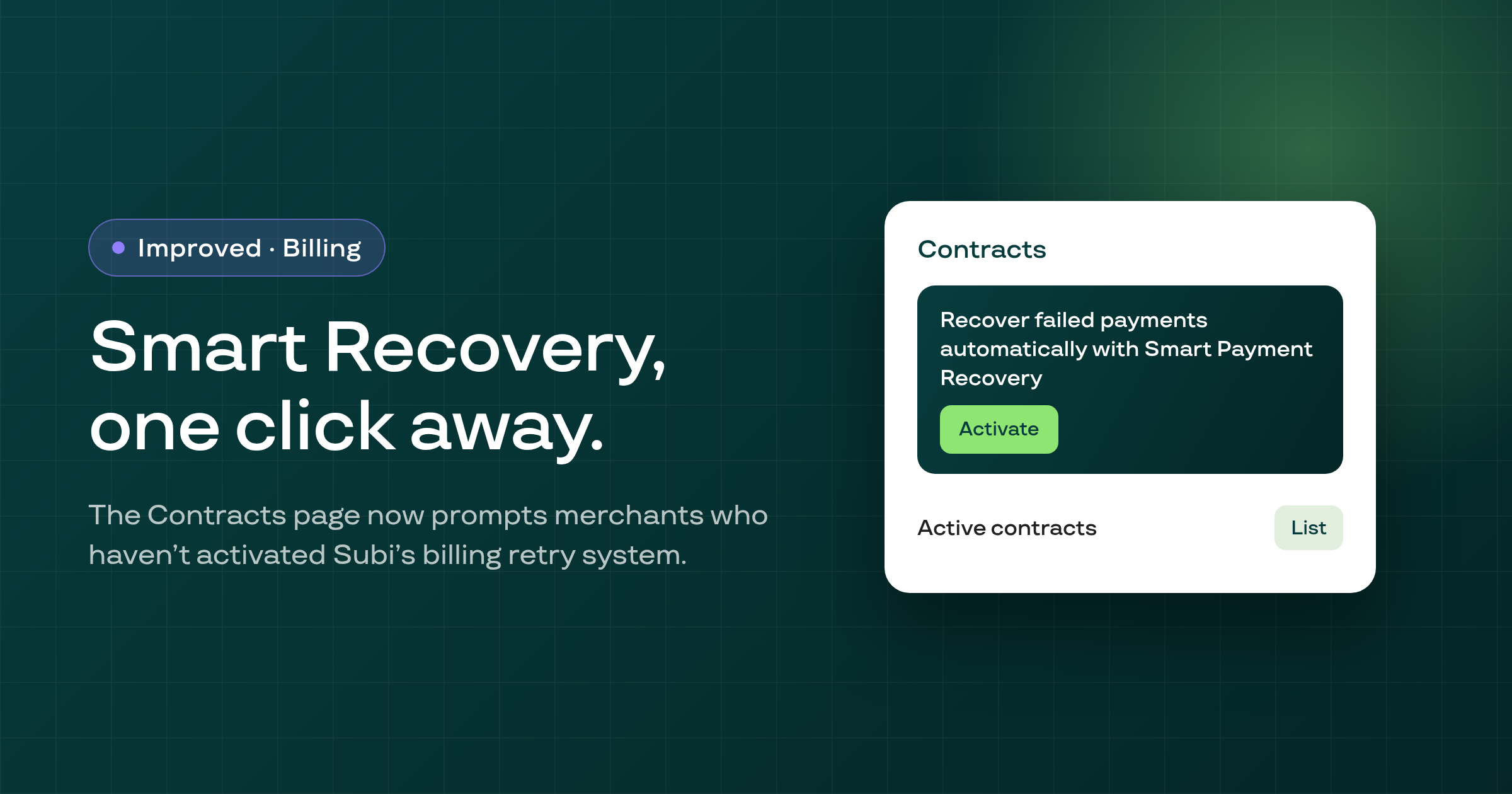
Merchants who haven't yet activated Smart Payment Recovery now see an in-app prompt on the Contracts page, making Subi's advanced billing retry system easier to discover and turn on.
The add-item flow inside the customer subscription edit-order modal now correctly displays selling plan options, product names, and variant names, and renders the selection interface in the right inline layout.
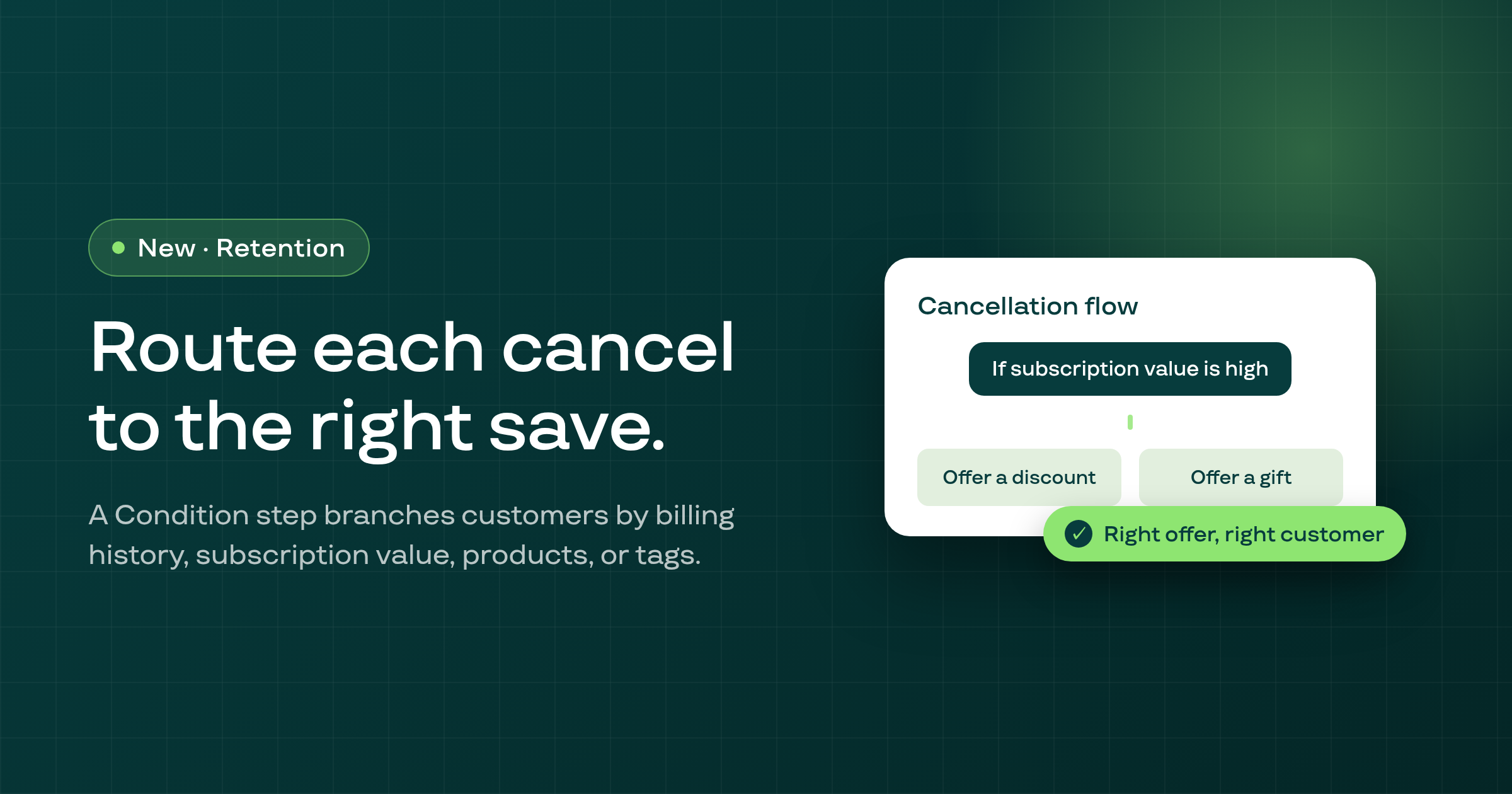
A new Condition step in the cancellation flow branches customers to different treatments based on their billing history, subscription value, products, or tags.
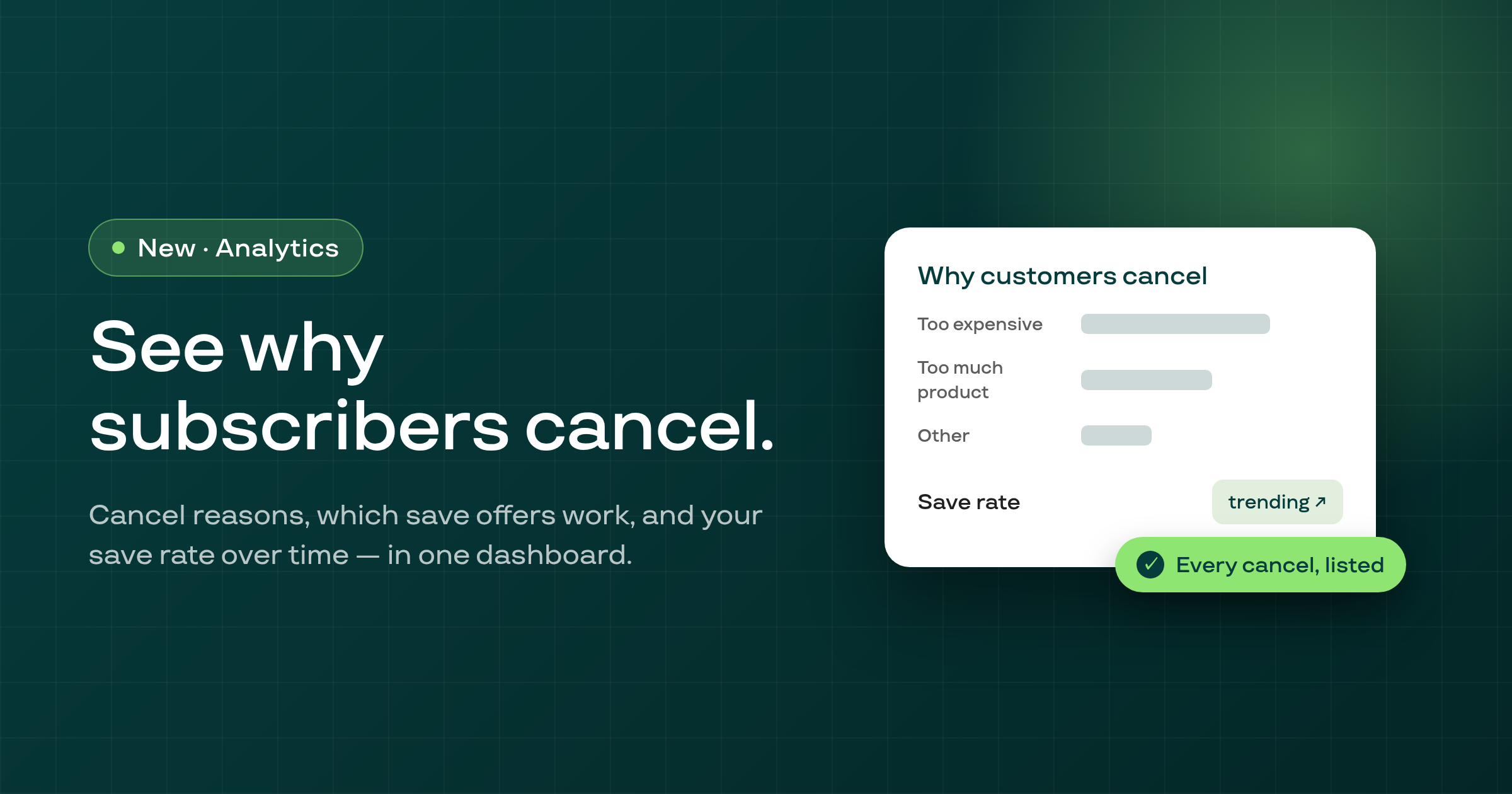
A new analytics dashboard shows why customers cancel, which save offers work, and your save rate over time — with a filterable list of every cancellation.
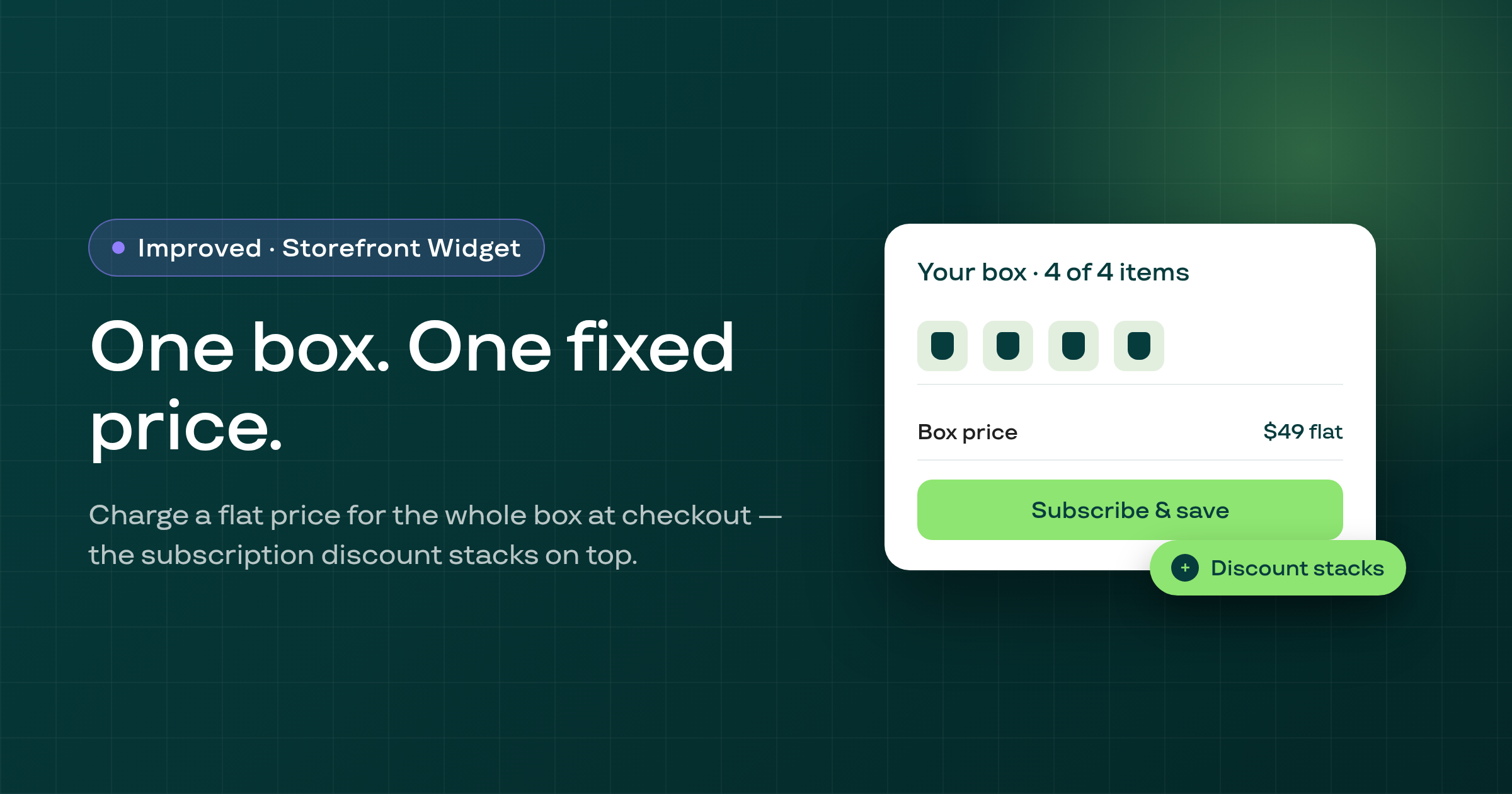
Build-a-Box now charges a flat, fixed price for a box at checkout, with the subscription discount stacking on top and correct pricing on multi-currency stores.
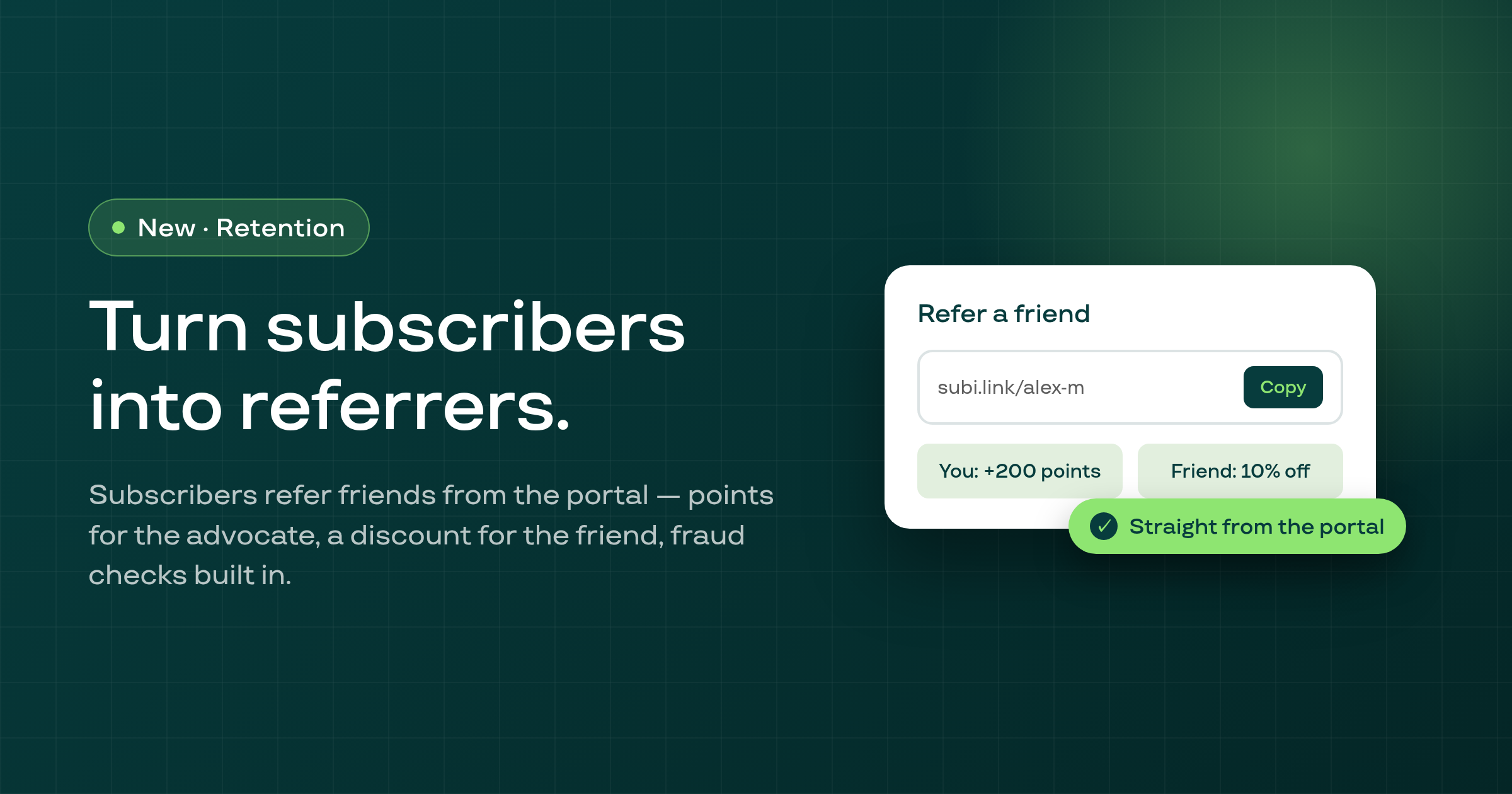
Subscribers can now refer friends from their portal — the advocate earns loyalty points, the friend gets a first-order discount, fraud checks built in.
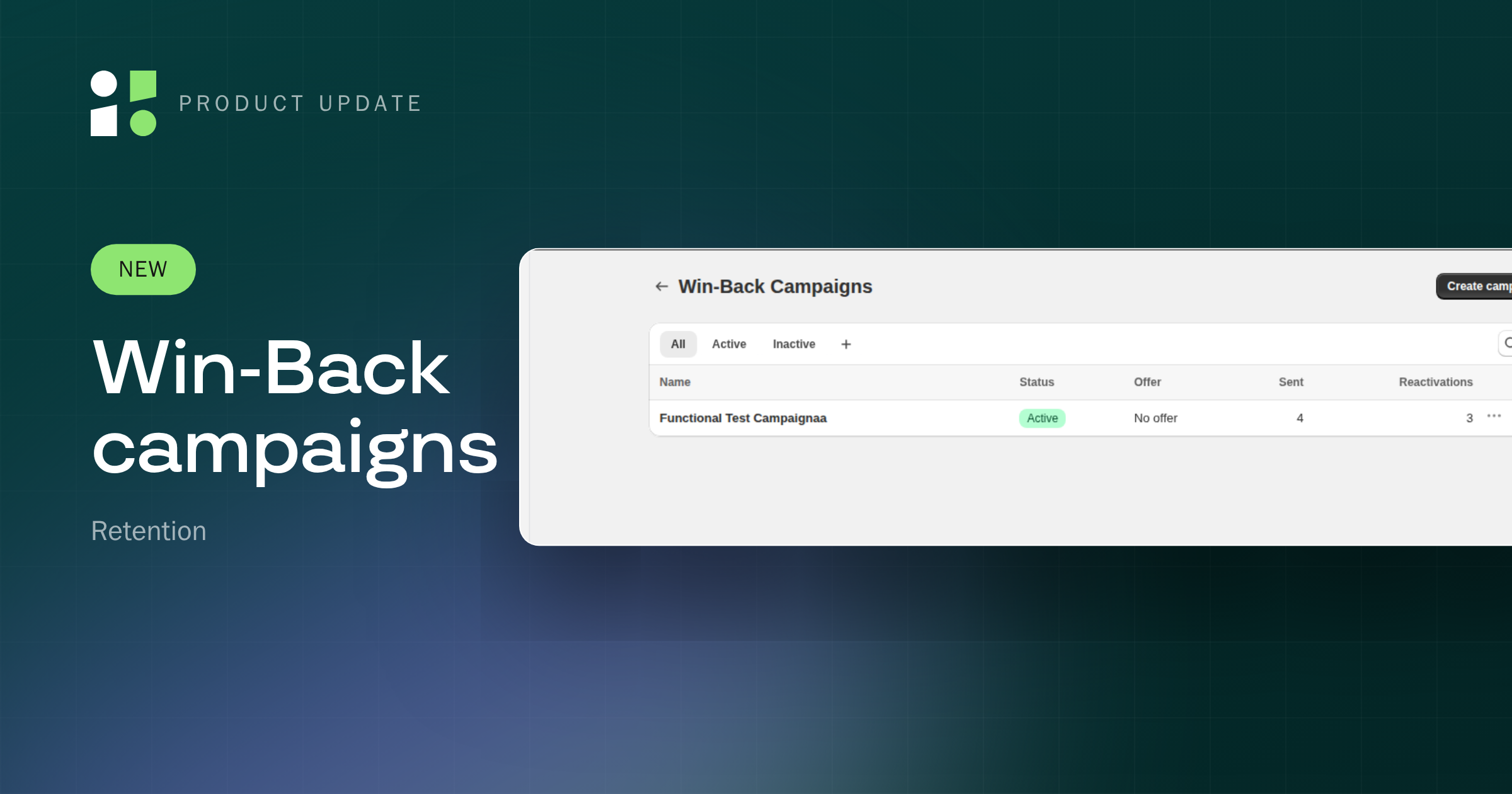
Timed email sequences now reach out after a cancellation with a one-click reactivation offer — targeted by cancellation reason, measured per email step.
A new Theme Integration card on your home page shows whether your app embed and each Subi widget block is activated in your live theme, with direct editor links.
Subscribe to Subi events with merchant-configurable webhooks — signing secrets, multiple endpoints per topic, delivery logs, a test feature, and retries.
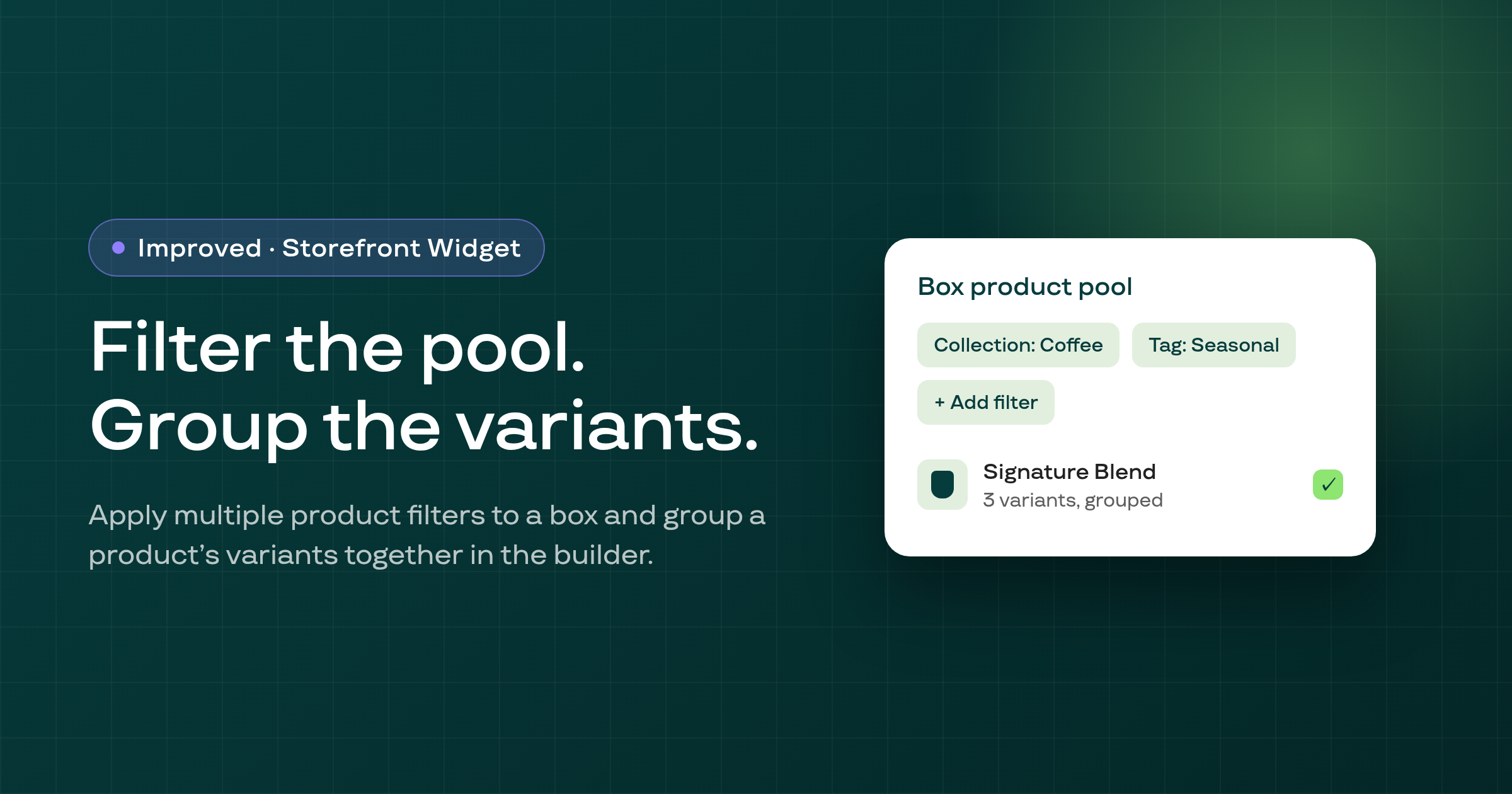
Subi's new Build a Box plan type lets customers assemble their own subscription box on your storefront, with per-option discounts and product pools by collection or your whole catalog.
Every plan type — including bundles and Build a Box — now lives in one Subscription Plans section, with a single create modal that shows all plan types.
You can now restyle the Subscribe & Save widget with custom color schemes, price-visibility toggles, advanced color settings, and a featured-benefits section.
Subi now offers a public REST API with a self-serve API-keys page in Settings, so you can programmatically access your subscribers and subscription contracts.
You can now configure upsell offers shown to subscribers — in the customer portal, in billing-reminder emails, and targeted by audience or customer segment — managed from a new Upsells menu.
You can now send SMS notifications to subscribers for contract events and billing reminders — with customizable templates, an activation page, and customer opt-out and opt-in.
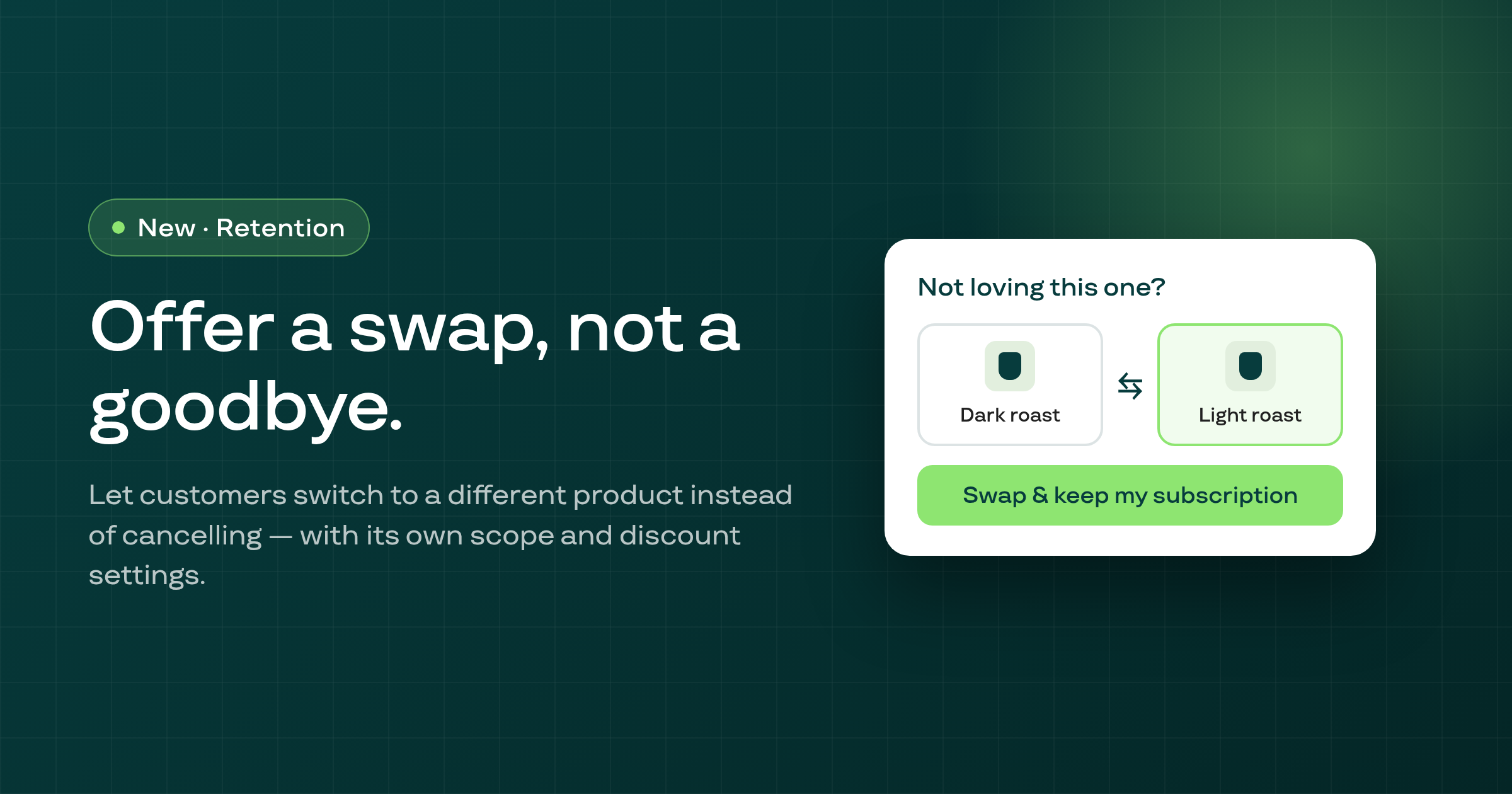
Subscribers can now request a product swap from the portal or customer account — browsing products that match their subscription frequency, seeing applicable discounts, and swapping per line — with a merchant toggle to allow or block swaps.
You can now edit many subscription contracts at once — next billing date, interval, shipping price, line price, skip the next order, send a management link, or swap a product — in a single bulk action.
The subscription contracts page has been rebuilt with multi-value filtering, sortable and configurable columns, and bulk actions so you can find and manage contracts faster.
You can now create curated subscription bundles — pick the products, set billing and delivery, add free shipping, and show the bundle on your storefront with its own widget.
Subscriptions now fully support local delivery — with address and instructions — and store pickup alongside shipping, shown clearly in subscription details.
Your customers can now manage subscriptions inside Shopify's native customer account — pausing, cancelling, swapping products, and changing intervals — with customizable content and button text.
The app, panel, customer portal, emails, and storefront tags have been rebranded from Subify to Subi — with legacy 'subify' tags still supported alongside the new 'subi' tags.
Subi now lets you sell membership plans — recurring memberships with tiers and free trials, joinable from storefront membership blocks and managed in the customer account.